

Why This Film Resonates Now…It’s an Urgent Reflection on Our World
A Mirror to the Moment We’re Living In
There are films that narrate, and then there are those that quietly absorb the world around them. This one belongs to the latter. In a time shaped by unrest and displacement, it doesn’t attempt to summarise reality—it reflects its emotional weight, allowing it to unfold with restraint.
Where the Quietest Voices Reside
The film turns its gaze toward those who are most often spoken about, but rarely heard—women and children navigating the aftermath of conflict. Their presence here is not amplified for effect, but held with a certain stillness that makes it all the more affecting.
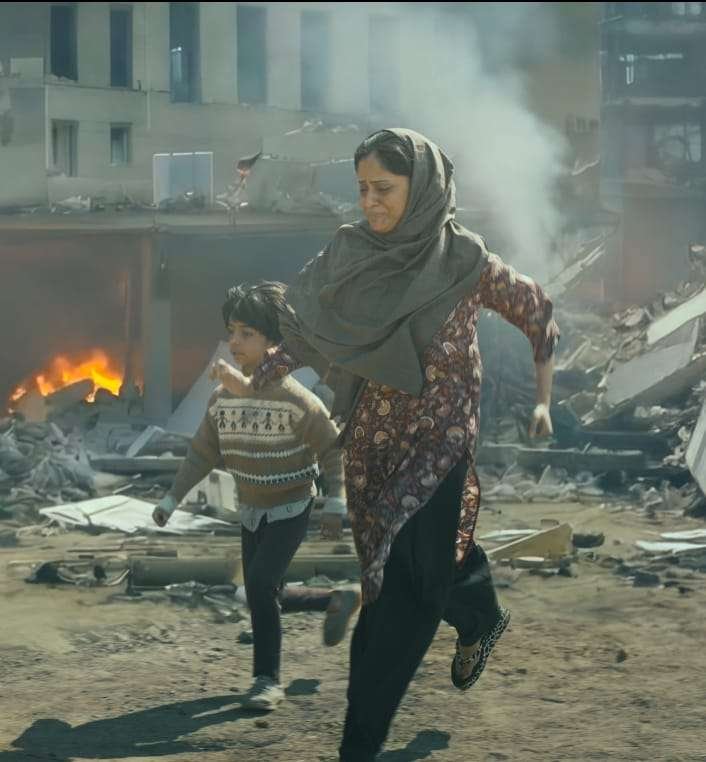
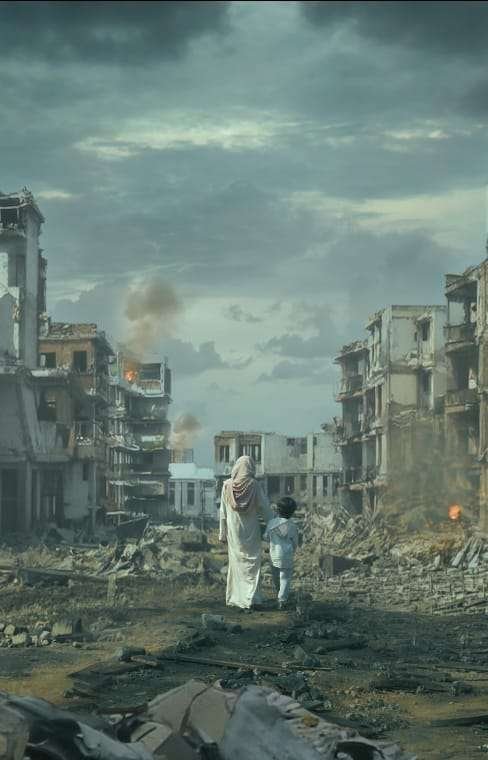
An Act of Moral Attention
Rather than positioning itself as commentary, the narrative lingers in a more contemplative space. It asks difficult questions without insisting on answers, inviting the viewer into a deeper engagement—one that extends beyond the screen.
Grounded in Thought, Open to the World
While its sensibility draws from an Indian philosophical undercurrent, the film resists cultural boundaries. Its emotional register feels instinctively familiar, no matter where you are watching from.
A Deliberate, Poetic Rhythm
There is a measured pace to the storytelling—one that allows silence, landscape, and gesture to carry as much meaning as dialogue. The realism is unvarnished, yet there’s an almost meditative quality that runs through it.
Holding on to What Connects Us
In a climate where divisions—political, social, ideological—continue to deepen, the film returns to something more elemental: the fragile, enduring thread of shared humanity.
Nature, Not as Backdrop but Presence
The natural world is not incidental here. It exists as a quiet witness—absorbing, enduring, and reflecting the fractures of human conflict in ways that words often cannot.
A Conversation That Continues Beyond the Screen
The film does not seek resolution. Instead, it leaves space—for reflection, for dialogue, for discomfort. It is in that unfinished space that its impact begins to take shape.
Aligned with a More Purposeful Cinema
At a time when storytelling often leans toward spectacle, this film chooses introspection. It stands within a lineage of cinema that is less concerned with scale, and more with significance.
Director’s Statement
Save The God began, for me, not as a project, but as a feeling I couldn’t quite set aside.
For years, I found myself returning to the same images—the faces of children and women in conflict zones, the kind you come across in passing, and yet cannot forget. There is a particular kind of helplessness in witnessing that suffering from a distance. Over time, that helplessness turned into a need to respond, in whatever way I could.
This film is that response.
I never saw it as a story in the conventional sense. It is closer to an appeal—for pause, for reflection, for a reconsideration of what we have come to accept as inevitable. If it reaches someone, somewhere, and shifts even a small part of how they see the world, that, to me, is enough.
The process of making it was not without its limitations. There were constraints at every stage—of time, of resources, of circumstance. But there was also a certain clarity that carried the film forward. It felt necessary to see it through.
The idea first took shape during the Syrian war, long before the world was altered by the pandemic. And yet today, as tensions continue to rise globally, it feels as though the film has been waiting for this moment—unsettling as that may be.
I don’t claim that a film can change the world. But I do believe it can reach a person. And sometimes, that is where change begins.

