

Parijat Haran: Assam’s Sattriya Heritage in Delhi
Directed by Sumanya Kashyap and Dr. Sukanya Baruah, the production presented Srimanta Sankaradeva’s classical dance drama at the Delhi Kala Festival 2026.
At the National School of Drama recently, the Delhi Kala Festival 2026 presented Parijat Haran, a classical dance drama rooted in the Sattriya tradition of Assam. Directed by Sumanya Kashyap and Dr. Sukanya Baruah, the production drew from the work of Srimanta Sankaradeva and centered on Krishna, Rukmini and Satyabhama.
The performance brought together dance, music, theatre and expressive storytelling to explore the relationships between the three characters. Rukmini and Satyabhama, with their very different temperaments, gave the narrative much of its character, while Krishna remained at the center of the story. Love, devotion, pride and jealousy emerged through the movement and dramatic exchanges rather than being treated as separate themes.
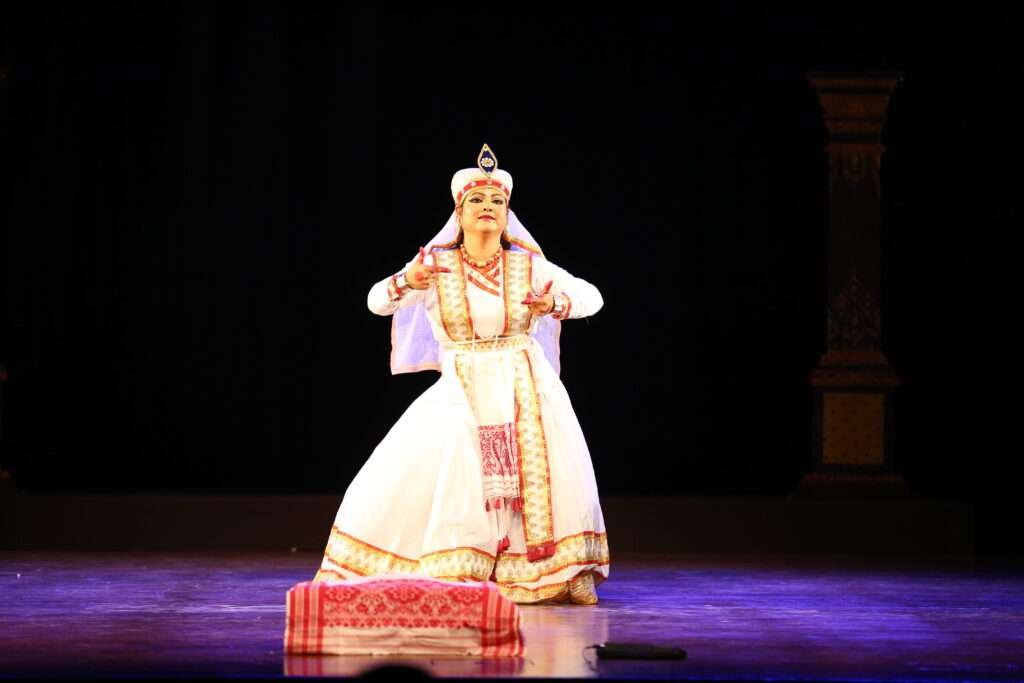
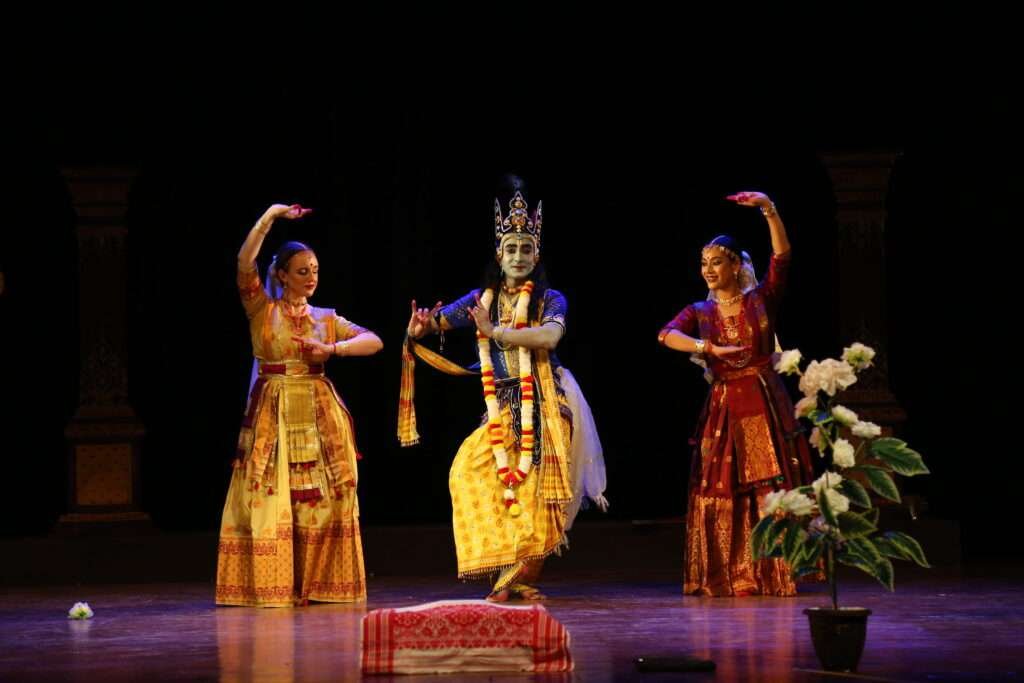
Seen in the auditorium, the production made clear why Sattriya is as closely connected to theatre and storytelling as it is to dance. The performers relied on gesture, expression and movement to advance the narrative, while the music provided an essential part of its structure. The result was a complete theatrical work rather than simply a presentation of a classical dance form.
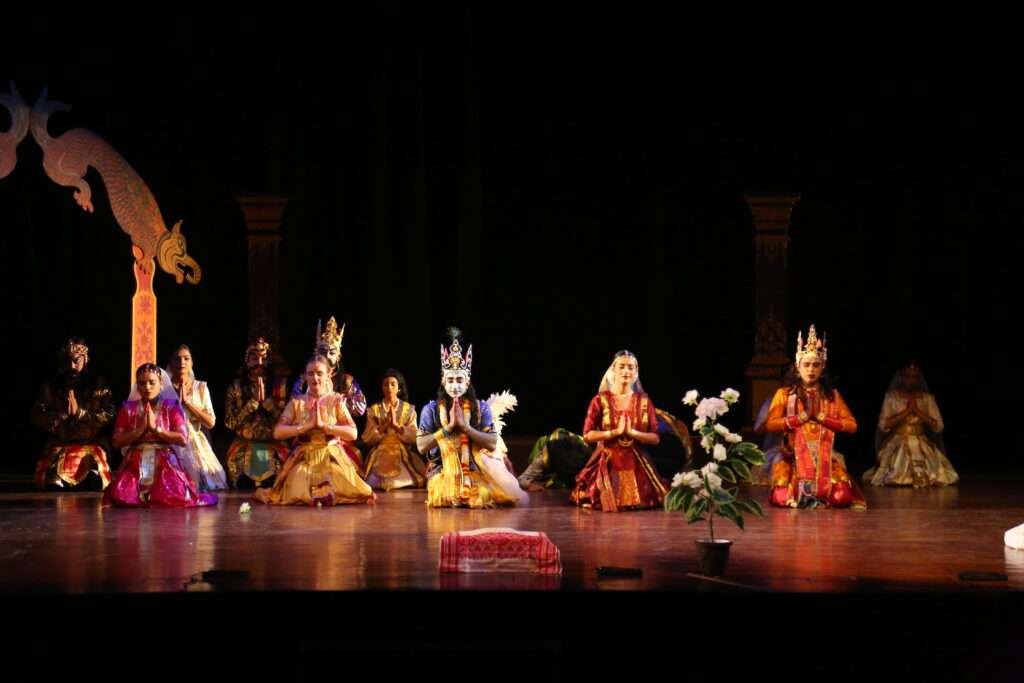
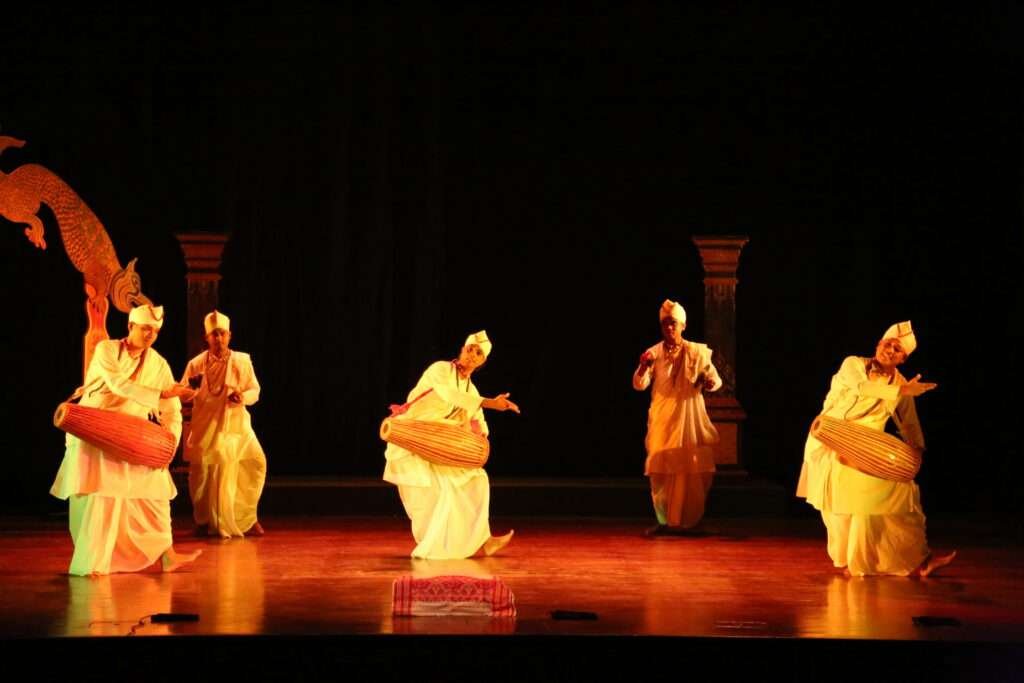
More than 400 people attended the performance, which formed part of the Delhi Kala Festival, running through August 31. Organized by Nishreyas and Vagambhrini in association with Delhi Tourism, Government of NCT of Delhi, the festival brings together several of India’s classical performing traditions, including Sattriya, Bharatanatyam, Kathakali, Odissi, Kathak, Chhau and Manipuri.
For audiences in Delhi, Parijat Haran also offered an introduction to a tradition that has developed within a very specific cultural and spiritual context. Sattriya, one of India’s eight recognized classical dance traditions, emerged in Assam nearly five centuries ago through the Vaishnavite movement associated with Srimanta Sankaradeva and Madhavadeva. Its repertoire draws together dance, music, literature and devotional practice, with the Ankiya Nat tradition forming an important part of its theatrical history.
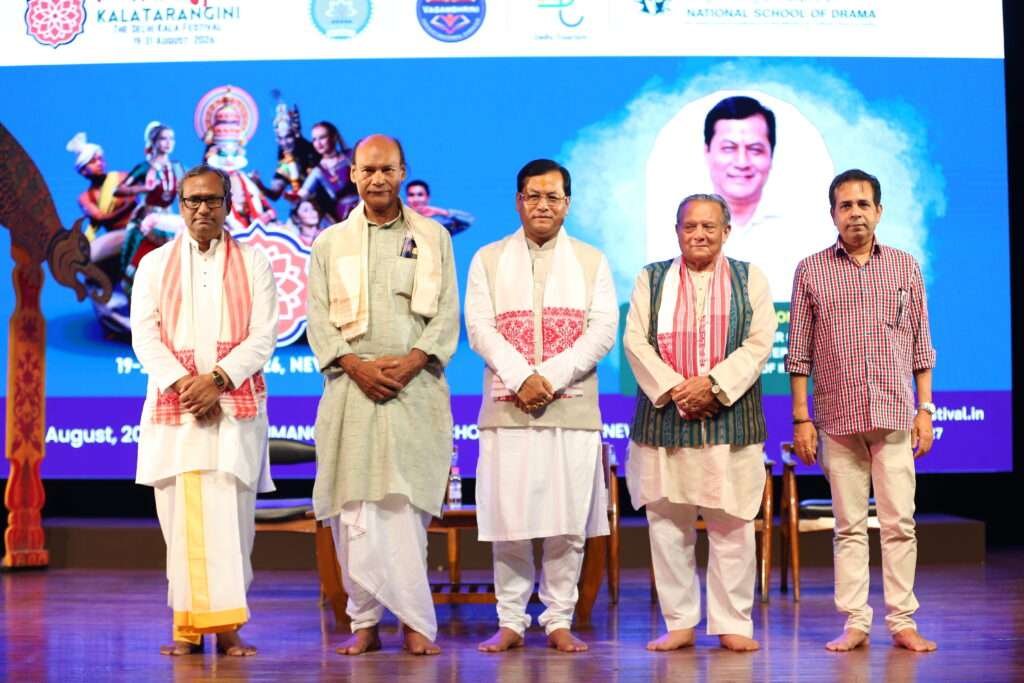
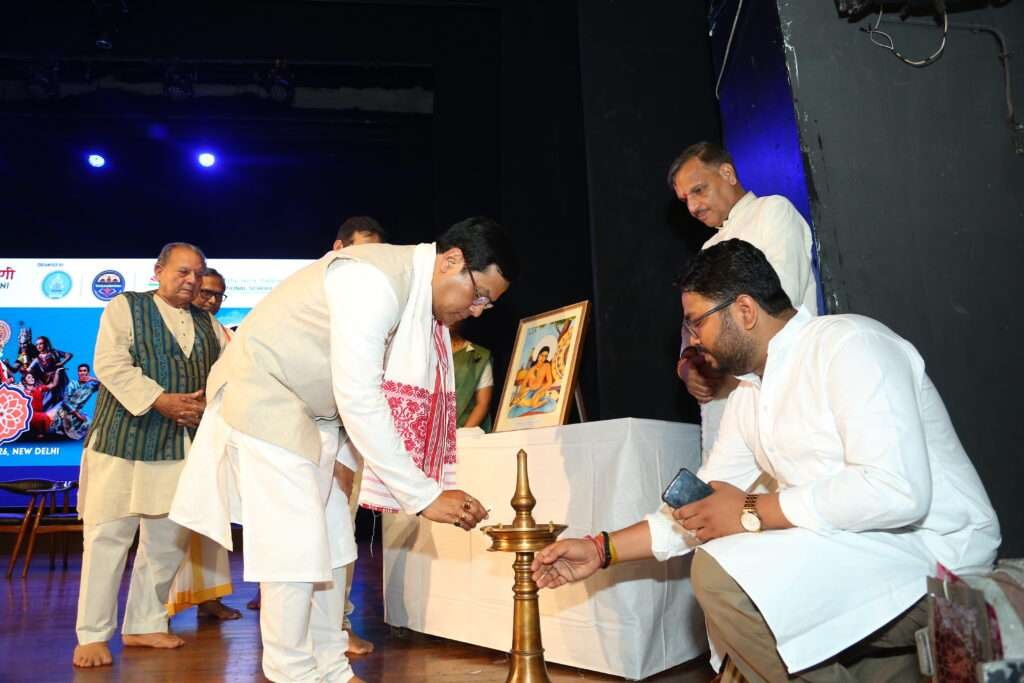
Shri Sarbananda Sonowal Ji, Hon’ble Union Cabinet Minister of Ports, Shipping and Waterways, welcomed the festival’s focus on the country’s classical forms, with particular attention to Sattriya. Speaking at the event, he said, “It is heartening to see that this year’s festival has chosen to celebrate the different classical dance forms of the country with a special focus on Sattriya of Assam.” He also emphasized the importance of initiatives that preserve and present India’s cultural traditions.
Prof. Rajnish Kumar Mishra, Chairman of the Organizing Committee, Kala-Tarangini, described the festival as an expression of India’s diverse cultural heritage and the continuity of its living traditions. Referring to the evening’s presentation, he noted its connection with the Bhagavata Purana and the Harivamsa.
Shri Bharat Gupt Ji, Vice-Chairman of the NSD Society, spoke in support of the presentation of Parijat Haran and the need for festivals that give greater visibility to India’s traditional arts. Shri Chittaranjan Tripathy, Director of the National School of Drama, also welcomed the festival’s presence at NSD, noting the value of bringing different regional traditions and their artistic expressions together.
One of the strengths of the Delhi Kala Festival is its range. Rather than focusing on a single school or region, the program brings distinct classical forms into the same cultural setting, giving audiences the opportunity to see how differently India’s performing traditions have developed.
In that context, Parijat Haran was particularly significant. It presented Sattriya through the form in which its various elements naturally belong together—dance, theatre, music and devotional storytelling. The production also demonstrated that the tradition can be presented to a contemporary metropolitan audience without having to dilute its cultural character.
With the festival continuing until August 31, Kala-Tarangini will go on to present artistic traditions from different parts of India. For Delhi, the value of such a program lies in that breadth: it brings regional practices into direct conversation with audiences in the capital while allowing each tradition to retain its own history, language and aesthetic identity.
Parijat Haran was a strong example of that approach, giving Sattriya a substantial place on the Delhi stage and allowing its distinctive relationship between devotion, theatre and dance to speak for itself.

