

A Navaratri Tradition Woven Across Generations
At the Gurugram home of 89-year-old Ramachandran, Bommai Golu is more than a festive display. His collection of Navaratri dolls, some dating back to his great-grandparents, holds generations of family history, faith and culture that he hopes to pass on.
“Every doll has a story, and every story carries a piece of our heritage. If we do not tell these stories to our children, we risk losing the memories, values and wisdom of generations before us,” he says.
What Is Bommai Golu?
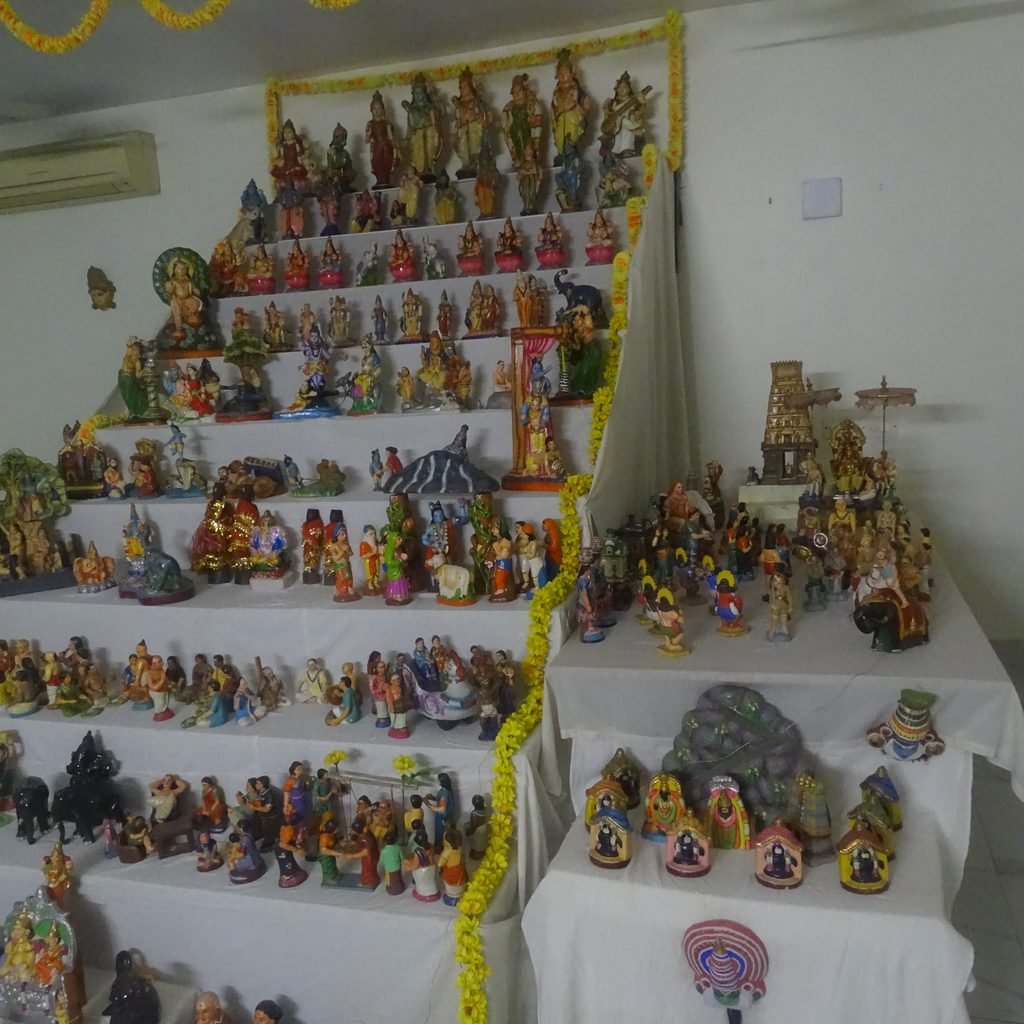
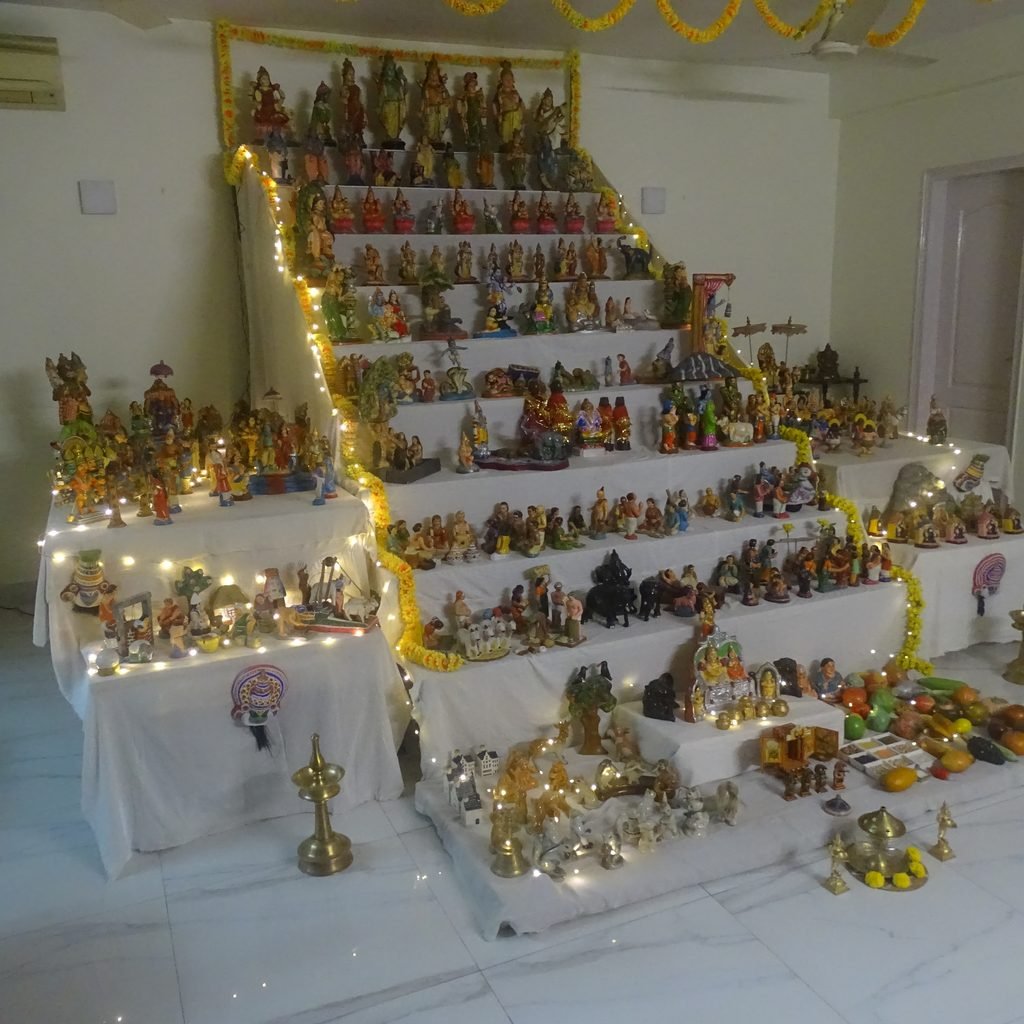
Bommai Golu is a Navaratri tradition celebrated by Tamil, Telugu and Kannada communities. Dolls and figurines are arranged on tiered steps to depict Hindu deities, religious narratives, cultural practices and scenes from everyday life, together forming a colourful tableau of faith and community.
Four Decades of Collecting Golu Dolls
Ramachandran, a retired official, and his wife Chandrakala have spent more than 40 years building their collection, combining inherited dolls with pieces sourced mostly from Chennai. He recalls when an entire set cost just a few rupees. “Today, you cannot even buy peanuts for a rupee,” he says with a smile.
Highlights include Mahavishnu, Garuda carrying the Utsava Murti of Lord Balaji, Vaishnavite devotees chanting the Vedas and elaborate temple processions inspired by the Tirupati tradition. Chandrakala arranges each figure with care, keeping the display symmetrical and visually balanced.
Scenes of Everyday Life and Marapachi Dolls
Alongside the religious tableaux are scenes of childbirth, weddings and traditional wedding feasts that capture customs shaping generations. The collection also features wooden Marapachi dolls, associated with auspicious beginnings and, in some communities, gifted to newlyweds as a symbol of prosperity and continuity.
Teaching Children Through the Golu Display
For visiting children, the display is an engaging introduction to mythology, rituals and social customs. The couple encourages them to ask questions and explains the meaning behind each figure, believing that seeing these traditions brings them to life in a way books cannot.
Passing the Tradition to the Next Generation
Ramachandran’s daughter and son-in-law now help with the annual arrangement, and his grandson in Canada hopes to take the collection overseas and share it with a wider audience.
For Ramachandran, the true meaning of Bommai Golu lies not only in the dolls handed down but in the values, conversations and cultural bonds they nurture long after they return to their shelves.

