

Tarun Tahiliani brings Indian craftsmanship and contemporary tailoring together in a collection for the modern Indian groom, with Ali Fazal as showstopper
Photo : FS Media Pro / FDCI x Lakme Fashion Week / RISE Worldwide
Tasva by Tarun Tahiliani presented a contemporary take on Indian menswear, bringing traditional craftsmanship, modern silhouettes, and a versatile color palette into the wedding wardrobe. Actor Ali Fazal closed the show as the label’s showstopper, reflecting its approach to Indian occasionwear through a refined, contemporary aesthetic.The collection explored how traditional wedding attire can evolve to reflect changing tastes without losing its cultural significance. Intricate detailing, considered construction, and versatile silhouettes formed the foundation of a wardrobe designed for the many celebrations that make up an Indian wedding.
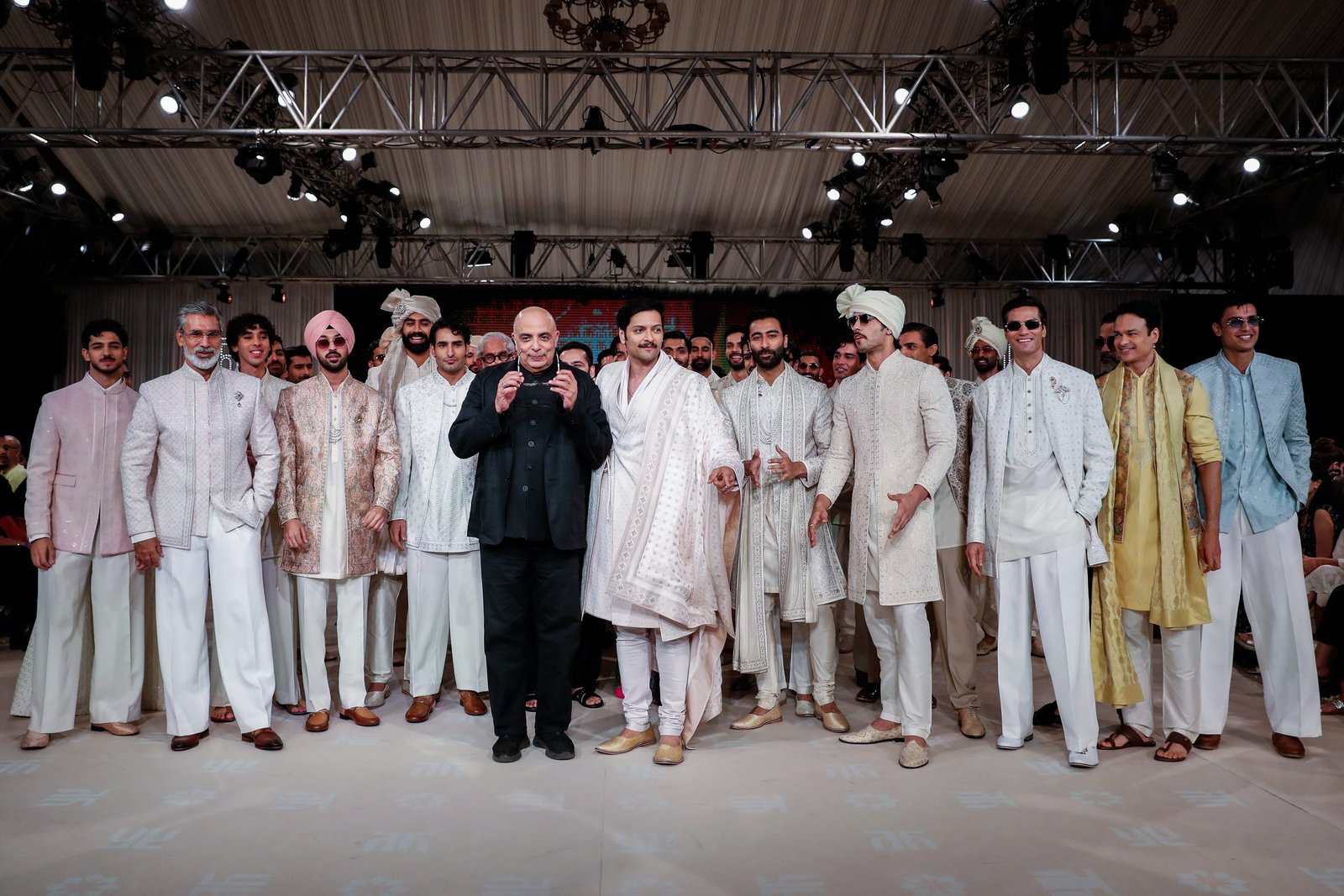
Showstopper: Ali Fazal
Ali Fazal appeared in an ivory ensemble featuring an angarkha-inspired layer beneath a structured, embroidered jacket. A coordinating stole with delicate detailing completed the look, while fitted ivory trousers maintained a clean silhouette. Gold-toned juttis added a traditional finishing touch.
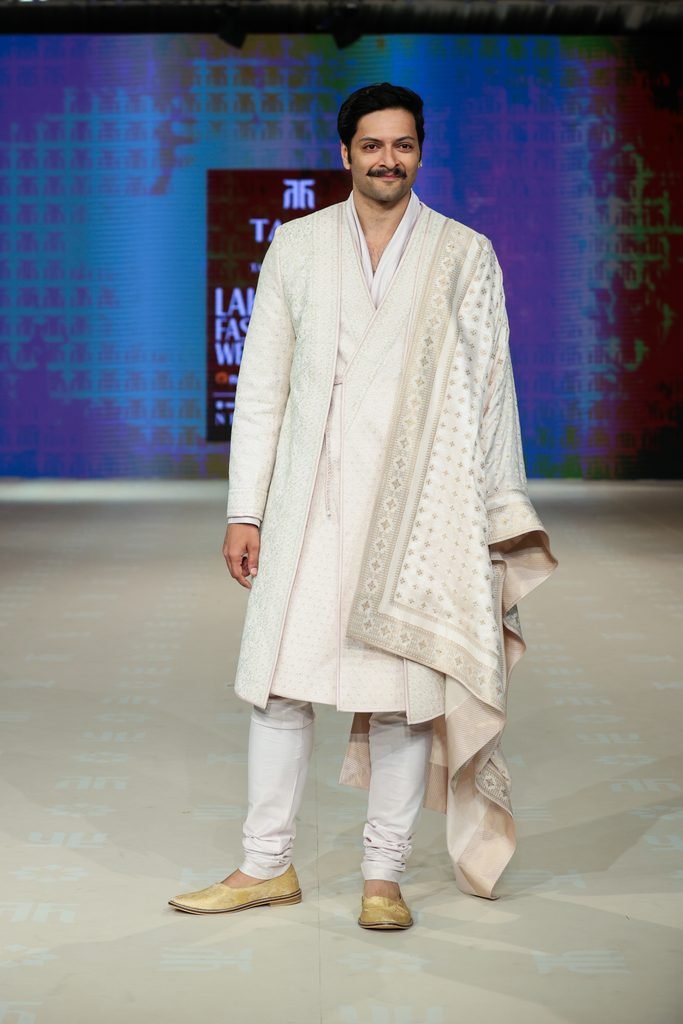
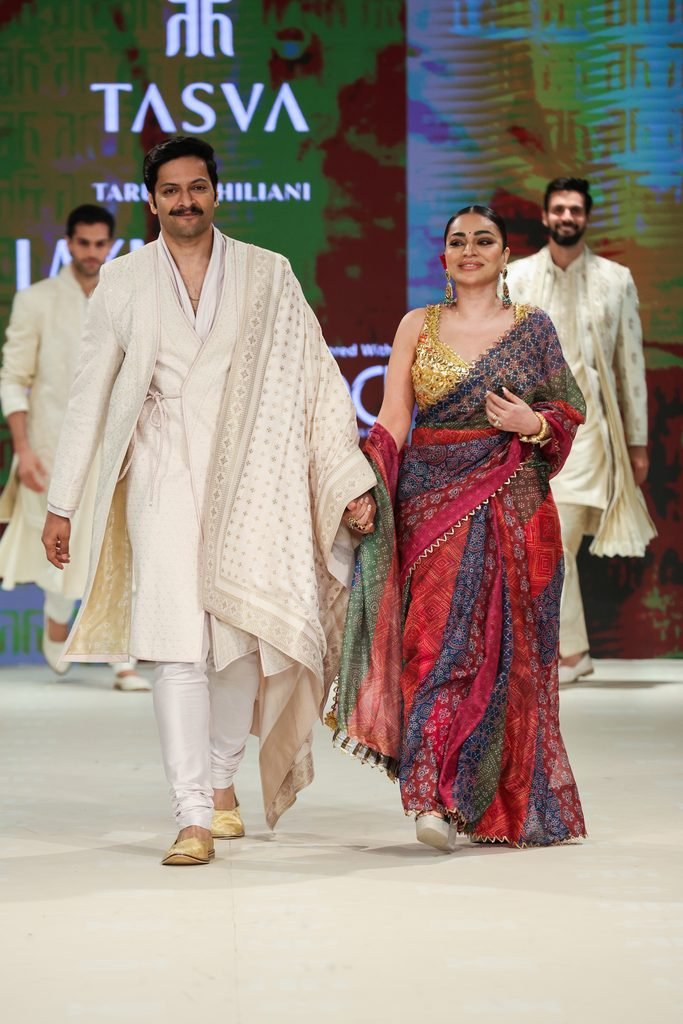
The tonal styling allowed the embroidery to stand out without overwhelming the outfit. The combination of layered construction, subtle ornamentation, and clean tailoring offered a contemporary interpretation of Indian groomwear.
Art With Ancestry
The collection drew inspiration from the Tree of Life, the intricate artistry of Lipan art, the fluidity of paisleys, and the interplay of light. Floral, flowing, and geometric motifs translated these influences into a contemporary design language.
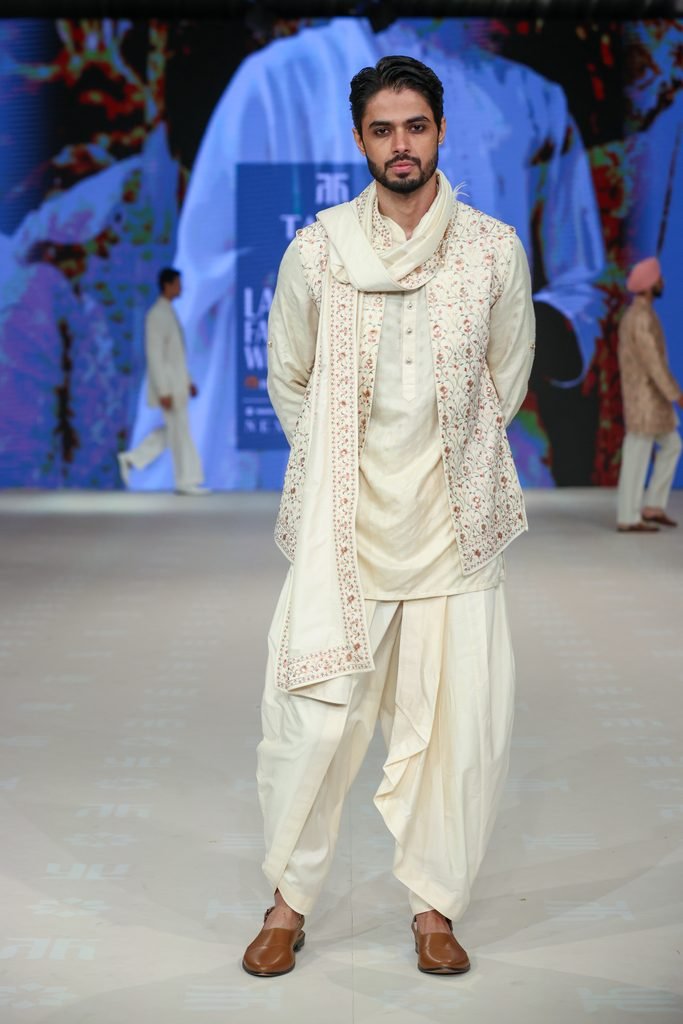
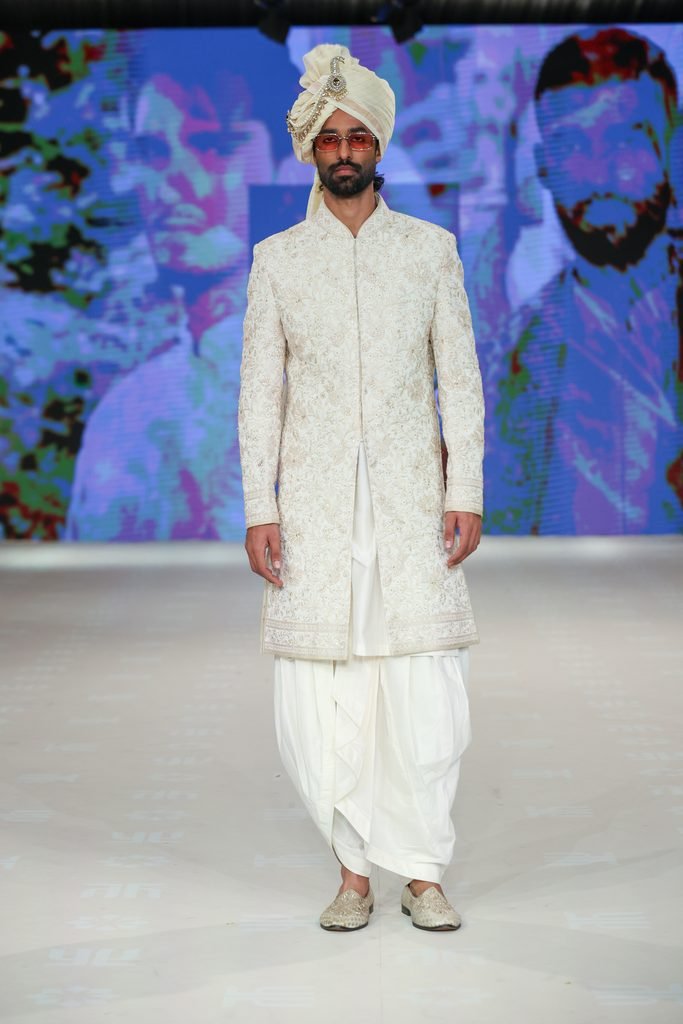
These artistic references connected the collection to India’s rich visual heritage while allowing the garments to feel relevant to modern dressing. Rather than relying solely on traditional forms, the designs explored how familiar motifs could be reinterpreted through updated silhouettes and styling.
Sunil Sethi, Chairman of the Fashion Design Council of India (FDCI), highlighted the dialogue between India’s sartorial heritage and the evolving preferences of the modern Indian man, emphasizing the importance of keeping traditional craftsmanship relevant through contemporary design.
Craft In Detail
Aari work, Zardozi, and mirror work played an important role, complemented by appliqué, pearl embellishments, and three-dimensional detailing. These techniques introduced texture and depth, bringing intricate surface work into garments shaped by modern construction.
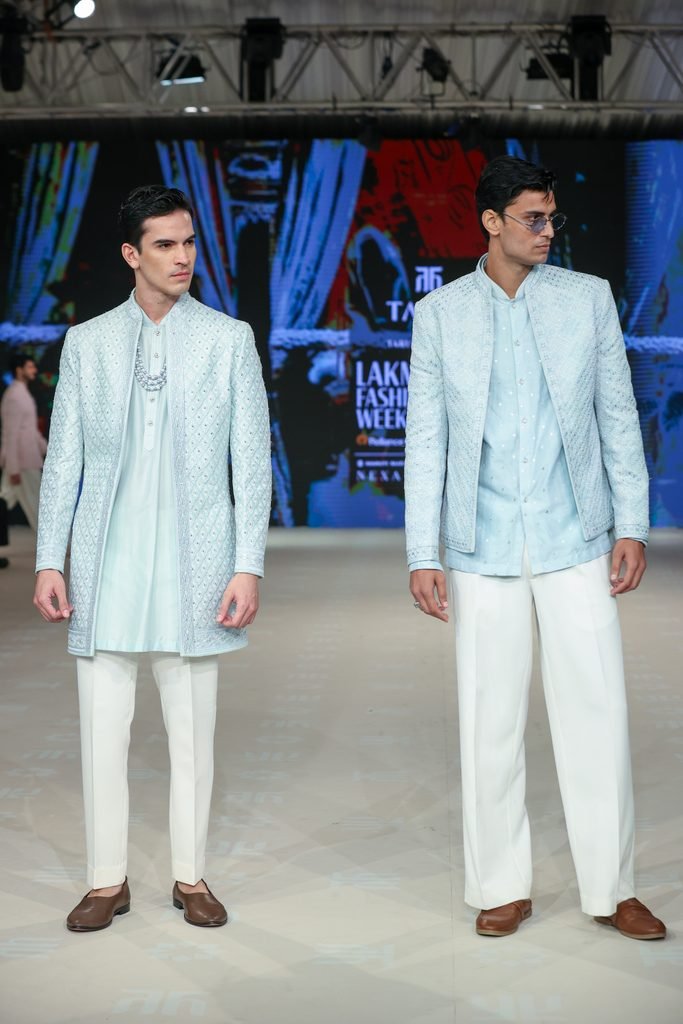
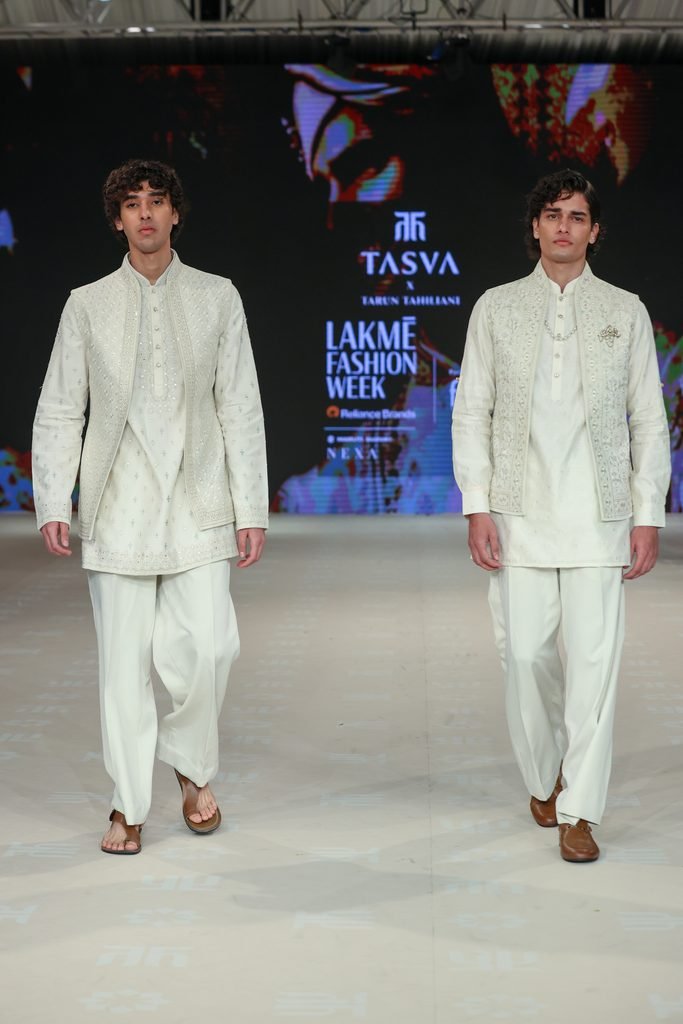
The balance between ornamentation and tailoring gave the pieces their character. Detailed embroidery added richness, while clean lines and considered proportions kept the overall aesthetic contemporary.
Color Sets Mood
The palette moved between understated elegance and more expressive occasion dressing. Ivory, lilac, salmon, and jade brought softness to daytime ensembles, while deeper jewel tones and vibrant accents offered options for cocktail evenings and mehndi celebrations.
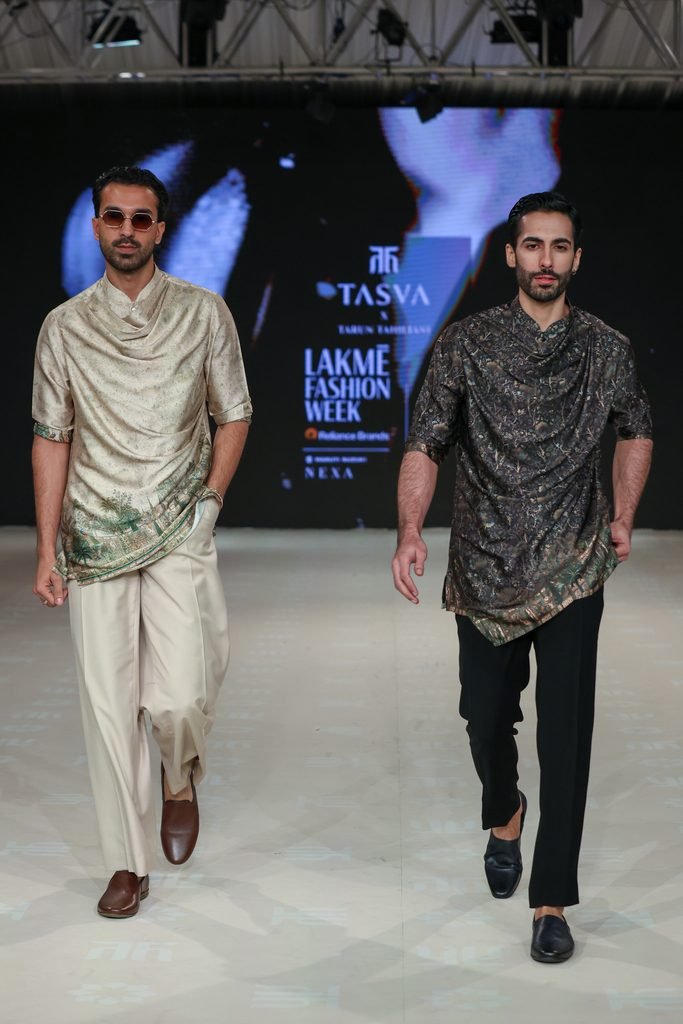
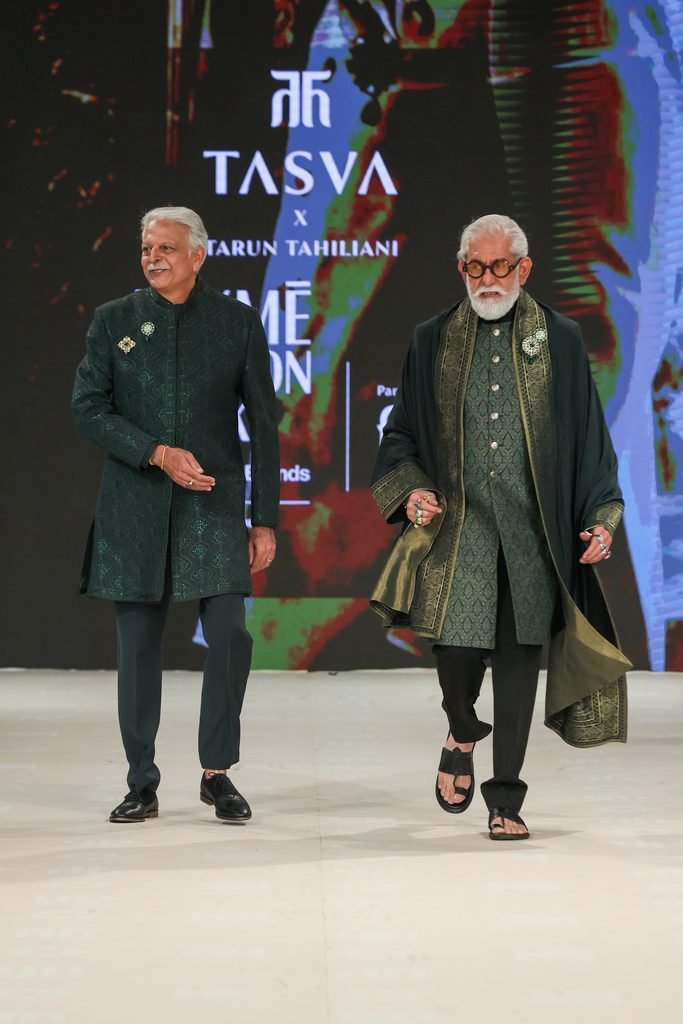
This range reflected the varied moods of an Indian wedding wardrobe, where individual preference increasingly shapes the choice of color, embellishment, and silhouette.
Silhouettes With Ease
Classic sherwanis with asymmetrical details and sharp tailoring appeared alongside sleek dinner jackets and contemporary Indo-Western ensembles. Traditional ceremonial styles were reworked through modern proportions, offering alternatives to conventional wedding attire.The emphasis on versatility reflects a wider shift in Indian menswear. Today’s groom is looking for clothing that balances visual appeal with comfort and personal style, with outfits that work across different celebrations rather than serving a single occasion.
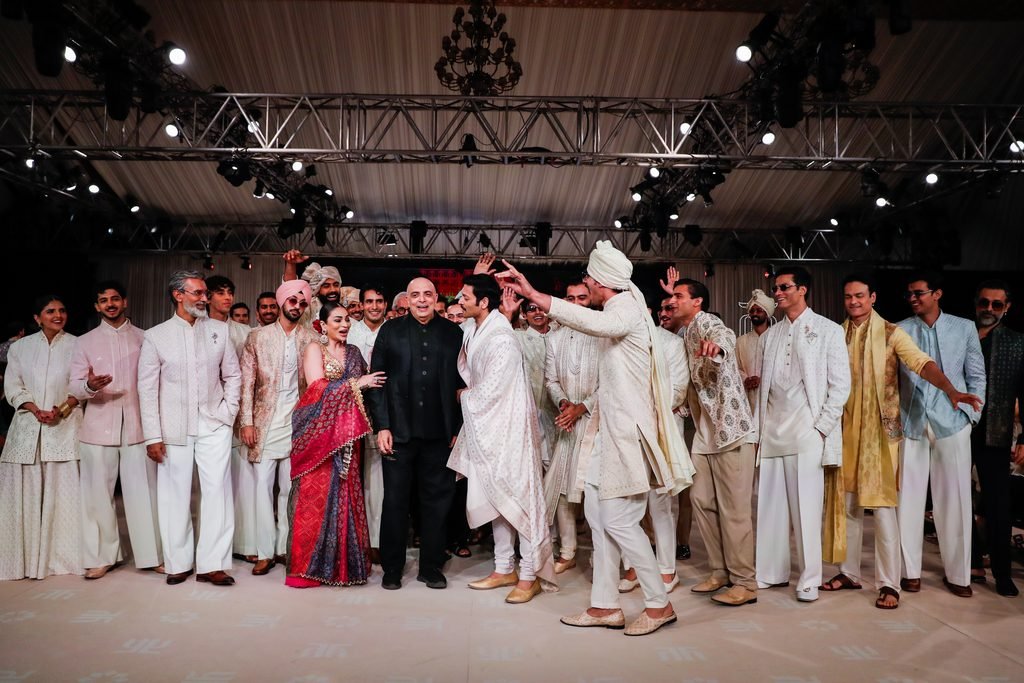
Speaking about the collection, Tarun Tahiliani emphasized the importance of making Indian occasionwear relevant to how men dress and celebrate today, bringing together traditional craftsmanship, contemporary silhouettes, comfort, and individuality.
Tradition, Reimagined
Tasva by Tarun Tahiliani presented a considered perspective on contemporary Indian menswear, bringing together artisanal techniques, modern tailoring, and the varied demands of wedding dressing.
The collection reinforced the idea that heritage can serve as a foundation for individual expression. For the modern groom, Indian occasionwear is increasingly about honoring tradition while choosing silhouettes, colors, and details that reflect his own style.

