

Courage, Memory, and a Son Forever Twenty-One
By Seema Dhawan
A retired army officer crosses the border into Pakistan, not for ceremony or nostalgia, but because a chapter of his life remains unfinished. Brigadier M. L. Khetarpal (Retd.), played by Dharmendra, is traveling to a college reunion, though the journey is clearly about something else. The present moves forward, but memory keeps pulling him back — to his son, Second Lieutenant Arun Khetarpal, whose life ended at twenty-one. Each step he takes is weighted with decades of loss, each glance carrying the echo of a life that was cut short.
The film moves into the past, introducing Arun as he enters the army. He carries himself with clarity and confidence, shaped more by conviction than bravado. There is no hurry to define him through heroics. Instead, the film allows him to take shape through routine — drills, discipline, and the gradual understanding of what the uniform demands. Early in his training, as responsibility begins to settle in, he articulates what will guide his choices later:
“Vardi pehnne se pehle insaan hona zaroori hai… kyunki yuddh mein wahi insaan kaam aata hai.”
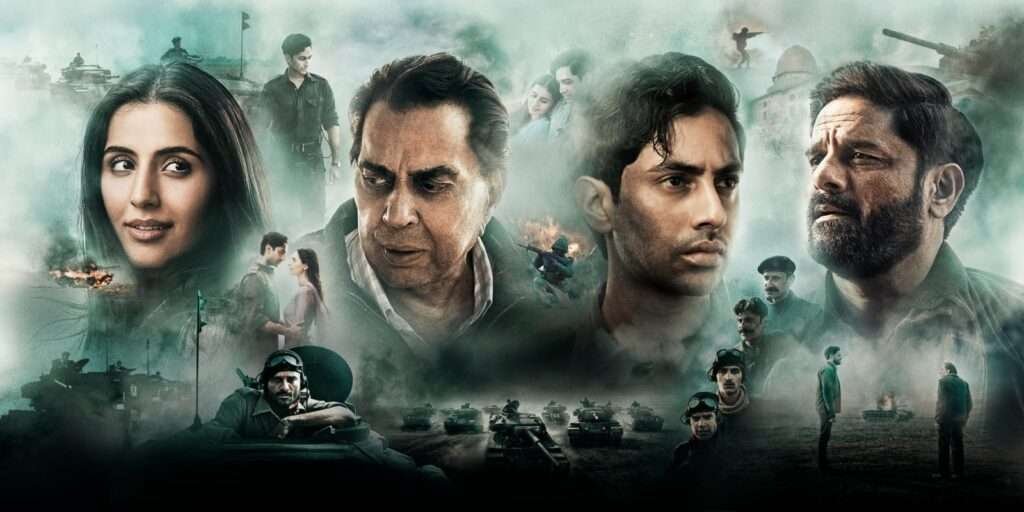
Agastya Nanda approaches Arun with restraint and focus. He does not rely on external markers of bravery, allowing the character to remain internally consistent. There is an ease in how he wears the uniform and a steadiness in his presence that makes Arun believable. For a debut performance, he shows control and judgment, knowing when to hold back and letting moments unfold without being pushed. It is in these small, quiet gestures — a pause, a glance, the adjustment of a uniform — that the character’s humanity shines through.
The shift to the battlefield is immediate and unsettling. The war sequences are filmed without gloss and are designed for clarity rather than spectacle. The focus remains on movement, positioning, and confusion rather than visual flourish. Tanks struggle across uneven terrain as machines under strain, not symbols of dominance. Orders overlap, visibility is limited, and fear lingers constantly as the terrain resists control. Cinematography avoids dramatic angles, choosing instead to stay close to the ground. When Arun’s tank is damaged and he is ordered to withdraw, his response is direct and final:
“Main apni position nahi chhodunga.”
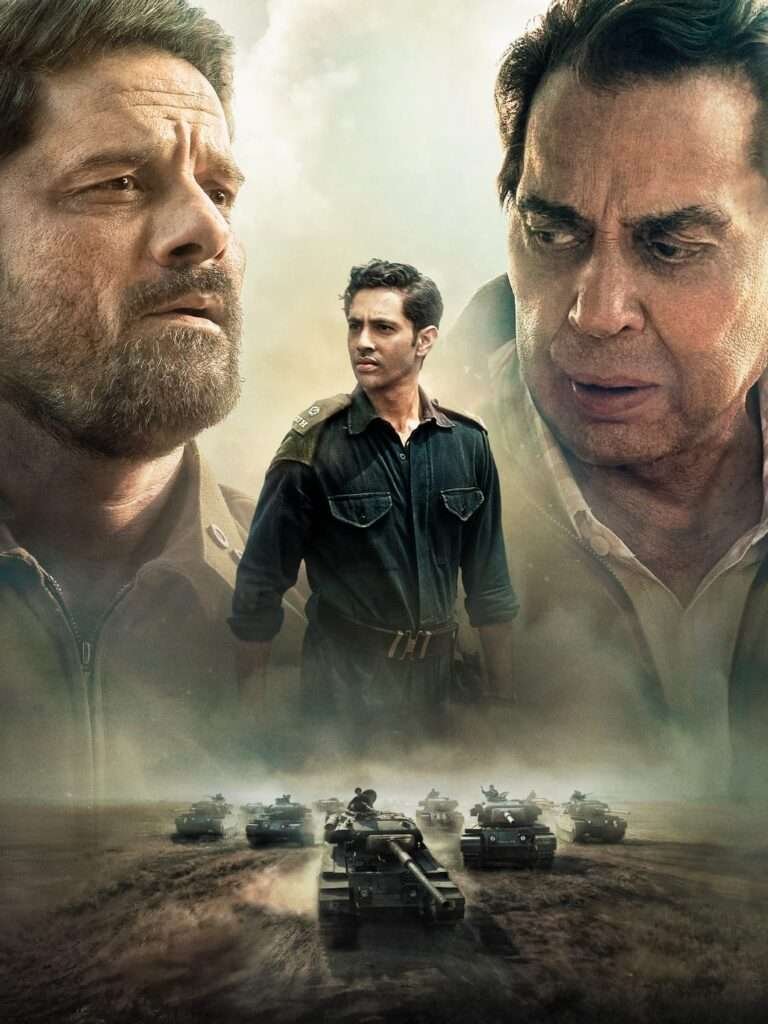
The moment is not framed as defiance. It feels like a decision already made long before it is spoken, carrying consequences that the film does not soften. The sequences emphasize how fleeting moments of courage and clarity can be in the chaos of war — and how every choice carries an irrevocable weight. It is this attention to realism that makes the battlefield feel immediate, tense, and emotionally grounded.
Away from the battlefield, the film briefly turns to Arun’s personal life. During training, he meets Lieutenant Simar Bhatia. The role is small, but it adds context to who Arun is beyond the uniform. Simar understands the path he has chosen and does not argue with it. There is no attempt to turn the relationship into conflict. Played by Simar Bhatia in her debut role, she approaches the character with ease and sincerity, using limited screen time effectively and never drawing attention away from the central story. Their interactions, though brief, subtly reflect the sacrifices made by those who love soldiers — the quiet understanding that life will continue even when paths diverge.
In the present, Brigadier Khetarpal reaches Sargodha, the site where his son made his final stand. He is accompanied by Major Faizan Khan of the Pakistani Army, played by Jaideep Ahlawat. The exchange between the two men avoids confrontation or sentimentality. It is measured, grounded, and professional. When Major Faizan guides the Brigadier to the exact spot, he says:
“Yeh ladai hamari thi… par jo yahan gira hai, woh sirf aapka beta nahi tha. Woh ek sachcha sipahi tha.”
Later, pointing to a tree still standing nearby, he adds:
“Yeh pedh… yahan har roz khada rehta hai. Shayad kisi ko yaad rakhne ke liye.”
Brigadier Khetarpal kneels and touches the soil. He does not speak. Dharmendra allows the moment to pass without emphasis, his expression holding years of grief, pride, and restraint. Much of what he conveys comes through posture and silence rather than dialogue. His presence anchors the film’s emotional core, a reminder of the enduring connection between a father and the son he lost too soon. Dharmendra carries the present-day narrative with authority shaped by time. He does not seek sympathy or explanation. His presence is enough. In what is his final film, there is no sense of performance or farewell framing. He simply occupies the frame, and the weight he brings stays with you. From the college reunion to the battlefield at Sargodha, his performance lingers as a closing chapter, resonating with the years of emotion that the story quietly holds.
Technically, the film remains controlled. Music is used sparingly, editing allows scenes to end without being underlined, and the camera keeps both war and memory grounded in reality. A few transitions between timelines feel slightly abrupt, and certain sequences in the present occasionally move at a slower pace than necessary. Yet these minor imperfections do little to weaken the film’s impact. In fact, the quietness of some scenes allows the performances and emotions to resonate more deeply.
Ikkis leaves you with the weight of memory: a father standing where time stopped, a young officer forever frozen at twenty-one, and the subtle acknowledgment that courage often comes with silence. Despite small flaws, the film succeeds in creating a lasting impression.
It’s a film that asks nothing of its audience except to feel: the stillness of Dharmendra’s eyes, the restrained fire in Agastya Nanda’s gaze, the human depth of Jaideep Ahlawat, and the quiet strength of Simar Bhatia. Long after the last frame, that number — twenty-one — remains, not as a title, but as a life interrupted, a story carried forward in memory, honor, and heart.

