

Recently, I travelled to Dehradun for the motion poster launch of Jai Hind, Jai Sindh – A Love Story — and it felt less like a routine film event and more like stepping into a story shaped by memory.
There was a quiet pride in the room of Hotel Ramada as the first visuals played out. The title itself carries weight — Jai Hind, Jai Sindh — two sentiments, two histories, held together through one narrative of love.
Directed by Indrajit Lankesh and produced by Sammy Nanwani under Sammy’s Entertainment, the film brings together a powerful ensemble — Mahesh Manjrekar, Jaya Prada, Zarina Wahab, Vikram Kochhar, Upasna Singh and Amit Behl — artists whose cinematic journeys mirror the emotional depth the film promises.
Set against the backdrop of Partition, the story traces a romance born during one of the most turbulent chapters of the subcontinent’s history. Yet what struck me during the launch was that this isn’t positioned as a heavy historical retelling. Instead, it unfolds as a tribute to the Sindhi community — a people who rebuilt their lives across borders and went on to shape modern India in profound ways.
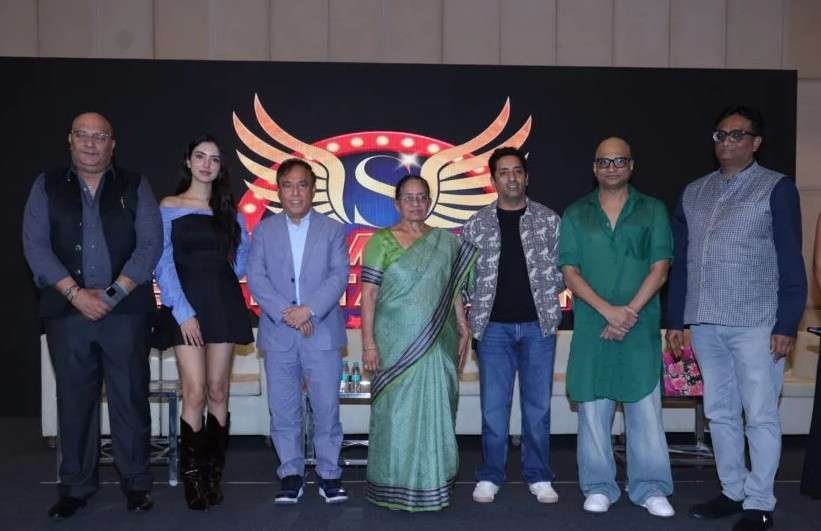
Producer Sammy Nanwani spoke about the personal connection behind the film — memories, inherited stories, lived experiences that inspired this narrative. And you could sense that this project is not just about spectacle; it is about acknowledgment.
As the motion poster concluded, the larger message became clear. In a world often divided by difference, the film speaks of India as a rare coexistence — 1.4 billion people who speak differently, eat differently, pray differently, yet continue to share a collective identity. Through the metaphor of two individuals finding harmony despite historical wounds, Jai Hind, Jai Sindh – A Love Story suggests something both simple and powerful: if love can transcend Partition, unity can transcend division.
Watch the motion poster here:
https://youtu.be/XdS4XKJvOMc

