

Unmistakable. Unapologetic. Unmissable
I met Sunita Ahuja at her Mumbai home for a conversation that moves easily from the very beginning. There’s a comfort in the way she speaks—open, direct, and honest. What follows is more personal, and entirely in her own voice.
Excerpts from the Interview…
Seema Dhawan
I remember walking into her home and registering it almost instinctively—spaces that felt lived in. There was an ease to it.
The door opened into a home that felt warm—soft lighting, personal corners, a quiet sense of comfort that immediately put you at ease. And then Sunita Ahuja walked in— greeting you with a smile that is easy, familiar—almost as if you’ve met her before. She sat down, laughed openly, and just like that, the distance dissolved.
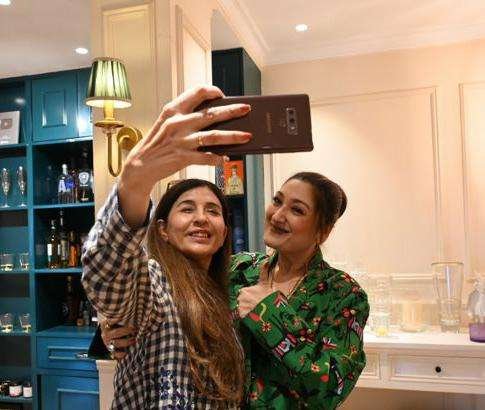
Within minutes, the conversation stopped feeling like an interview. She was talking—openly, honestly.
You notice the glow, of course. It’s hard not to. And when I mentioned it, she answered:
“Yeh jo mere chehre par glow hai, yeh kisi ke pyaar ya care ki wajah se nahi hai… yeh meri pooja ka hai.”
(The glow you see on my face is not because of anyone’s love or care… it comes from my worship.)
Her mornings begin at 4 a.m.—in prayer, in stillness, in a discipline that doesn’t seek validation. By the time the day begins for most, she has already spent hours with herself. Not occasionally—every day. A discipline that feels less like routine and more like anchoring.
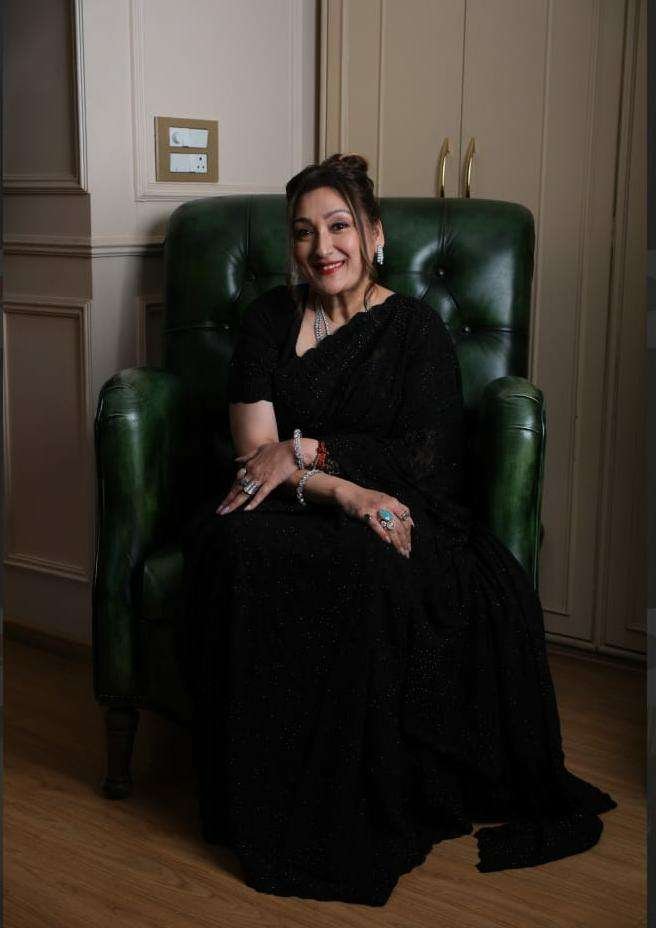
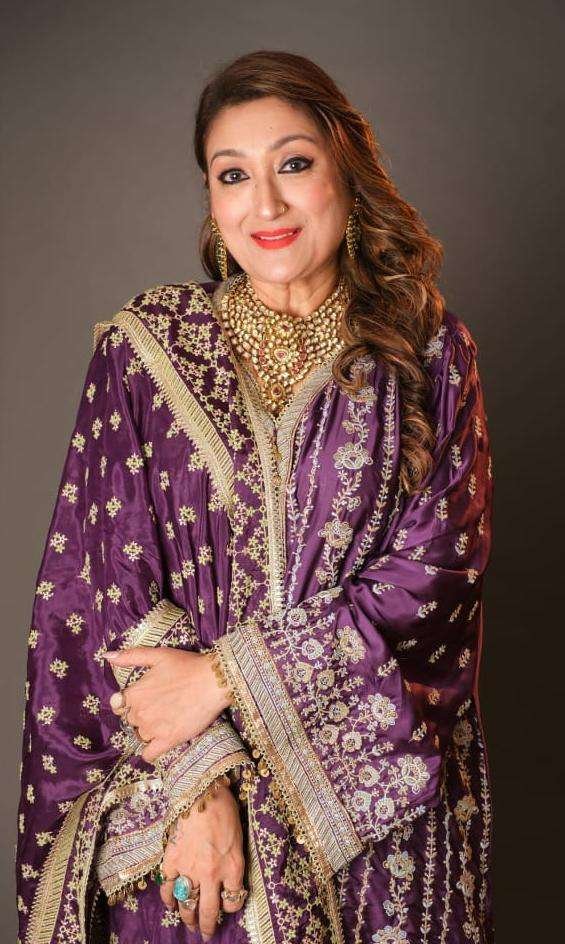


Photography- Kapil Tejwani
Makeup-Ayesha Kapasiyawala
Where Her Voice Changes
We were talking about women—their strength, their endurance—and suddenly, her tone steadied in a different way. Less conversational, more resolved.“Ek baar, do baar, teen baar maaf karo… uske baad nahi.”
(Forgive once, twice, even three times… but not beyond that.)
And then, she reiterates, “A woman is not garbage.”

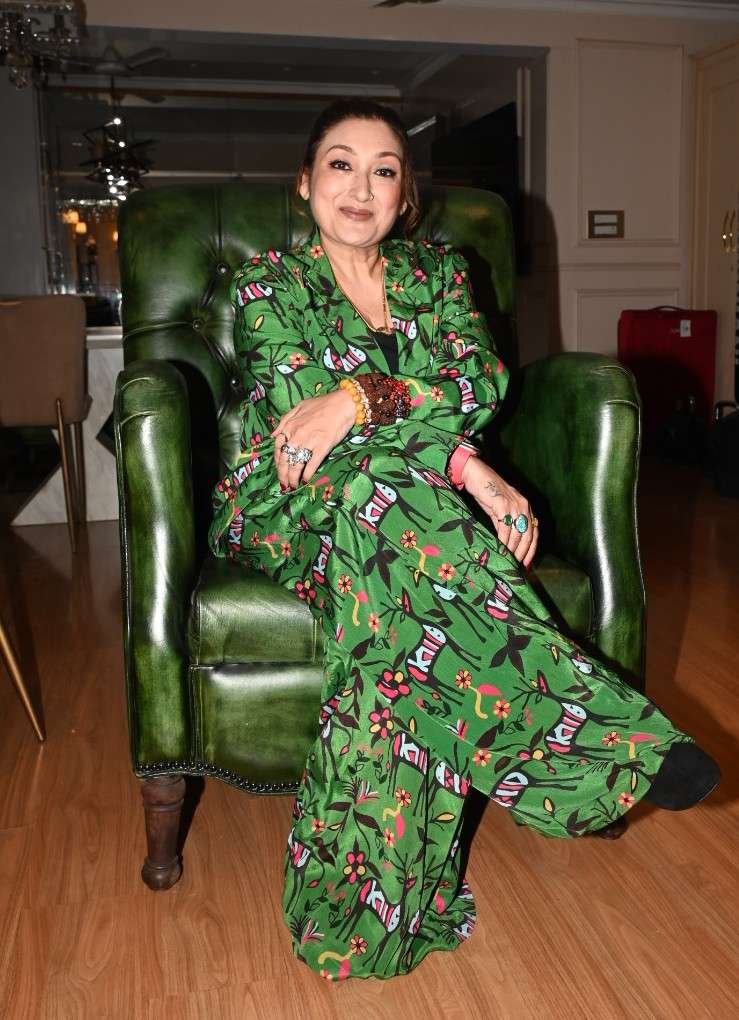
Photography -MANOJ
I remember responding—speaking about how women who give the most often carry the deepest emotional weight, how that pain begins to show quietly in who they become.
She didn’t interrupt. She let me finish. And then something in her shifted further—her voice deepened, slowed, almost carrying a weight that hadn’t been spoken until then. “I just want to say… if someone hurts a woman, brings tears to her eyes… their end is never good”
“Aurat ki izzat honi chahiye. Wife ho, beti ho, maa ho… har roop mein.”
(A woman should be respected. Whether she is a wife, a daughter, a mother… in every form.) “Aaj kal auratein cancer se suffer karti hain… kyun? Dard ki wajah se. Itna dard seh leti hain.”
(These days women suffer from cancer… why? Because of pain. They endure so much pain.)
There was a brief pause after that—one of the few in the entire conversation. And then, softer but heavier:“A woman’s tears carry immense weight.”
In that moment, she wasn’t speaking as a public figure. She was speaking as someone who believes this deeply—almost spiritually.
The Decision to Choose Herself
The Decision to Choose Herself
When I asked her about her journey—about starting something of her own at this stage in life—she didn’t rush into an answer.
She took her time. “My family life has been going on…” she began, almost cautiously, before gathering her thoughts.
And then, more clearly:
“Maine socha… ab main khud ke liye jeeyungi. Main apne pairon par khadi hoongi.”
(I thought… now I will live for myself. I will stand on my own feet.)
There was a moment—brief, but telling—where her voice wavered ever so slightly. Not enough to break, but enough to reveal that this decision wasn’t casual. It was earned.
And then she says something that feels less like a response, and more like a quiet assertion of everything she has come to believe:
“Log kehte hain main jo bhi hoon, sirf Govinda ki wajah se hoon, kyunki main unki biwi hoon. Isse koi jhutla nahi sakta—Govinda ki biwi toh main hamesha rahoongi. But aaj maine jo bhi naam aur shoharat kamayi hai, apne bal par kamayi hai. Bahut mehnat ki hai, aur karti rahoongi. 55 saal ki umar mein maine apni mehnat se ek nayi zindagi shuru ki hai. Mehnat karo—phal milega.”
(People say that whatever I am today is because of Govinda, because I am his wife. That cannot be denied—I will always be Govinda’s wife. But whatever name and recognition I have earned today, I have earned on my own strength. I have worked very hard, and I will continue to do so. At the age of 55, I have started a new life through my own effort. Work hard—and you will see the results.)
She also makes it clear—she isn’t afraid of starting late. Nor of competition.
There is space for everybody, she believes.
On Age, Fear, and Starting Anyway
She speaks about age the way someone does when they’ve stopped negotiating with it.
Women, she says, hesitate. They fear judgement—family, society, even their own children. “I will never ask you to shed off your responsibilities to wards your family. Do it but prioritize yourself as well. Step by step shuru karo.” (Start step by step.) Not everything has to be a revolution. Sometimes, it’s simply about beginning. Now, it’s time to live a little for yourself. Identify yourself. And she repeats it—she believes more women need to hear it. So, i decided it’s right time to start something of my own. My husband Govinda also told ‘Do anything you want but on your own do not use my name.’
Fragments of a Life Lived Early
There are glimpses of her past that surface unexpectedly. Meeting her husband young. Marrying at eighteen. Becoming a mother soon after and there’s no regret in her voice.
She speaks of her father not attending her wedding. Of navigating relationships, responsibilities, expectations—at an age when most are still discovering themselves.
And yet, she doesn’t frame it as loss. “I didn’t lose anything,” she insists. “And even if I had, I would have kept it within me.”
For years, her identity was framed alongside Govinda—a relationship she acknowledges with ease, without resistance.“Main hamesha Govinda ki wife rahungi… lekin jo main khud ke liye karti hoon, usmein bhi koi galat baat nahi hai.”(I will always be Govinda’s wife… but there is nothing wrong in doing something for myself.)
The Woman Behind the Image
There’s a lightness that returns when the conversation drifts to fashion, personality, the way she carries herself.
In a lighter vein she adds.“Fashion woh hai jo main pehnu.”
(Fashion is what I wear.)She mentions her love for Masaba Gupta, and for brand Mulmul but ultimately, her style is instinctive—fluid between tradition and ease. “I am a child at heart,” she says. “We all should always retain a sense of childlike spirit”
True…that’s what keeps you alive. That’s what keeps you glowing.
Discipline, Faith, and the Everyday
Her routine returns as a constant thread—meditation, clean eating, vegetarian choices, mindful living. Even as she mentions occasional indulgences—Chinese meals with her son—it feels balanced, never excessive.
She speaks of menopause, of doctors advising protein, of adapting without losing her core beliefs.
On Visibility, Criticism, and Staying Grounded
When the conversation turns to public life—paparazzi, attention, criticism—her response is unexpectedly warm.
“I love them,” she says about the paparazzi. “They are also doing their work.”
Even when discussing trolling or judgement, she chooses empathy over reaction.
“Celebrities are known because of them,” she adds, almost matter-of-factly.
The Emotional Undercurrent
Towards the end, something softens…when she speaks about spirituality, about karma, about how energy returns, her voice slows.“Main karma mein bahut maanti hoon.”
(I deeply believe in karma.)And then, almost as a quiet warning wrapped in belief:Those who hurt a spiritual person… even God does not spare them.And in that moment, you see it—the emotion she otherwise holds together so effortlessly. It touched me deeply.
As I left, I realised the conversation never really felt like one. It felt like sitting with someone who has lived fully, felt deeply, and arrived at a place where she no longer edits herself for the world.
She has lived many roles—daughter-in-law, wife, mother, public figure. But what stands out now is something quieter, stronger: a woman who has allowed herself to evolve, without discarding who she has been.
Unfiltered in thought. Grounded in faith. Open in emotion.
Exactly as she is—
Unmistakable. Unapologetic. Unmissable.

