

Beyond the Uniform: The Unfinished Duty of a Soldier
A candid conversation with Major General G. D. Bakshi reveals a life shaped by service, defined by discipline, and driven by a purpose that continues long after the uniform has been set aside.
Stepping into the home of Major General G. D. Bakshi, what unfolds is not just a reflection on a life in uniform, but a deeply personal journey of purpose, memory, and continued service beyond retirement.
Seema Dhawan
I had reached out to Major General G. D. Bakshi, and he warmly invited me to his home.
He and his family made me feel completely at ease. There was an immediate sense of comfort—it didn’t feel formal in any way. Instead, it felt as though I had been welcomed into a space where I was genuinely expected.
His home quietly reflects the life he has lived. The walls tell their own story—lined with the many medals and honors he has earned over the years in the Indian Army. And yet, what stands out is not the weight of those achievements, but the simplicity with which he carries them.
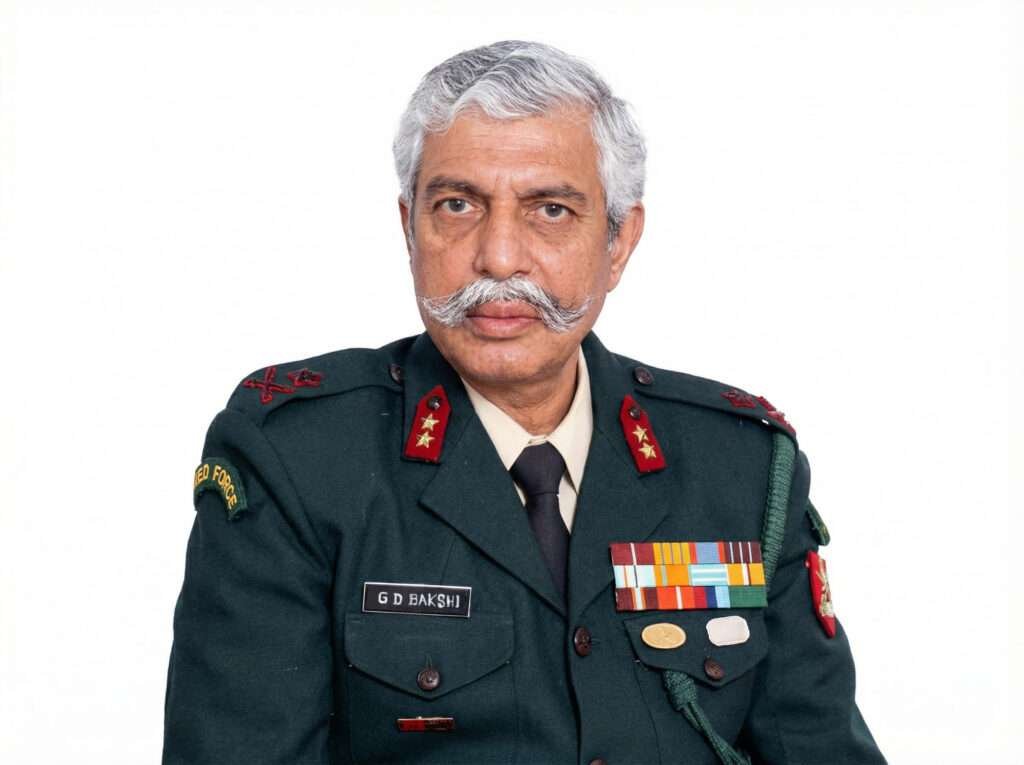
Sitting with him, you are aware of the years in uniform, the discipline, the honor—but there is also an ease in the way he speaks, a warmth that allows the conversation to unfold naturally.
What followed was less an interview and more a conversation—one that moved effortlessly between memory, purpose, and a life that continues to remain deeply engaged even beyond the uniform.
.
On Life After Uniform: Purpose Beyond Retirement
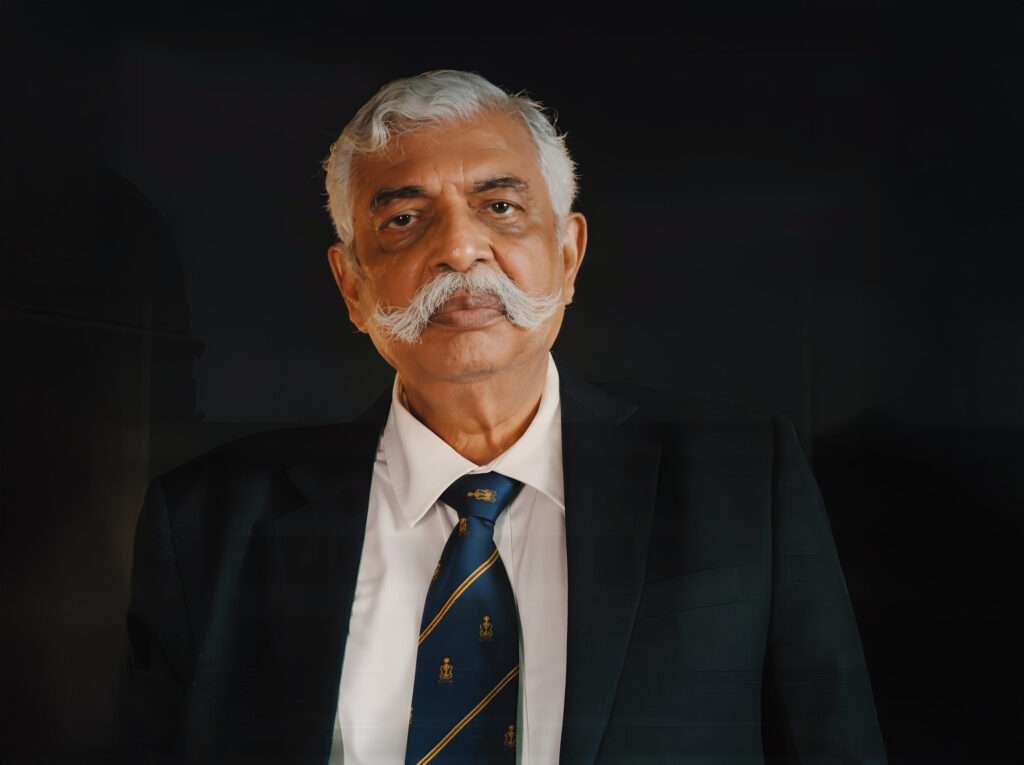
As we begin talking, I ask him how he keeps himself fit.
“I meditate,” he says simply. “I am retired now, and I do what I like—reading, writing, communicating.”
It’s hard not to remark on it.
“But retired—you are certainly not tired. You even completed your PhD after retirement?”
“Yes,” he nods. “I started my PhD one year before retirement and finished it two years after.”
He speaks about this phase of life with quiet clarity.
“There is no age at which one must stop learning,” he says. “People often dread retirement—what will I do with myself? But if you know what you want to do, it becomes one of the most productive phases of your life. There is no compulsion anymore. You choose what you love—and you do exactly that.”
For him, that sense of direction came early.
“Since childhood, I loved reading and writing. As a young officer—I was a captain then—I began writing for military journals. Writing has been the love of my life. After retirement, I finally had the time to fully dedicate myself to it.”
His work today extends well beyond the written word.
“I speak on television on military matters. I interact with young people—school and college students. They are the future. I speak to them about values—nationalism, patriotism, duty.”
He pauses, then adds,
“Keeping in touch with the young keeps you young. This is my payback time.”
The Day the Uniform Came Off
When I bring up his final day in uniform, his tone shifts.
“I was a very, very sad man,” he says.
What remains most vivid for him is not the ceremony, but a deeply personal moment.
“You have to take your military identity card… cut it up… destroy it.”
He pauses.
“That card—it wasn’t just an ID. It was my identity. My life. And suddenly, it was over. I would never wear the uniform again.”
Even now, the memory carries weight.
“I had tears in my eyes.”
The farewell that followed was steeped in tradition.
“My colleagues pulled my jeep to the gate. I broke down. Thirty-seven years as an officer… forty-one years since I first joined the NDA—it all came rushing back.”
At home, the moment took on a quieter form.
“My eyes were swollen. My wife asked, ‘What happened?’ I told her—I have fought my last battle.”
What she said next stayed with him.
“She said, ‘If I know you well, there are many more battles ahead.’ And she was absolutely right.”
“That identity card wasn’t just an ID. It was my life.”
A New Direction
In the years that followed, his sense of purpose did not fade—it evolved.
His work gradually found a new rhythm, combining research, writing, and public engagement.
A significant part of this phase has been shaped by his long-standing interest in Subhas Chandra Bose.
Through sustained research and writing, including his book Bose or Gandhi: Who Made India Free?, he has sought to revisit and re-examine the narratives around India’s independence.
Over time, that work moved beyond the page.
It developed into a public campaign that culminated in Netaji’s statue being installed at India Gate—a moment he reflects on with quiet satisfaction.
Looking back, he says,
“There are still things we must continue to understand and acknowledge.”
“History is not just about what happened—it is also about what we choose to remember.”
On Youth, Nationalism, and a Changing India
Speaking about the present, his focus turns to the younger generation.
“There is a sea change,” he says, drawing from years of travel across the country.
His time working with Ajit Doval at the Vivekananda International Foundation shaped much of this engagement.
“When I asked what work needed to be done—papers, research—he said all that can wait. We need to speak to the youth.”
What followed was extensive travel across India.
“For three years, we traveled—Arunachal, Gujarat, Rajasthan, Bihar. Small towns, remote schools.”
From those interactions, a clear impression emerged.
“The youth are more aware now. More assertive. More engaged with the idea of the nation.”

