

Conversations
Co ordination- Danny Singh
Photography-Jagjeet Singh
Three Voices on Love, Legacy and the Making of a Journey Across India
Dehradun recently played host to the motion poster launch of Jai Hind Jai Sindh: A Love Story, bringing together veteran actors Mahesh Manjrekar, Jaya Prada and Zarina Wahab on screen for a film that revisits love, memory, and identity against the historical backdrop of Partition. Produced by Sammy Nanwani under Sammy’s Entertainment and directed by Indrajit Lankesh, the film unfolds as a travel-love drama, tracing a journey across landscapes while exploring the lingering emotional ties to one’s roots. The motion poster offers a first glimpse into a story that connects past and present through themes of belonging, sacrifice, and healing.
In a candid conversation, director Indrajit Lankesh along with actors Amit Behl and Vikram Kochhar reflect on the emotional and creative journey behind Jai Hind Jai Sindh: A Love Story.
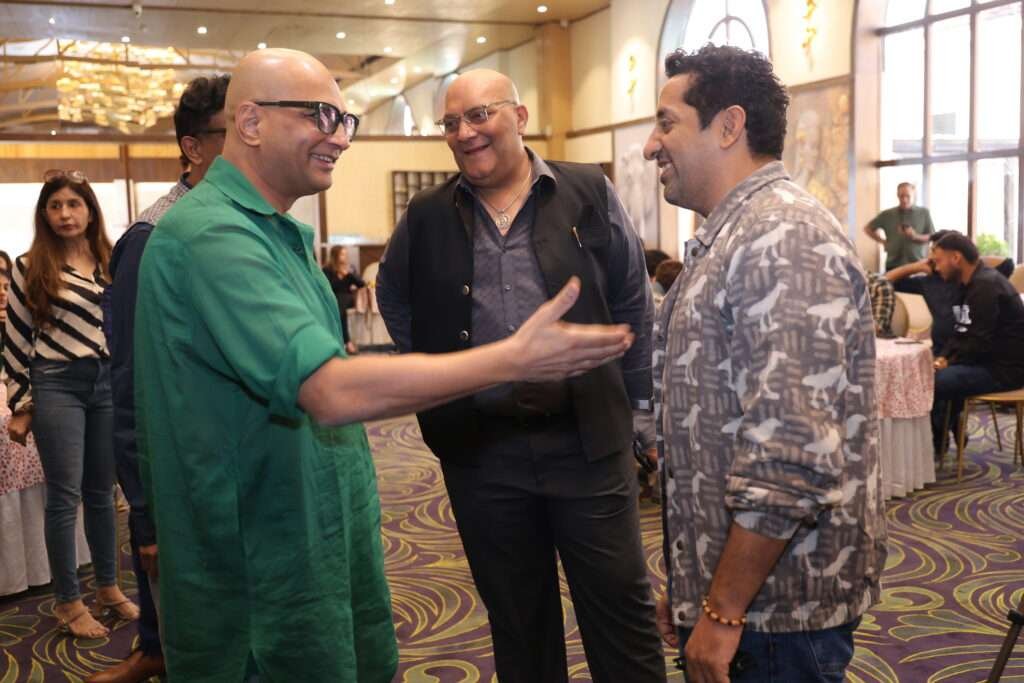
They speak about the film’s layered storytelling, the responsibility of portraying history through a human lens, and the personal experiences that quietly shaped their performances.
Excerpts
Amit Behl
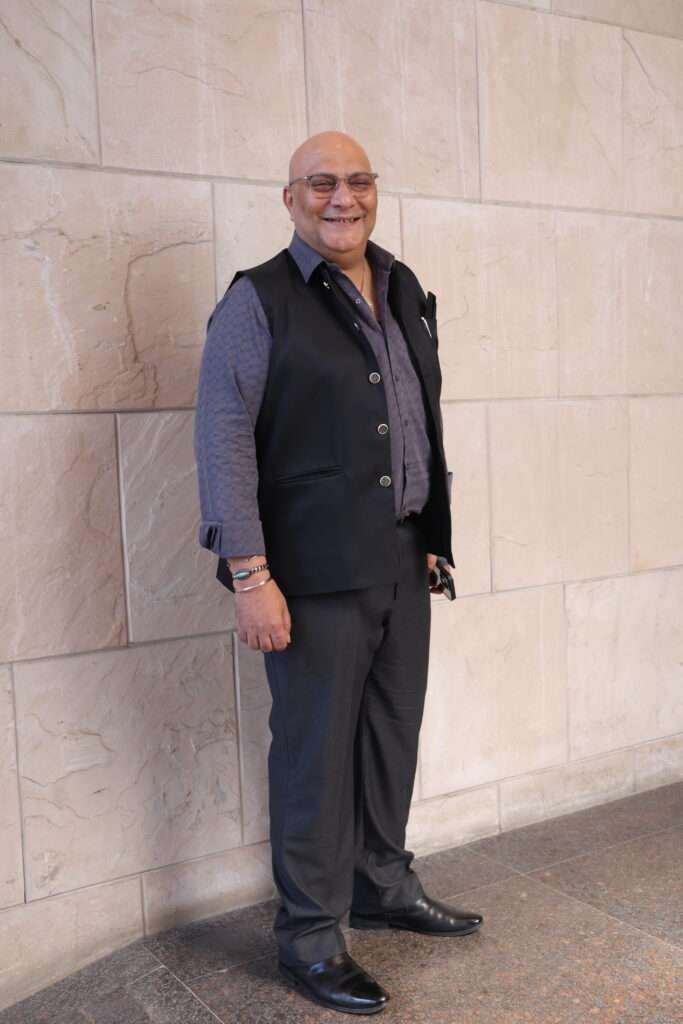
Actor Amit Behl brings with him the gravitas of three decades across theatre, television, film, and now digital platforms. In a deeply personal conversation, he spoke about his latest collaboration with director Indrajit Lankesh, his defining eight-minute monologue in Jai Hind Jai Sindh: A Love Story, and the restless pursuit that continues to drive him.
When this project came to you, what was your first reaction?
I had earlier worked with associate producer Charan Suvarna on his daughter Shirdi Suvarna’s film. Around that time, Indrajit Lankesh told him that he wanted to make a film with me. Producer Sami Nanwani narrated the story to me, and I instantly loved both the narrative and the role.
Interestingly, I first met Lankesh sir directly in Chikmagalur, amidst the coffee plantations. The very first scene he explained to me was intense — an eight-minute monologue. The moment he described it, my heart cracked open. I knew this was going to be special.
Before the shot, we even played table tennis for a couple of hours while waiting. By lunchtime, we had become friends. Then we performed the scene. When it ended, Lankesh sir said, “I never thought you would take this scene to such a dimension. You were completely immersed.”
That scene is the highlight of the film. If it had failed, the love story wouldn’t have worked. It features powerful actors like Mahesh Manjrekar and Chhaya Kadam, but for eight minutes, I am the one speaking — and everyone else is listening. It was exhausting and exhilarating at the same time.
Tell us about your role in the film.
The film revisits the era of Partition through flashbacks. Mahesh ji’s character has lived through that trauma. I play his son.
Because of his own struggles with poetry and art — and how he believes that ruined his life — he becomes a ruthless businessman with medical colleges and industries. He wants his son to become a doctor. But the son is an artist — a photographer and painter.
When the son refuses to follow his father’s path, he sets out on a journey from Kashmir to Kanyakumari. Ultimately, the father realizes an important truth: never put so much pressure on someone that they lose their identity.
You’ve spent 30 years in the industry — across theatre, television, and film. What has each medium meant to you?
Theatre is my first love. It doesn’t pay much, but nothing compares to performing in front of a live audience. The applause, the silence, even the tears — that connection is addictive.
Television gives you entry into people’s homes. You become part of their daily lives.
Film gives you longevity. Even today, people remember my scenes from The Kashmir Files, LOC Kargil, Bheja Fry, and 1920. That’s the power of cinema — it immortalizes you.
Web series have added another dimension. Look at how characters become cultural phenomena — like Kaleen Bhaiya in Mirzapur.
All mediums have their importance. But as an actor, performing live on stage — when the curtain rises — that is an incomparable high.
How did you cope with the lows in your career?
The early years were very tough. When you get used to success, you crave the same highs. But my upbringing grounded me. My mother was a Hindi professor; my wife comes from a middle-class Maharashtrian family. That grounding helped.
I won’t say I didn’t break. I did. But I also balanced myself. My friends and family stood by me. And every time I fell, I came back stronger.
You’re an electronics engineer and an MBA. How did acting happen?
(Laughs) I’m an engineer and MBA by default. I was unfortunately very good at studies. My mother, deeply rooted in Hindi literature, had writers like Harivansh Rai Bachchan and Vijay Tendulkar visiting our home. Somewhere, art was always around me.
My family initially objected to acting as a career. But eventually, they saw my success before they passed away — and that meant everything.
For the last 12–15 years, I’ve also been teaching media education, acting for camera, AI in content, and media management at top institutes. I was even conferred an honorary doctorate by Stanford University for my contribution to media education.
I’m a restless soul. I can’t sit idle. There’s only one life — so why not explore everything?
Is there still a dream left?
Yes. Many.
I want to win an Oscar. And I want to win a Filmfare before I go. If the Almighty believes in my efforts — and with everyone’s good wishes — I believe I will.
Indrajit Lankesh
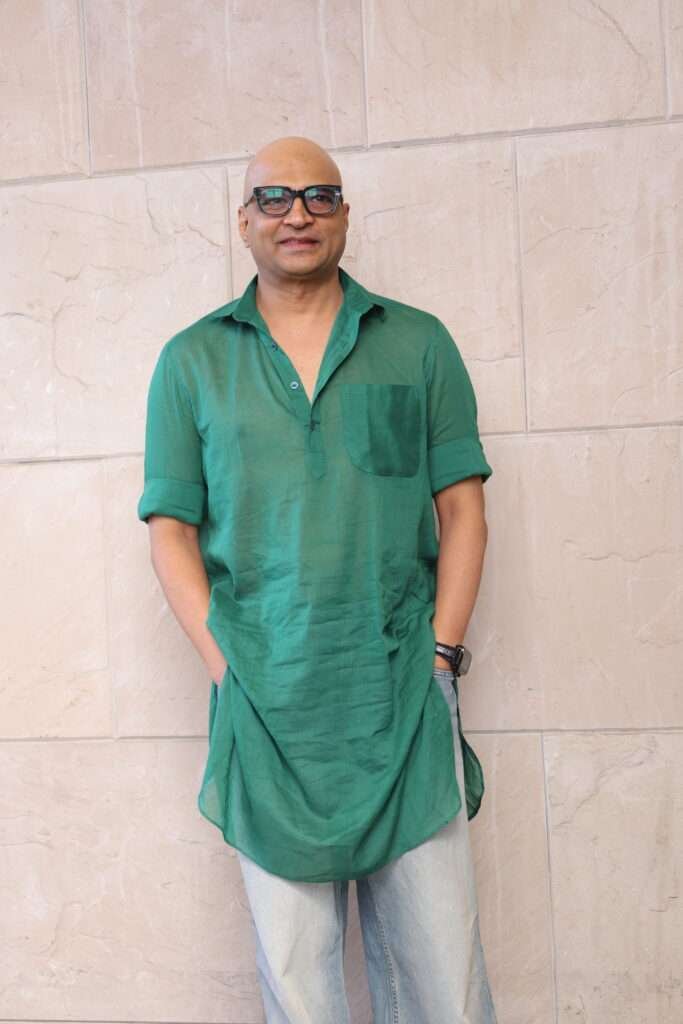
The motion poster brings India alive on screen. How was it working with newcomers on such a large canvas?
“If you feel like India has come alive in front of you — and this is just the motion poster — imagine the scale of the film.
Newcomers bring freshness. They come with hunger, with raw ideas. I understand their struggles because I was a newcomer once. There are challenges they face — confusion, pressure, uncertainty — and I relate to that.
But that’s also their strength. They are open. They are ready to learn. The hunger is visible.”
There are many love stories in cinema. What makes this one different?
“It’s not just another love story. It’s layered. There’s a larger backdrop. There is history. There is identity.
This film has heart. It’s emotional, layered, and relatable. While it has the visual canvas of a road film, at its core it is about relationships — about people searching for meaning, connection, and closure.
In this phase of my career, I love taking up challenges. This film is one such challenge.”
He adds:
“We’ve been shooting for the last six months across different locations. Coordinating such a large unit, travelling, capturing diverse terrains — it has been extremely challenging. And we are still wrapping things up.”
How is it working with veterans in the industry? Is it difficult?
“With newcomers, there is freshness. With veterans, there is depth.
With experienced actors like Mahesh Manjrekar, you learn so much. He is a fantastic creator — an actor and a director. I’ve made a friend for life.
When seniors support you in the storytelling process, it’s not about directing them. It’s about all of us coming together to make a film. That understanding is invaluable.”
He describes it as a blend of young energy and experienced wisdom coming together to create something meaningful.
Why should audiences watch this film?
“If you believe in love…
If you believe in unity in diversity…
And if you want two and a half hours of engaging entertainment — then you should watch this film.”
Vikram Kochhar
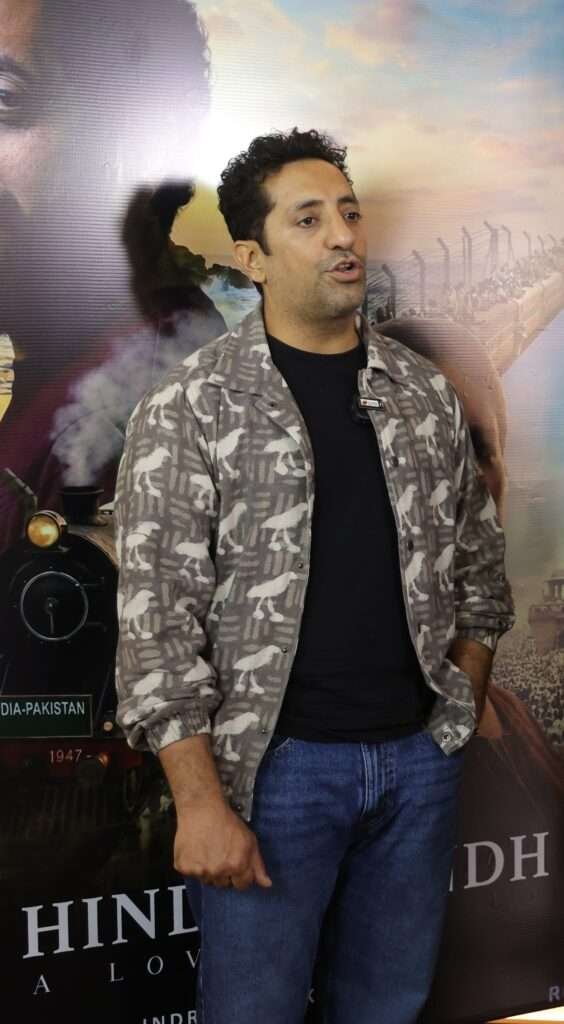
You have worked closely with director Indrajit Lankesh on this film. How was the experience?
I think Indrajit is a very emotional person. He receives from the heart rather than just the mind. Of course, he is extremely mindful and comes from a family known for its intellectual legacy, but what stands out is his sensitivity. He is knowledgeable, experienced, and very open as a director.
When we were experimenting with scenes or emotions, he was ready to receive. That openness makes a huge difference for an actor.
You were a core part of the film. Did you feel that responsibility?
Honestly, I think he treats every part of his film as core. There is nothing unnecessary in it. He hasn’t added anything “bhaaltoo,” as we say. Whatever is essential to the story is there — nothing more, nothing less.
From Matru Ki Bijlee Ka Mandola in 2013 to now, you’ve been part of many significant projects. How would you describe your journey and evolution?
It has been a roller coaster ride — with a lot of failures and a lot of successful moments. And I think that’s how it’s always going to be.
There have been very happy, elating phases, and there have been sad, even depressive moments. Falling and standing up again — like a phoenix rising from the ashes. I’ve experienced that.
At times, you even touch the limits of arrogance, and then life brings you back down. That, too, is a learning. I’ve seen all of it.
You once said there is no time to celebrate success in this industry. How do you cope with that phase of waiting?
Patience.
One thing I understood very early in my career is this: the number of rejections an actor faces in a month or a year is equal to what an average person might face in their entire life.
We audition for 100 things and maybe get selected for three or four. But those rejections polish you. They shape you. They make you stronger.
Why should audiences watch Jai Hind Jai Sindh: A Love Story? There have been many patriotic films revolving around love. What makes this different?
It’s not a patriotic film based on love. That’s where the difference lies.
It’s a journey film. It talks about real emotions. It questions you — but not in a confrontational way. It doesn’t demand answers. It simply takes you through a journey, showing you diversity, vibrance, and experiences.
If you’ve seen the motion poster, you’ll notice how vibrant it is. There’s so much diversity in it. As you travel through that world, you begin to imagine yourself in those places. You start thinking about things you’ve ignored in your own life — things you haven’t paid attention to.
And somewhere, quietly, you begin to question yourself. There may even be a sense of repentance.
The conversation with Vikram Kochhar revealed an actor shaped as much by rejection as by recognition — someone who views cinema not merely as performance, but as an emotional and introspective journey.

