

I AM BECAUSE I AM
Saloni Shukla
(Economist / Educator / Poet)
What happens when a woman who has spent her life achieving everything she was told would make her successful begins to question what success really means? Saloni Shukla’s journey—from an accomplished student at St. Stephen’s and a Citibank banker to a diplomatic spouse in China, an educator, a mother and, eventually, a woman who chose to look beyond the labels she had carried—is a deeply personal story of identity, motherhood, invisible work and finding a different way to measure a life.Saloni is currently working on her first collection of poetry and short stories with hope of publishing in the near future…
Seema Dhawan
THE WOMAN I HAPPENED TO MEET
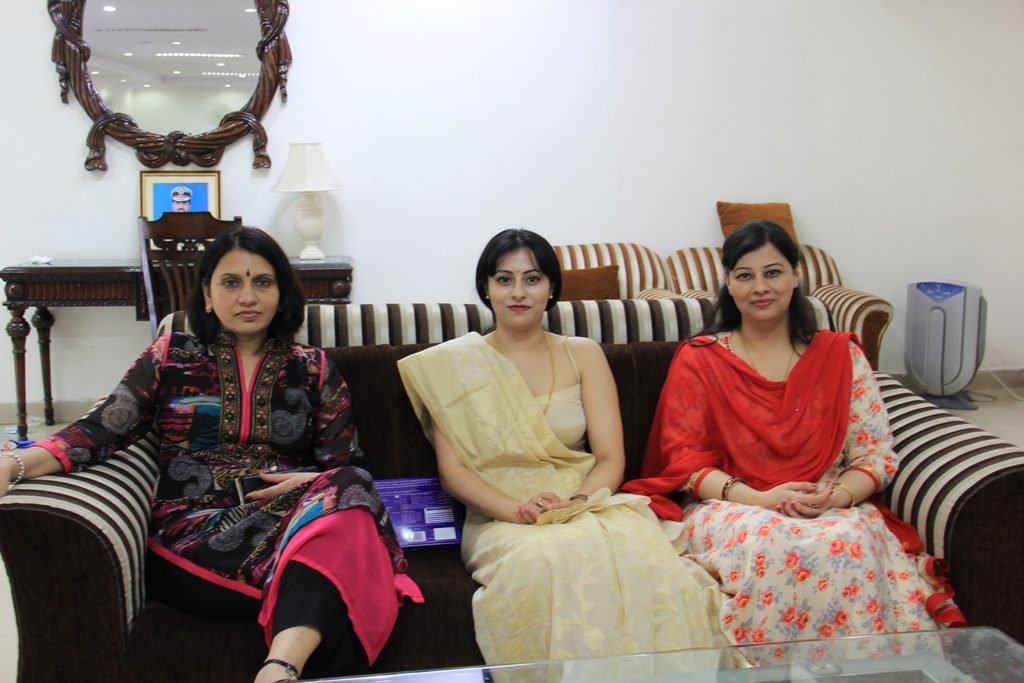
It was at a small Embassy gathering that I first met her. Someone introduced me to a young woman in a sari—suave, dignified and carrying an infectious smile. There was nothing unusual about the introduction itself. It was the conversation that followed that stayed with me.
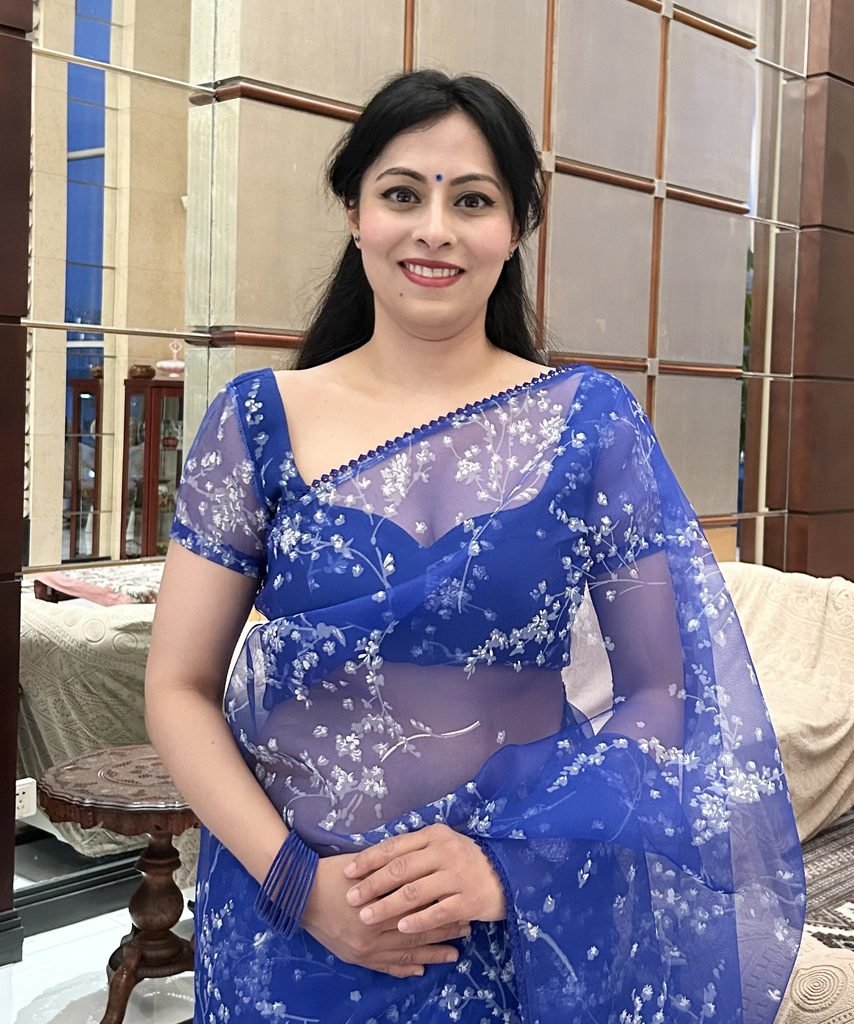
We began with the usual pleasantries and, quite naturally, found ourselves talking about literature. As a student of English Literature, I have always had a particular fondness for words, and when I was in school and college, I too wrote poetry. It was something I had left behind with time, but never stopped loving.When Saloni mentioned that she wrote poetry, my curiosity was immediate. She recited a few lines, and I listened.
“I know myself only
in relation to you and all there is…”
There was something in those words that made me want to know more about her. A conversation may tell you what someone has done; a poem can sometimes reveal what she has felt.What I discovered was a life that had moved through academic achievement, banking, marriage, diplomatic life, motherhood, education and several reinventions. Beneath all those chapters was a question that seemed to return again and again:
“Who am I when I am not being defined by a role?
WHEN LIFE SEEMED CERTAIN
At eighteen, Saloni believed she knew where she was going.An “ambitious, studious, conscientious 18-year-old,” she had applied to St. Stephen’s College for Physics, Mathematics and Economics, was shortlisted for all three, and eventually chose Economics Honours. Her twin sister was also in the course, and staying together felt natural.
At St. Stephen’s came the Sumitomo Scholarship, followed by the Faculty of Management Studies in Delhi and then Citibank, where a Day Zero placement seemed to confirm the path she had imagined for herself.Marriage appeared to be another milestone in that carefully constructed life. Before graduating from FMS, she was engaged to Abhishek, an IFS officer, in a match arranged by their families.
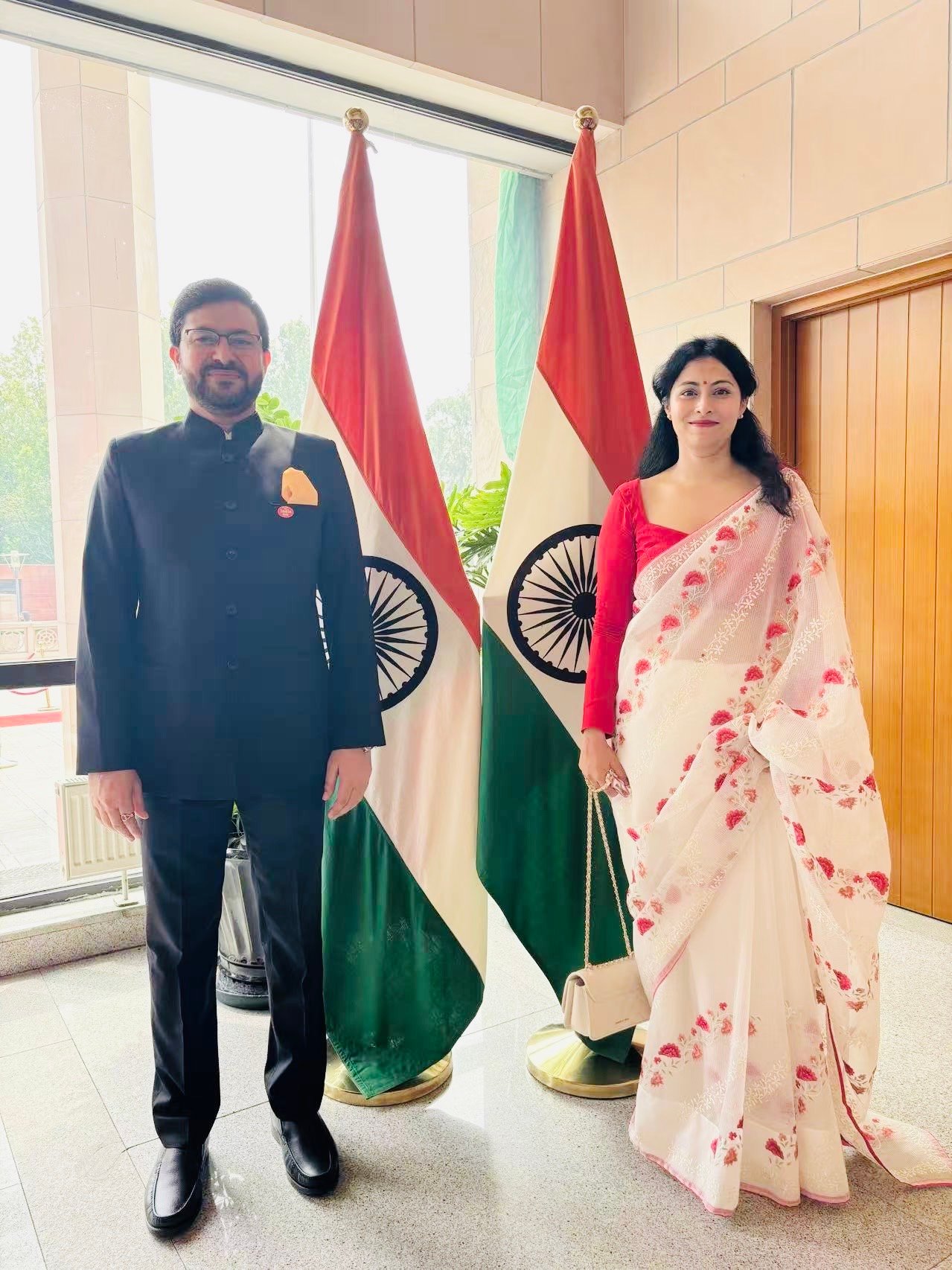
Looking back, she recalls, “I thought marriage was the final tick in the resume of my life—everything is perfect. “Seven days after the wedding, she joined Citibank headquarters in Chennai as a credit policy analyst. Abhishek left for Beijing for his language training, and for the next year they lived apart. This was 2009, before WhatsApp and the ease of constant communication. Skype on a laptop was the closest thing to everyday contact. Their schedules rarely matched, and the distance gradually made the differences between their lives more apparent.When Abhishek, her husband, decided to remain in China for several more years, Saloni left Citibank and joined him. It was a decision that changed far more than her address.“I never imagined that after all that I had done to achieve my dreams in life I would have to give them up for one oversight of marrying a stranger to whom I was not the top priority and whose world was complete with or without me—who then was I?” In China, she found herself without the language, professional identity or independence she had always known.
“The savvy banker is a complete bumpkin in China!”
Then came what she describes as the first real fracture in the identity she had built.
“The first crack in my identity appeared when I quit my job and reached a foreign country as a nameless spouse – Mrs. Shukla…”
A DIFFERENT KIND OF EDUCATION
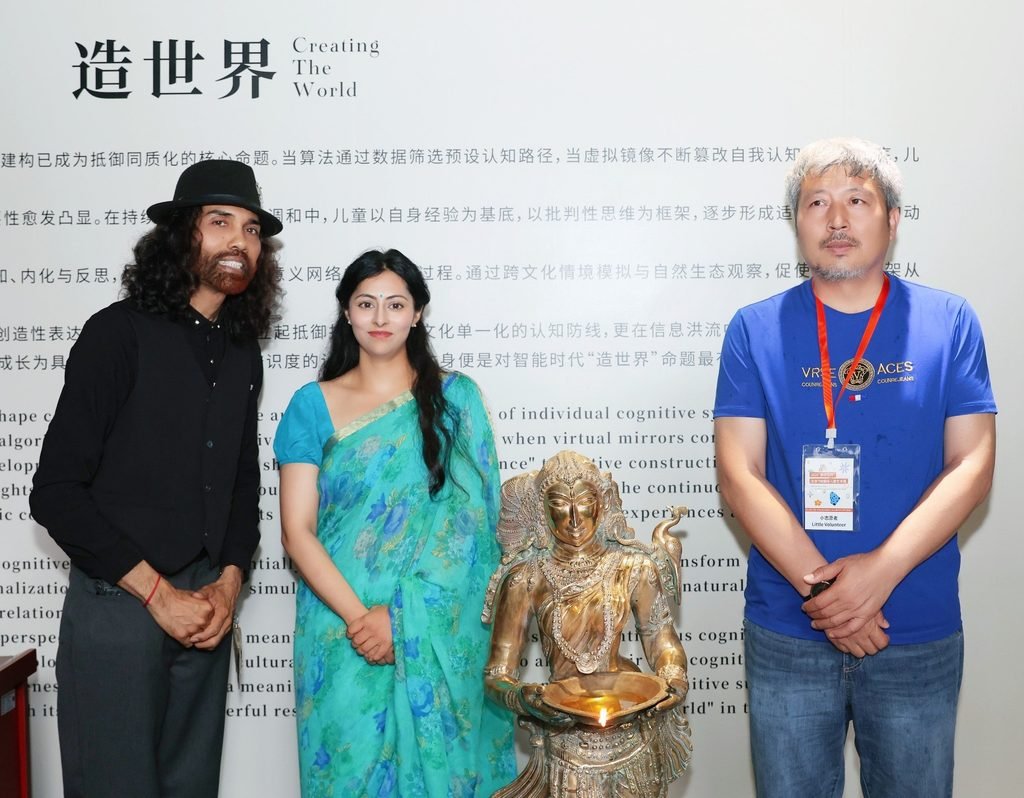
Rather than disappear into that new identity, she began learning Mandarin and got herself enrolled at China Foreign Affairs University, and made up the work she had missed, earned the scholarship for the best student in the foreign students’ class for all three semesters, scored 100 in reading and writing, and later cleared HSK Level 5 with distinction. She even secured a position with a leading consultancy.
But diplomatic-spouse regulations meant she could not take the job.Meanwhile, diplomatic life demanded another set of skills. A woman who had never cooked a meal before marriage, and had never even made tea, was suddenly preparing meals and hosting dinners for eight or ten guests, many of them foreigners.She began to notice how much work women in the diplomatic community carried without recognition.
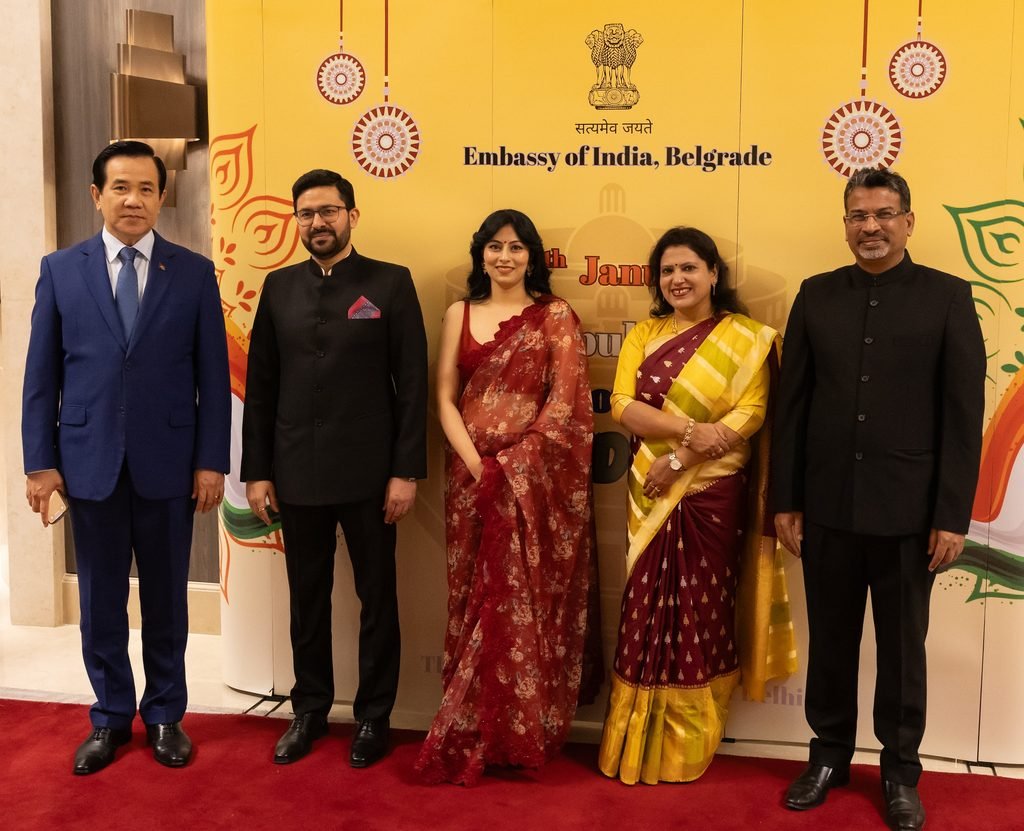
Careers, children, homes, dinners, social obligations and the emotional work of holding families together rarely appeared in the same language as professional achievement. One Italian friend described it memorably: spouses could sometimes be “treated like the flowers on the wall. For Saloni, the contradiction was difficult to ignore. “I have since this realization constantly endeavored to never let education, employment, career define me as a person.” She explains why: “I believe that each person has something unique to offer to this world and their worth is in their existence and not in their achievements.” That understanding would be tested again when motherhood entered her life.
WHEN EVERYTHING ELSE STOPPED
After four years of marriage, Saloni became a mother. Her son was born underweight, with underdeveloped lungs, and was placed on a ventilator. He spent fifteen days in the NICU.
“I didn’t want any identity, I didn’t want to exist without that little bundle who was battling life in NICU.”He survived, but the fear did not end when he came home. An infection developed into septic arthritis in his knee, and he had to be taken from Lucknow to Mumbai. There were procedures, surgery and another prolonged period of intensive care.“For once you have looked death in the eye it takes a whole personal journey of acceptance and divine grace to come out of it.”She became what others called a “helicopter mother.” Her son’s development was watched closely. Her parenting was questioned. And in trying to protect him, she eventually recognized that fear had begun to shape the way she disciplined him.“In my rage to discipline my son I became a such a strict disciplinarian that I ruined his sense of self-esteem…” Then comes perhaps the most difficult admission in her story:“I had pushed my little, precious son to the verge of despondency and myself to the verge of depression.”There was love, but there was also fear…
“The cycle of unhealed pain creating more pain,
For you my angel have the strength to rise above this,
To break the cycle with love and kindness,
So that the unhealed is healed…”
WHEN EDUCATION FOUND ITS WAY HOME
Education returned to her life for practical reasons. As a diplomatic spouse, she needed a career that could move with her.She enrolled at George Mason University for a Master’s in Education, specializing in culturally and linguistically diverse and exceptional learners, earned her International Baccalaureate Primary Years certification, and graduated among the top academic performers in her class.When her son struggled with reading at school in Cape Town, she drew on her research into phonics and her classroom experience. She began paying attention not simply to what he was failing to do, but to how he learned.Within three months, his reading had moved well beyond grade level, and he received a certificate for extraordinary improvement.More important was what changed between them.“I was no longer the authority, I was not even trying to achieve any outcome, I loved academics and I used it as a bridge to kindle the same love in him.”
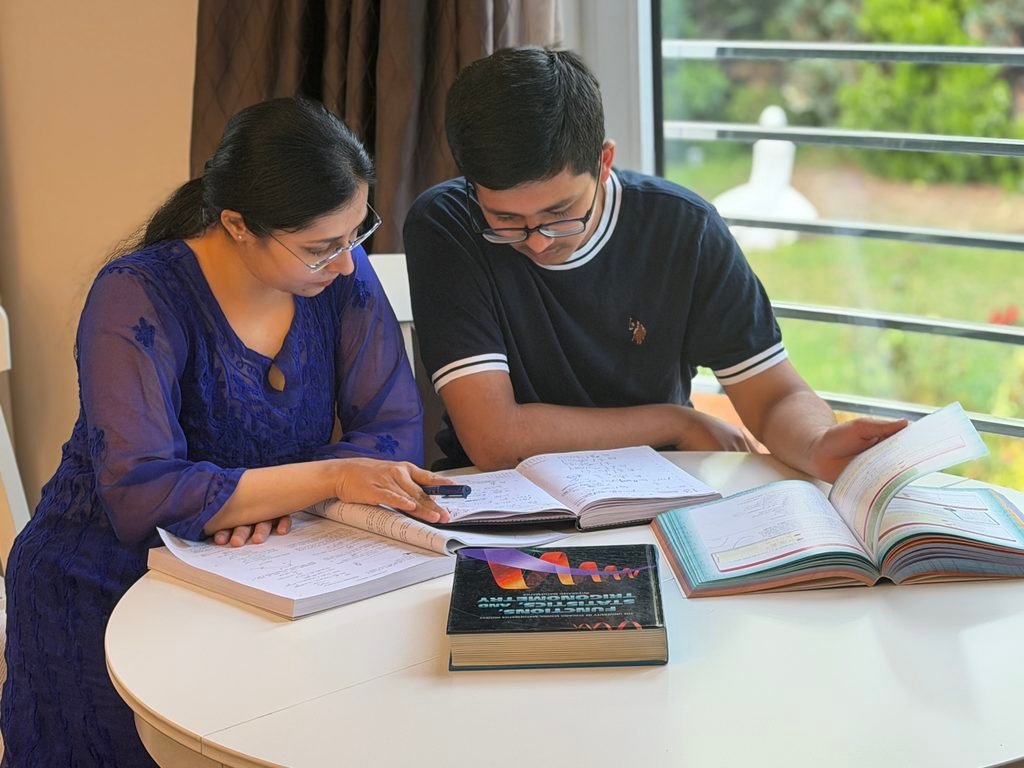
During COVID, with formal schooling disrupted, they spent long periods reading together. They explored The Secret Garden, The Time Machine, The War of the Worlds, A Wrinkle in Time and other books well beyond his expected reading level. They worked on mathematics, science and English Olympiads; he won a gold medal in Science and a bronze in Mathematics.His confidence returned. So did their relationship.For Saloni, education had taken on a different meaning.
“We often think and believe that empowerment comes from being financially independent or being highly educated but I learnt that true empowerment comes when we use our skills and experience to make a difference in the life of just one person be it our own life or that of family or even strangers.”
BEYOND THE LABELS
Looking back, Saloni no longer sees her life as a neat progression of successes and failures.
“I had struggled and tried relentlessly to fit into the society’s idea of a successful woman but my failure at each step brought me closer to discovering my true self – the freedom to value myself without evaluating myself against the set paradigms of worldly success.”
Her poetry puts it more simply:
“I am because I am.
I am a traveller.
Sometimes a sister.
Sometimes a mother.
Sometimes a daughter…”
And then:
“Sometimes a spouse,
Sometimes a worker,
Sometimes a stranger,
But always a human.”
The scholar is there. The banker is there. The diplomatic spouse, homemaker, mother, educator and poet are all there. But none of them is the whole of her.
“Cognizant of my true nature, aware of my final destination, to reach is not the question, how you reach is more important.”
WHAT REMAINS
By the time our conversation came to an end, I was thinking less about the impressive list of things Saloni had done and more about the question with which her poetry had begun.
Who are we when the labels fall away?
Her answer is not to reject education, careers, ambition or achievement. It is to stop allowing them to determine our worth “Healing is not about apologies or remorse. It’s about love when life teaches us to love ourselves truly no matter how many mistakes we make or no matter what trauma we face, we can let go of the pain and allow our self-love to reinforce our faith in the worth of our existence. “And then: “Humans are bound to err, bound to fail, bound to suffer, but they are not bound to let any such situation decide who they are.”
“I still make an effort each day to tell myself I’m alive because I’m valued and I have a purpose—all I need to do today is to live in the present, giving myself to each moment without carrying the burden of past or living in fear of the future.”
When I think back to that small Embassy gathering, I remember the sari, the smile and the unexpected turn our conversation took. Two women talking about poetry.One wrote poetry in school and college. The other was still writing.Somewhere between her poems and the story of her life, I began thinking about the many women who have spent years believing that if something cannot be put on a résumé, it somehow does not count.
IT COUNTS…
The years spent raising a child count. The home you built counts. The people you supported count. The things you learned along the way count. The courage to begin again counts.
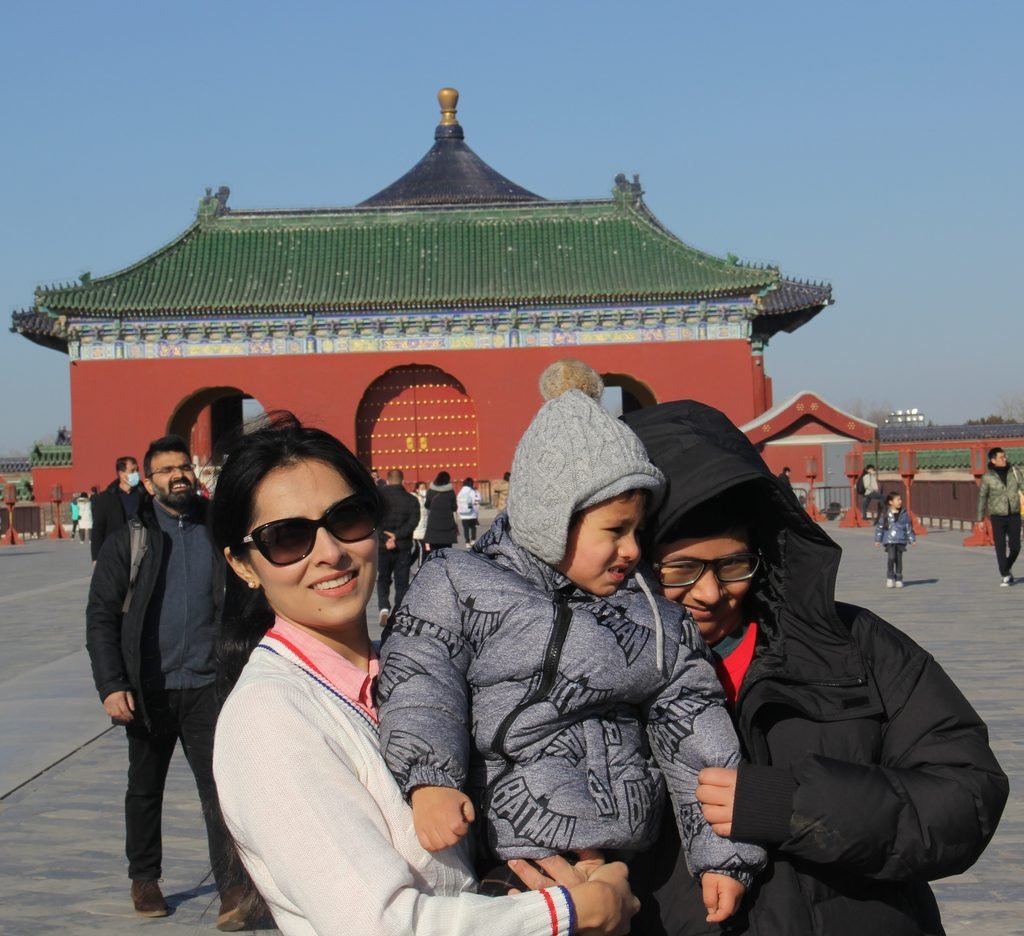
A career may change. A designation may disappear. A dream may be postponed. A woman may become a mother, a caregiver, a partner, an educator, a traveller—or something entirely different. She is still herself.Perhaps that is where Saloni has arrived: not free from roles, but free from believing that any one role must define her.And after everything, perhaps the simplest words are enough:
“I am because I am.”

