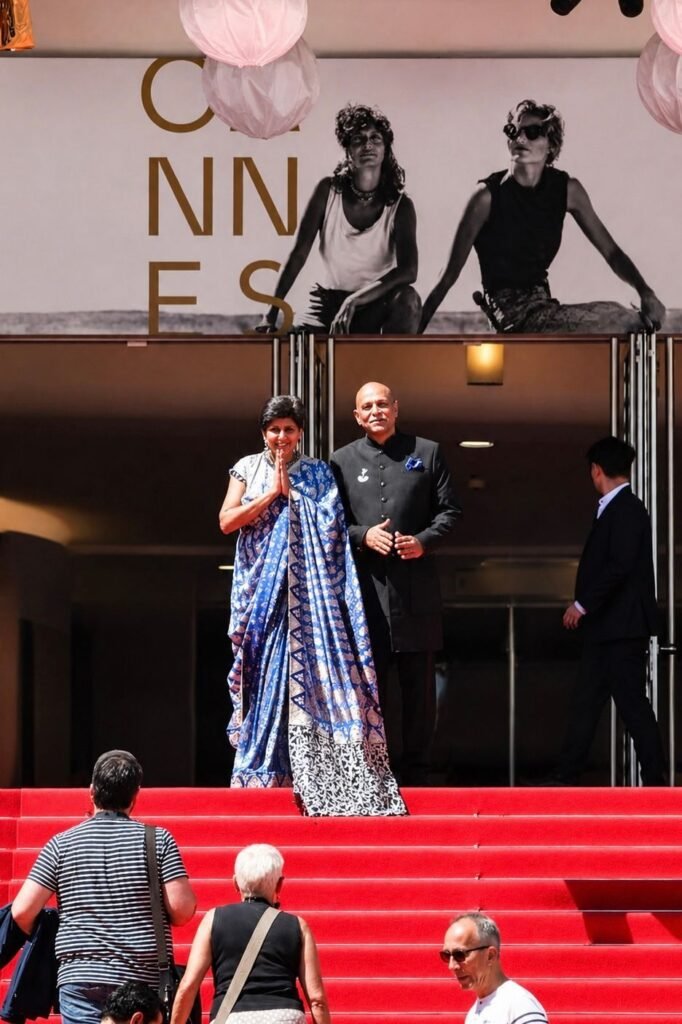

Nitika Gujral on Heritage, Craftsmanship and Her Cannes Debut
After making her Cannes debut with Noor d’Or and a restored heirloom saree that celebrated Indian craftsmanship, Nitika Gujral reflects on the experience of presenting her work on a global stage. In this conversation, she discusses the evolving aspirations of modern brides, the importance of preserving artisanal traditions, the creative vision behind her collection, and the lessons learned from building an independent couture label over three decades.
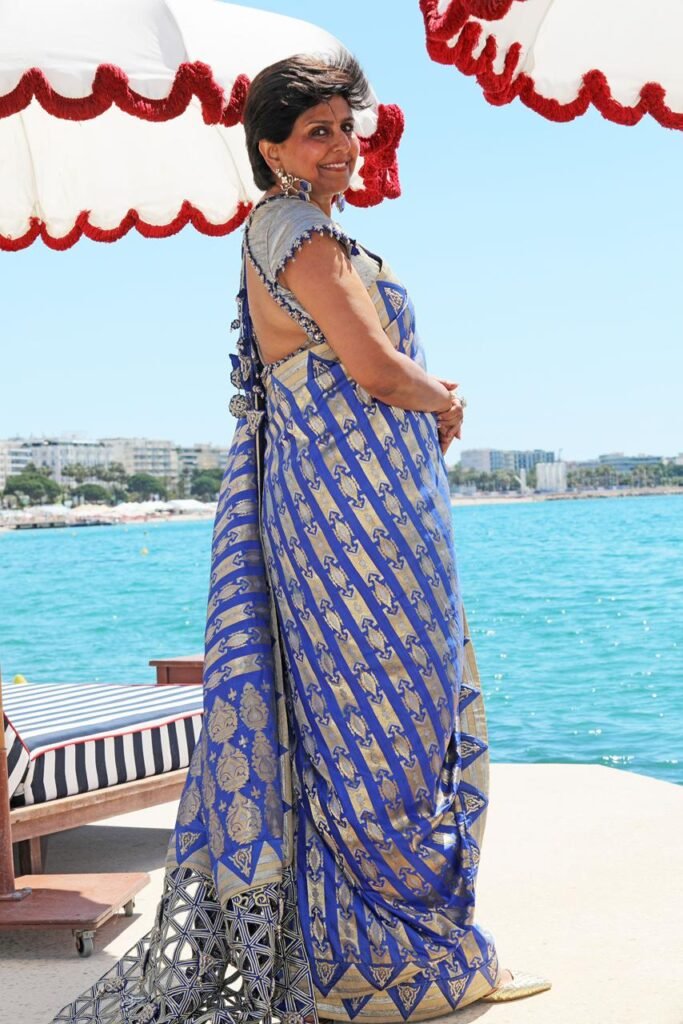
Cannes often becomes a meeting point of cinema, fashion, and culture. What was it like to experience Cannes through the lens of a designer?
Cannes provided a unique platform to network not just with the fashion and film fraternity but with professionals from different nationalities and diverse industries associated with both mediums—from film producers, movie stars, and cinematographers to musicians, event organisers, show directors, models, stylists, and backstage crews. It was a cross-cultural, multi-ethnic exposure on a scale one has never experienced before.
Your couture aesthetic has always leaned towards refined elegance rather than excessive volume. Do you feel today’s brides are looking for a different kind of luxury than they were a few years ago?
The modern bride knows what she wants to wear for her big day, unlike earlier generations where entire families had a say in trousseau and bridal shopping. She also wants to actively participate in the celebrations. At Nitika Gujral, it has always been our endeavour to blend traditional techniques with modern aesthetics. We ensure that our bridal outfits remain surprisingly lightweight despite their ornate appearance. There is nothing more satisfying than seeing a young bride twirl with joy during her fitting.
Noor d’Or carries a strong sense of light, texture, and movement. Were there specific emotions, places, or visual references that shaped the collection while designing it for Cannes?
The show at Cannes provided us with a unique platform to showcase India’s rich artisanal heritage. As a label, we see the constant struggle for preservation of artisanship in a world guided by fast fashion. The collection Noor d’Or needed to present this artisanship not just on Indian garments but also on silhouettes that would find a wider international appeal. This element of light and movement provided us the needed bridge to link diverse cultures and aesthetic sensibilities with Indian craftsmanship.
Indian craftsmanship is receiving increasing international attention, yet artisans often remain behind the scenes. How important is it for you to spotlight the craft communities that contribute to your creations?
As a fashion label, we have always believed that every garment comes together through not just the labour but also the collaboration of so many different individuals. In our three-decade-plus journey with Indian artisans and craftsmen, we have witnessed the loss of many techniques due to a lack of patronage in an era of fast fashion. For this heritage to survive, we need to showcase it globally. Noor d’Or is not just a testament to our artistic ability but an expression of gratitude to every individual who poured their heart and soul into these creations.
Building an independent couture label comes with both creative freedom and pressure. Looking back, what has been the most defining lesson in your entrepreneurial journey so far?
The most significant lesson as an independent label has been to be true to one’s own inner sensibilities. There is always the pressure to conform to transient trends and yet, one develops one’s own language, and that is what needs to be articulated through each of our creations.
After experiencing Cannes firsthand, do you see global fashion platforms changing the way Indian bridal couture is perceived internationally?
Absolutely. While the traditional bridal and groom ensembles that we showcased at the event had everyone enthralled, the draped sarees and gowns embellished with intricate hand embroideries were hugely appreciated across nationalities and cultures. It was both humbling and satisfying to be approached by complete strangers after the show and hear how mesmerised they were by the outfits.