

The Emerging Indian Designers to Know
A Kolkata flower market, the alchemy of metal, and vintage Kantha quilts: Subbah Studio, Abhishek Chauhan Studio, and Day & Age each made a distinct case for where Indian fashion is headed.
Photo : FS Media Pro / FDCI x Lakme Fashion Week / RISE Worldwide
Emerging talent took center stage at Lakmé Fashion Week in partnership with the Fashion Design Council of India (FDCI), where NIF Global Presents GenNext introduced three labels with distinctly different ideas about what fashion can be. Subbah Studio by Nimisha Diwakar, Abhishek Chauhan Studio by Abhishek Chauhan, and Day & Age by Shreya Parasrampuria and Sharan Adka approached the runway from different directions, and that contrast made the showcase particularly compelling.
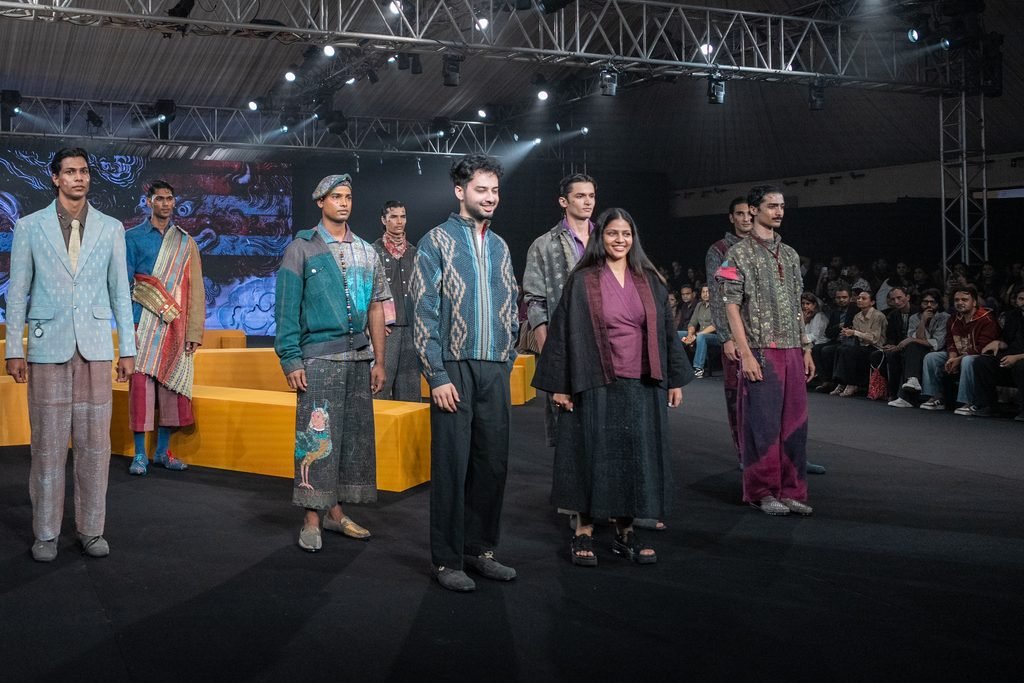
One collection drew on the color and movement of a Kolkata flower market, another explored transformation through sculptural forms, and the third reimagined vintage quilts through the lens of mythology and identity. What connected them was an attention to detail: handworked textiles, unconventional silhouettes, and materials carrying stories of their own.
Subbah Studio, Hustle & the Hue: Kolkata’s Flower Market, Reimagined in Batik and Silk
Nimisha Diwakar looked to Mullick Ghat, Kolkata’s historic flower market, where color is piled high and movement never seems to stop. Hustle & the Hue explores the tension between chaos and calm, translating the market’s atmosphere into a collection shaped by textiles and intricate handwork.
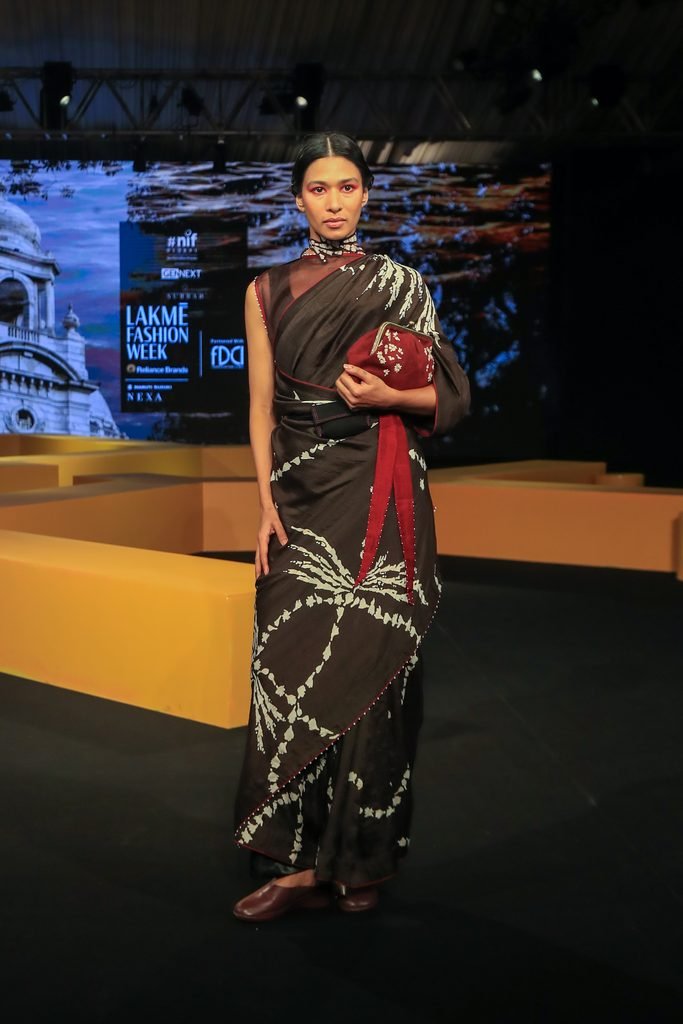
Hand-painted Batik takes the lead, complemented by handwoven Noil, Hand Matka Silk, Murshidabad silk, and Khadi. French knots, wave tucks, Kantha embroidery, beading, and Aari work add layers of texture, giving the garments a richness that reveals itself in the details.
The collection’s appeal lies in its contemporary treatment of traditional craftsmanship. Bengal’s textile heritage remains central, but Diwakar approaches these techniques as a living design language rather than a reference to the past. The handwork connects each garment to the artisans, places, and processes behind its creation, while the overall approach feels firmly rooted in the present.
The trend to watch: Craft-led luxury. Regional weaves and hand embroidery are finding new expression in contemporary collections, bringing texture, individuality, and a sense of provenance to modern dressing.
Abhishek Chauhan Studio, Alchemy: Sculptural Silhouettes and the Beauty of Imperfection
Where Diwakar builds her collection through textiles and surface detail, Abhishek Chauhan begins with form. Alchemy takes inspiration from the transformation of metals, drawing a parallel with the ways experience changes people and shapes their identities.
The concept comes through in the construction. Sculptural volumes, considered proportions, and unconventional material choices put the focus on the relationship between the body and the garment. Rather than relying on embellishment, the collection allows shape and structure to establish its visual identity.
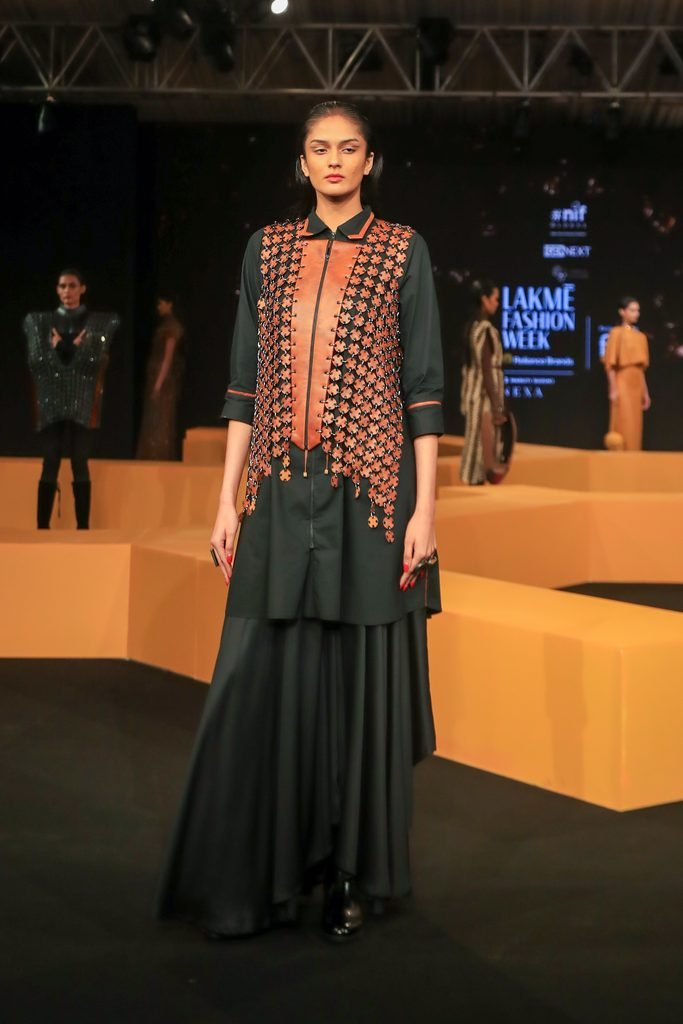
Imperfection is central to Chauhan’s approach. Instead of smoothing away irregularities in pursuit of a flawless finish, he treats them as part of the design. The result is a collection that considers clothing a form of personal expression, one in which confidence comes from embracing individuality rather than conforming to a prescribed ideal.
The trend to watch: Architectural dressing. Sculptural shapes and unexpected proportions offer a fresh alternative to familiar tailoring. Here, construction does the expressive work, making silhouette as important as color, print, or embellishment.
Day & Age, Neither This Nor That: Vintage Kantha Quilts and Mythical Hybrids
For Shreya Parasrampuria and Sharan Adka, identity is rarely straightforward. Their collection, Neither This Nor That, explores the complexity of belonging through Indian and Iranian cultural references, including the yali and the makara. These mythical hybrid creatures, composed of different animal forms, challenge simple definitions of what something can be. The designers use them to explore identities that exist between categories rather than within fixed boundaries.
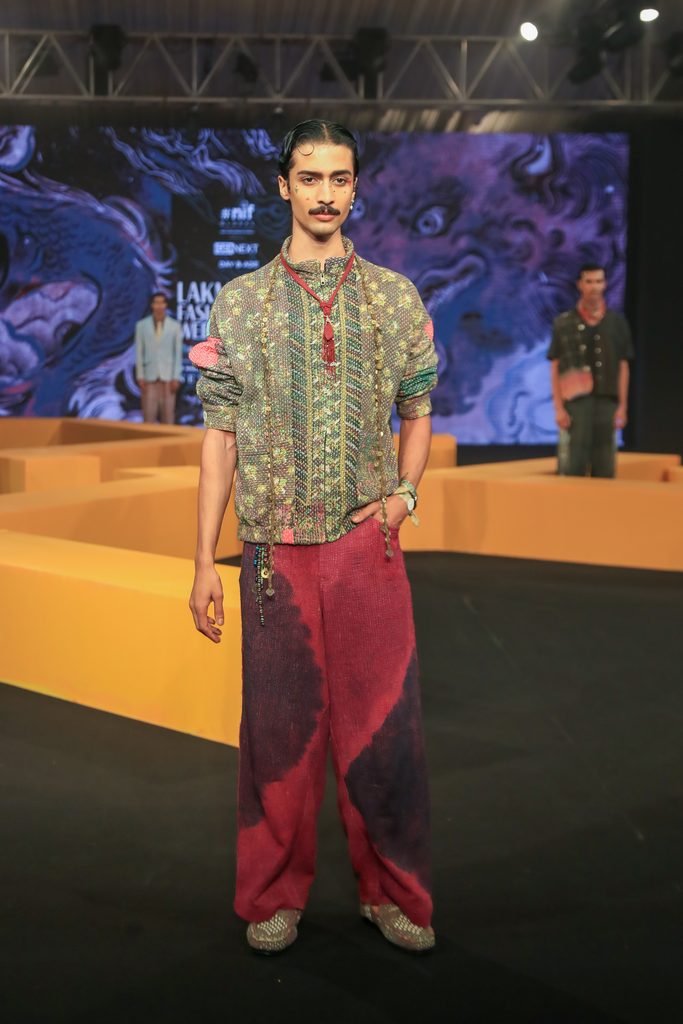
The textiles reinforce that idea. Vintage Kantha quilts are reworked into one-of-a-kind garments, retaining the character and history of the original fabrics. Appliqué, beadwork, and embroidery introduce additional layers of detail without erasing the textiles’ earlier lives.
There is something compelling about this approach to material. Each quilt carries its own marks, textures, and history, making the resulting garment distinct. Instead of starting from scratch, Day & Age builds on what already exists, bringing inherited textiles into a contemporary fashion context.
The trend to watch: Textile reclamation. Vintage fabrics and repurposed textiles offer designers an opportunity to create pieces with individual character and a tangible connection to the past. Their environmental benefits, however, depend on sourcing, production methods, and the full life cycle of each garment.
Why GenNext Matters
For an emerging label, a runway presentation offers more than a moment in the spotlight. It creates an opportunity to introduce a design philosophy, build industry relationships, and establish a recognizable identity in a competitive fashion landscape.
Jaspreet Chandok, Group Vice President at Reliance Brands Limited, highlighted the individuality of the three designers, from their reinterpretation of traditional crafts to their experimental silhouettes and personal narratives. He also emphasized the importance of industry exposure in helping emerging labels find their footing.
Sunil Sethi, Chairman of the Fashion Design Council of India, underscored the value of introducing designers whose perspectives reflect the breadth of Indian design. Shaunik Khosla, Business Head at NIF Global, similarly emphasized the platform’s commitment to giving emerging talent greater visibility and opportunities to develop their creative careers.
The collections made that diversity tangible. Subbah Studio drew from regional craftsmanship, Abhishek Chauhan Studio explored transformation through form, and Day & Age used mythology and vintage textiles to question conventional ideas of identity. Each presented a distinct creative perspective, giving the showcase its range.
The Future of Indian Fashion Isn’t One Look
Set side by side, these collections tell a story of contrasts. Diwakar found inspiration in the everyday spectacle of a Kolkata flower market, Chauhan explored the possibilities of transformation, and Parasrampuria and Adka looked to hybrid mythology and vintage quilts to examine identity.
Their approaches also point to ideas worth following in contemporary Indian fashion: traditional craft finding new expression, sculptural silhouettes challenging familiar proportions, and vintage textiles taking on a second life. These are not entirely new concepts, but each designer brings a personal perspective to the conversation.
That individuality is what makes GenNext worth watching. Rather than presenting a single vision of Indian fashion’s future, the showcase made room for three different interpretations, each shaped by its own references, materials, and design philosophy. The next chapter may not have one defining look, and that is precisely what makes it interesting.

