

Actors Tarsem Jassar and Geet Goraya on the Heart, Heritage and Humanity of the film
Coordination -Danny Singh: Photography-Jagjeet Singh & Anil
Sitting down with Tarsem Jassar and Geet Goraya in New Delhi ahead of Dastaar‘s release, I expected our conversation to revolve around the film’s making, memorable moments on set and what audiences could look forward to. Instead, we found ourselves talking about history, identity and the responsibility of bringing a culturally significant story to the big screen.
It quickly became clear that, for both actors, Dastaar is far more than another release. Rooted in courage, sacrifice, service and heritage, it is a story they believe deserves to be told with honesty and respect.
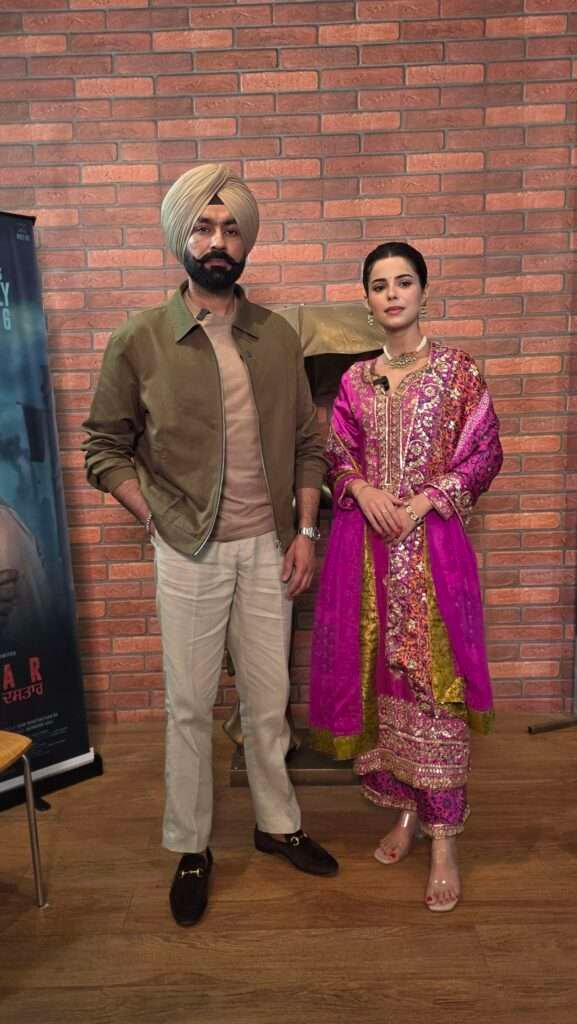
For Tarsem Jassar, who has built an impressive career as an actor, singer, lyricist, writer and storyteller, the film is deeply personal—not because it mirrors his own life, but because it reflects values that have shaped his creative journey.
The Weight of a Title
When I asked Tarsem whether there was one scene where he felt the greatest sense of responsibility while portraying his character, his answer came without hesitation.
“Every single scene.”
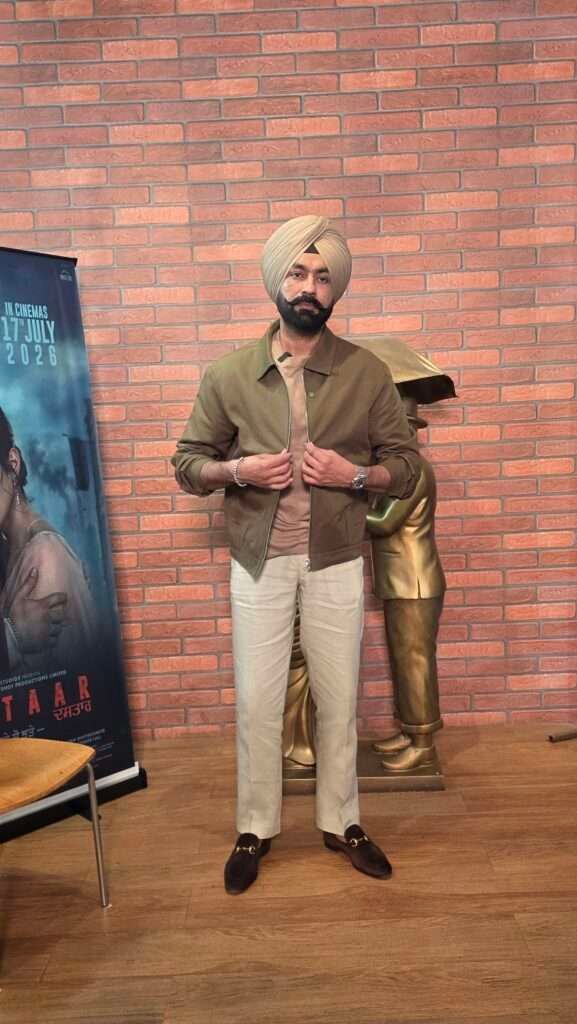
He explained that the responsibility wasn’t confined to one emotional sequence. It remained constant throughout the film because of what the title itself represents.
“The whole film is a responsibility because of the title itself,” he said. “Dastaar carries responsibility. It carries courage. It carries everything that society needs.”
For Tarsem, the dastaar is far more than a symbol of identity. It represents courage, sacrifice, service and standing beside one’s community. Those ideals, he believes, define the spirit of the film.
“This is a story of struggle and fighting for what’s right,” he said. “Just as the dastaar has always stood for its community, made sacrifices and served others, this film reflects those very ideals.”
One of the most memorable moments of our conversation came when he spoke about the dastaar beyond the film itself. He described it as an identity that makes Sikhs instantly recognisable across the world—but one that also carries accountability. Every action, he said, shapes how the community is perceived, making dignity, humility and integrity values that extend far beyond personal conduct.
For Tarsem, the role goes beyond performance. It is about honouring a legacy with sincerity.
History as a Personal Journey
The conversation naturally shifted to Tarsem’s creative process. Having written many of his own songs and stories, I was curious to know how much of himself audiences would discover in Dastaar.
Rather than drawing parallels with his personal life, he pointed to something that has quietly shaped his work for years—his fascination with history.
“This character comes from true historical events,” he shared. “I’ve always enjoyed reading history, and I continue to do so.”
That curiosity, he explained, influences both the songs he writes and the films he chooses.
“That’s why even my songs and my film selections often reflect those influences.”
When I asked whether audiences would recognise traces of him in the film, he smiled.
“You’ll definitely find my nuances somewhere in the film.”
His answer was a reminder that every storyteller leaves something of themselves in their work. The books they read, the experiences they carry and the values they hold quietly shape the stories they choose to tell.
A New Chapter for Punjabi Cinema
As our conversation turned towards Punjabi cinema, I asked both actors what audiences would discover in Dastaar that they hadn’t seen before.

Geet smiled before looking towards Tarsem.
“I think sir should answer this first,” she said with a laugh.
Tarsem didn’t take long to respond.
“The title itself.”
He explained that while the dastaar has always held immense historical, cultural and spiritual significance, it has rarely taken centre stage in Punjabi cinema.
“We’ve never really seen the story of the Dastaar come to the big screen before.”
For him, that alone gives the film a distinct identity. Beyond its subject, he believes Dastaar stands apart because of its scale, historical backdrop and cinematic treatment.
“It’s a special project because of its making,” he said. “It’s based on true events, and audiences will experience something they haven’t really seen before in Punjabi cinema.”
Geet Goraya echoed that optimism.
For her, Dastaar is as much about reconnecting audiences with their roots as it is about telling a compelling story.
“The title itself carries so much meaning,” she said. “I think we should stay connected with our history.”
She believes cinema has the ability to make history feel immediate rather than distant and hopes audiences leave the theatre not only impressed by the film’s visual scale but also with a deeper appreciation for the heritage that inspired it.
“People should definitely come and watch this film,” she added. “It’s beautifully made.”
What struck me most was how naturally the two actors complemented each other. Tarsem spoke with the conviction of a storyteller committed to preserving history through cinema, while Geet brought warmth to the conversation, reminding us that stories rooted in history are meaningful only when they continue to resonate with new generations.
Together, they reflected the direction Punjabi cinema seems to be taking—stories that are ambitious in scale while remaining firmly rooted in culture, identity and lived experiences.
Editor’s Note
As I walked away from my interaction with Tarsem Jassar and Geet Goraya, I realised, I kept coming back to one word that had quietly shaped our conversation: responsibility.
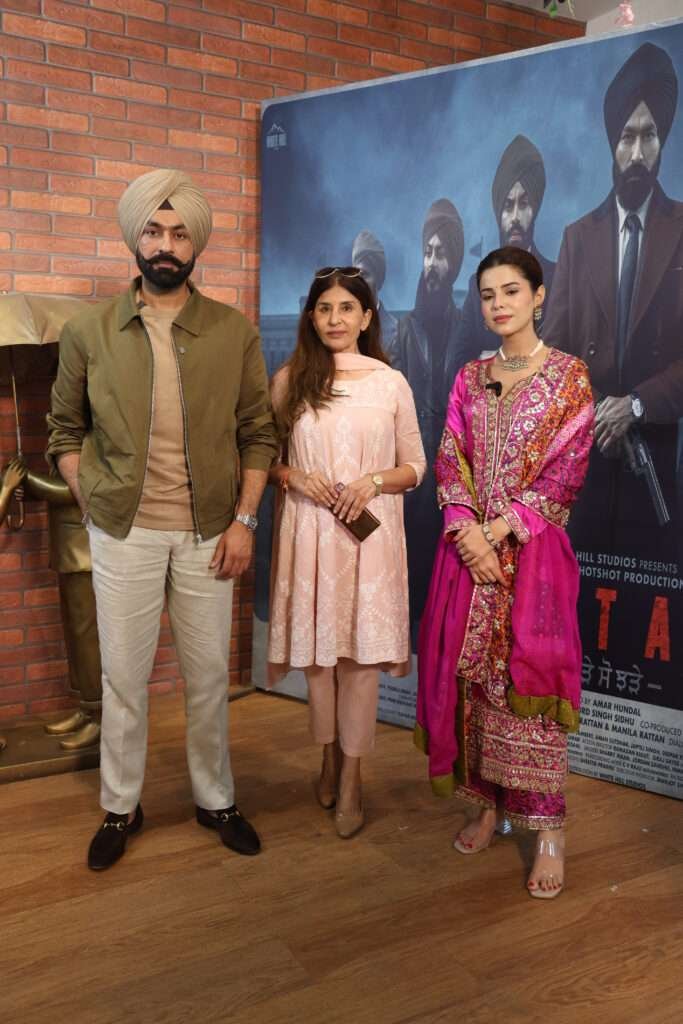
There were no sweeping promises about box-office numbers or attempts to amplify the film’s scale. Instead, both actors returned, in different ways, to the idea that Dastaar represents something larger than cinema alone.
Tarsem’s words—“Every single scene”—lingered long after the interview ended. Not because they were dramatic, but because they captured the philosophy behind the film. Every answer, whether about history, storytelling or Punjabi cinema, reflected the same belief: when a story carries the weight of a community’s legacy, every creative decision matters.
Geet’s perspective completed that thought. Her emphasis on reconnecting audiences with their history reinforced the idea that heritage isn’t something confined to textbooks—it comes alive through stories told with sincerity.
Whether Dastaar becomes a landmark for Punjabi cinema will be for audiences to decide. But after spending time with Tarsem Jassar and Geet Goraya, one thing felt unmistakable: they weren’t simply promoting a film—they were sharing a story they genuinely believed in. And sometimes, that conviction speaks louder than any trailer ever could.
Directed by Amar Hundal, Dastaar is a Punjabi action-drama set primarily in 1980s Britain. Starring Tarsem Jassar, Geet Goraya and Yograj Singh, the film follows the journey of a Sikh immigrant who rises from profound personal loss to become a respected community leader. Scheduled for a worldwide release on July 17, 2026, the film explores themes of courage, cultural identity and resilience, with the dastaar (turban) serving as a powerful symbol of hope, service and sacrifice. It also marks a significant milestone for Punjabi cinema as one of the first films from the industry to be extensively shot and produced on location in East Yorkshire, England.
By SEEMA DHAWAN

