

Tarun Tahiliani Unveils Navaratna: A New Perspective on Couture
Seema Dhawan
Tarun Tahiliani transformed the historic grandeur of Bikaner House into the perfect backdrop for Navaratna, his latest couture offering unveiled during Hyundai India Couture Week 2026, in association with Nexxus New York. Moving beyond the conventional runway, the designer presented an intimate preview where every silhouette reflected his signature mastery of fluid draping, impeccable tailoring, and extraordinary craftsmanship. Rooted in India’s rich artisanal heritage while embracing a distinctly contemporary sensibility, Navaratna reaffirmed why Tahiliani remains one of the defining voices of modern Indian couture.
Inspired by the symbolism of the nine precious gemstones, Navaratna explores the intersection of heritage, innovation, and craftsmanship through a collection that celebrates India’s artistic legacy with a modern perspective. Presented within the historic setting of Bikaner House, guests were invited to experience the collection up close, allowing every intricate detail, luxurious textile, and meticulously crafted silhouette to be appreciated beyond the confines of a traditional runway.
Stepping into the installation, it became clear why Tahiliani chose to begin with a preview. Away from the pace of the runway, the embroidery, layered textiles, sculpted silhouettes, and finely executed handwork invited closer attention, revealing nuances that are often overlooked during a conventional show.
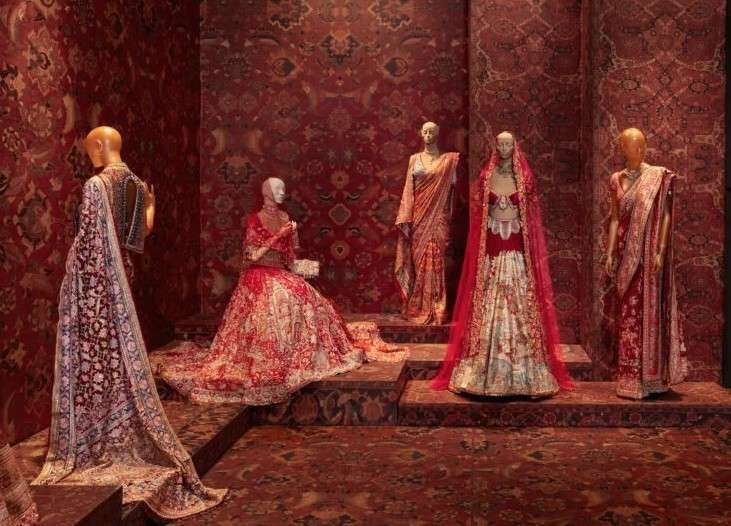
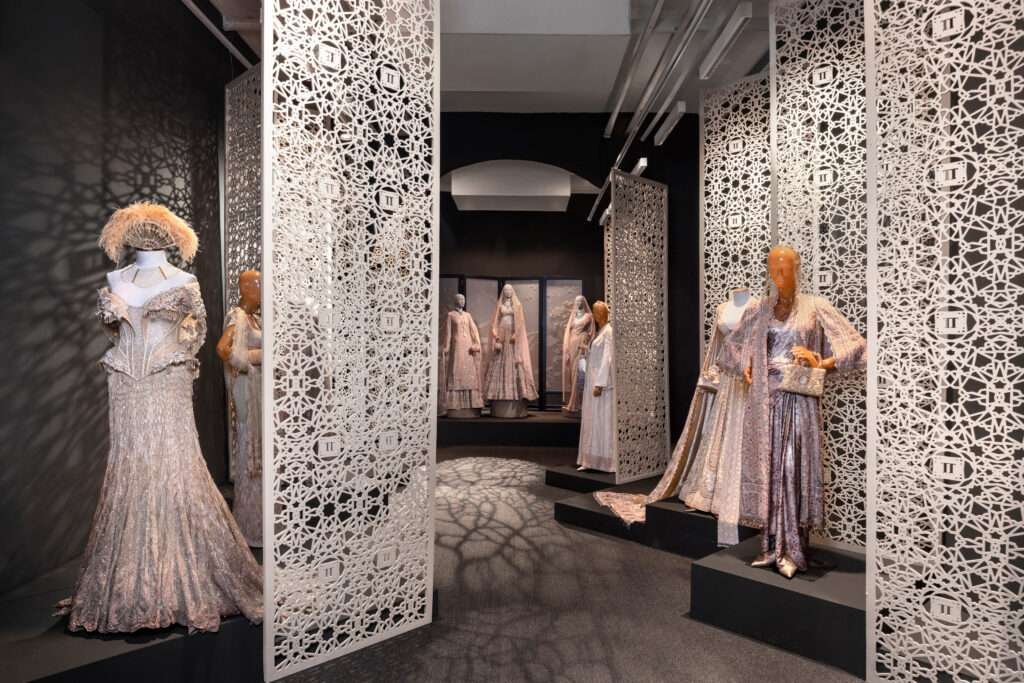
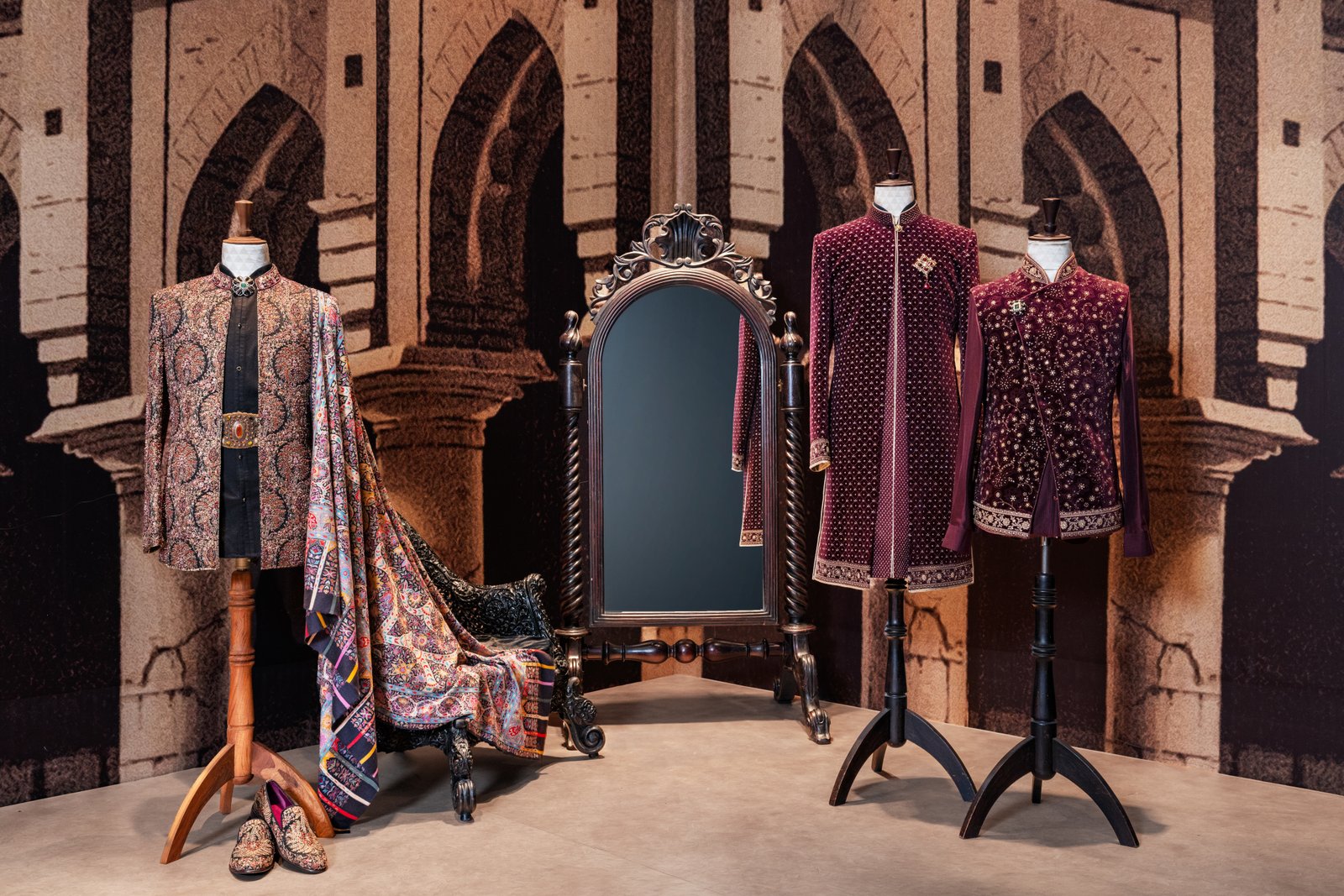
Reflecting on the decision, Tahiliani said, “We need a new way of presenting in India because our couture—and our bridal collections—are about weddings. They’re also about a level of detail that people need time to appreciate. I wanted to do something where people could really see the detail and stop—if they wanted to spend four minutes in front of a garment.”
It was not simply an introduction to the show; it became an integral part of the collection’s narrative, allowing editors, buyers, and industry insiders to understand the craftsmanship, construction, and artistry before seeing the garments in motion.
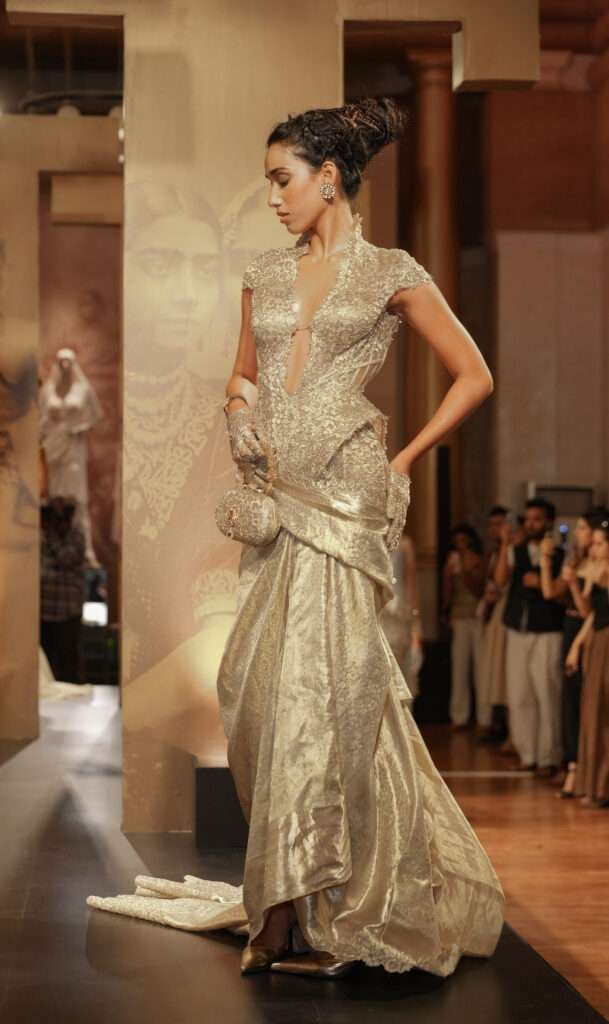
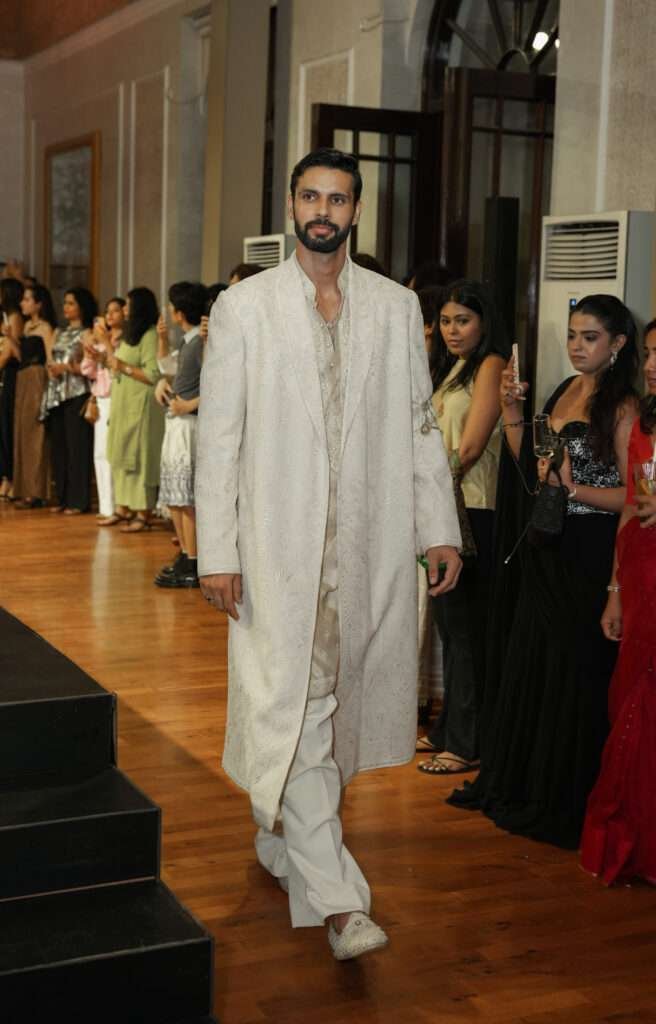
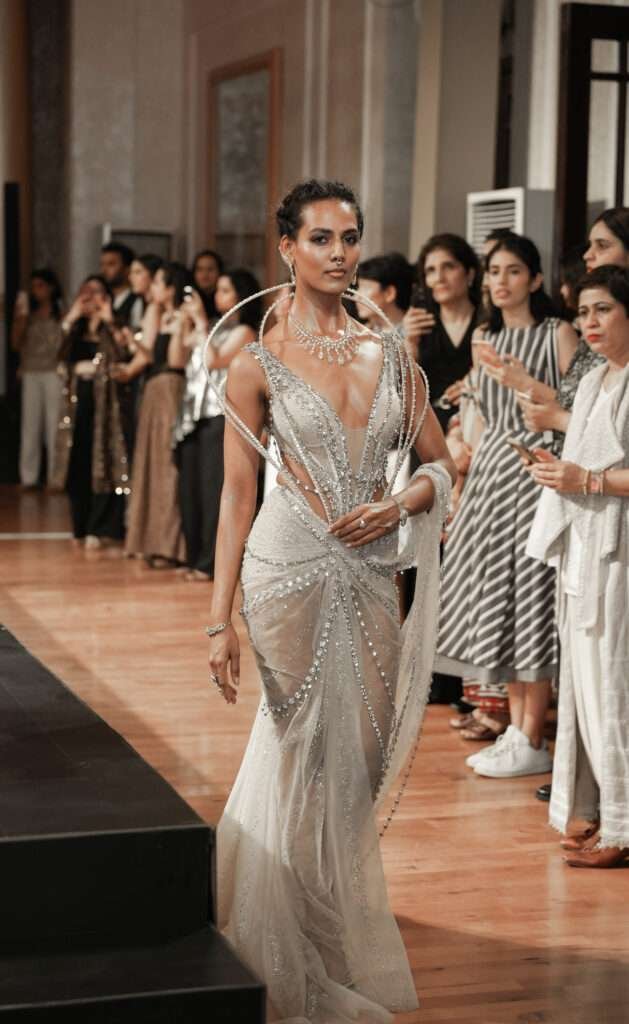
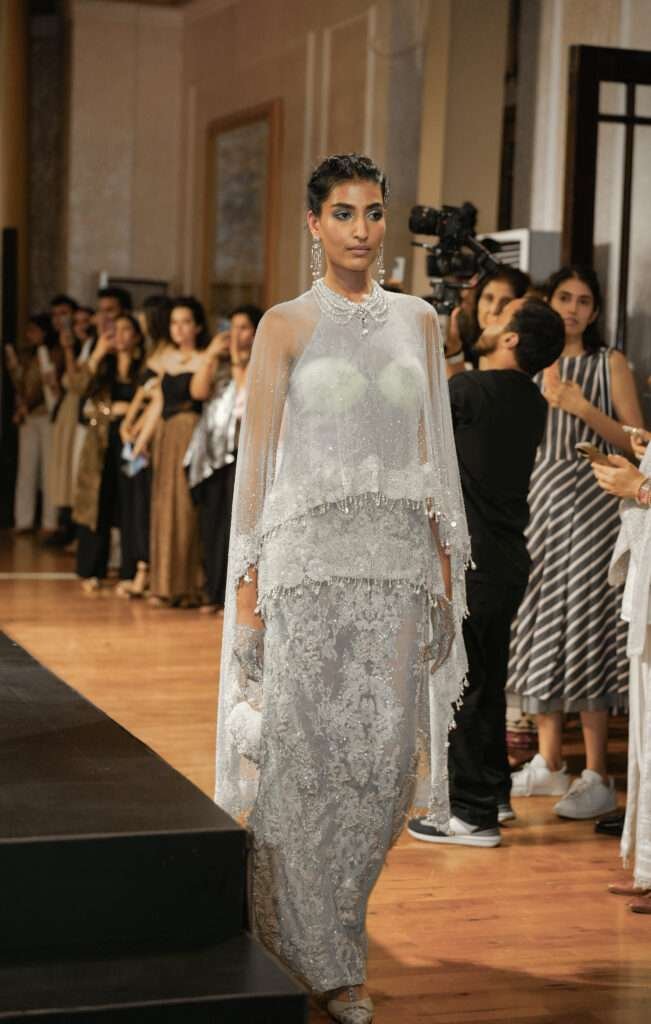
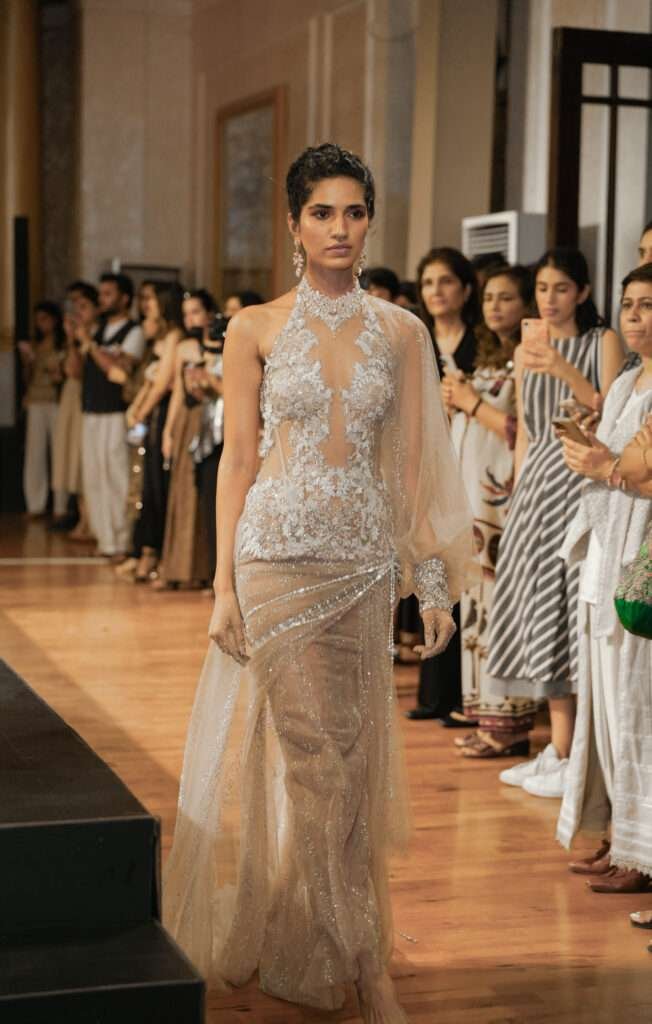
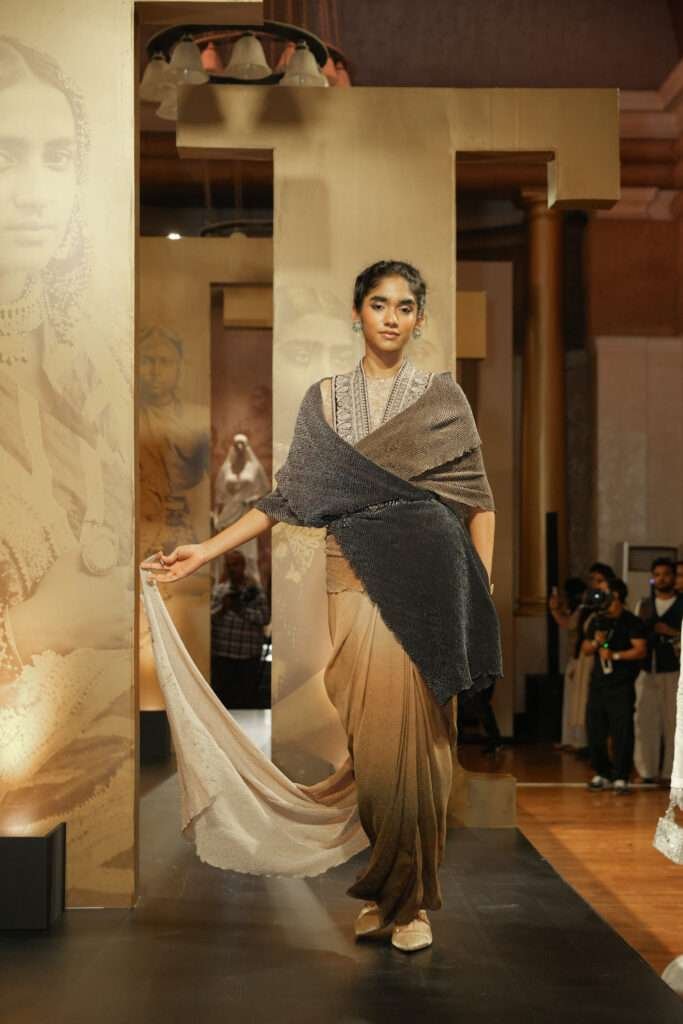
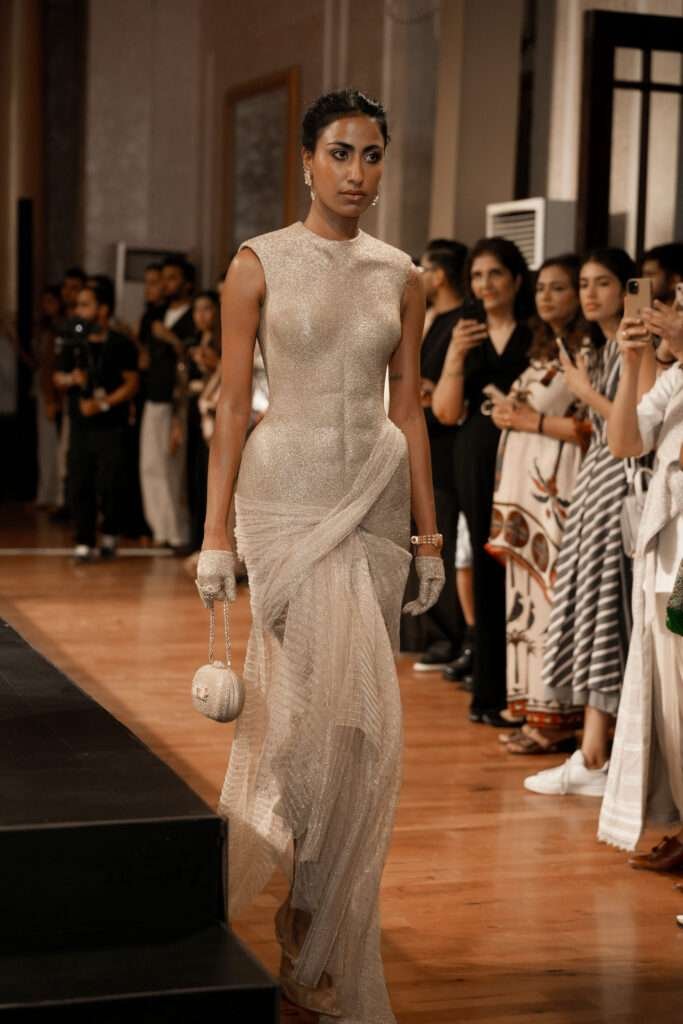
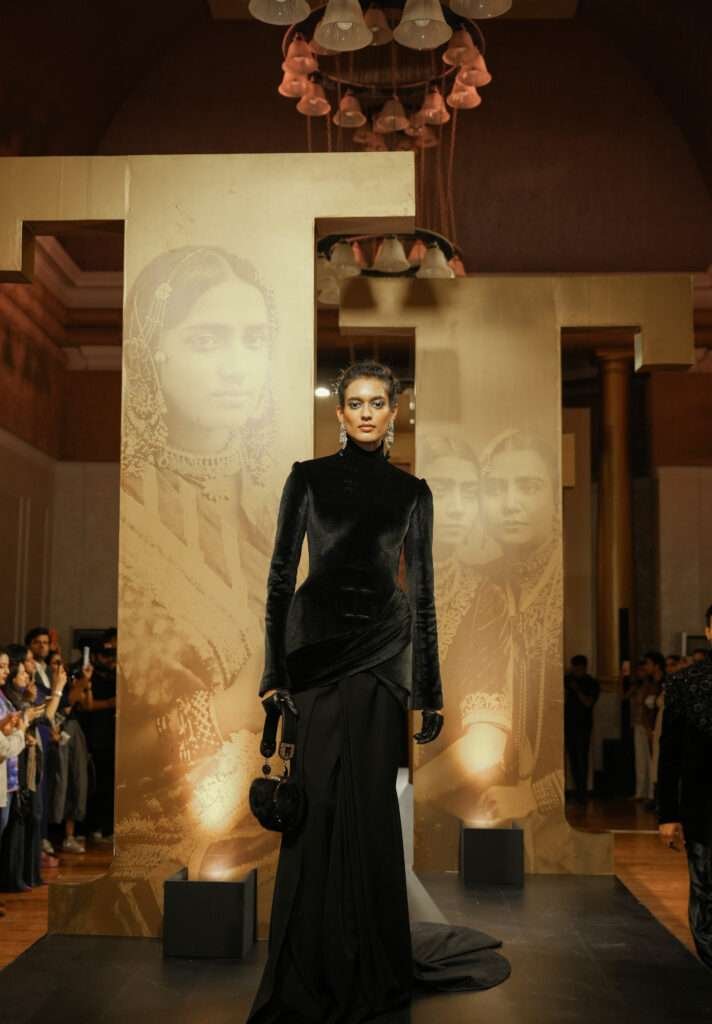
As the evening shifted to the runway, the format extended well beyond the finale. Rather than returning backstage, the models remained within the venue, allowing guests another opportunity to view the garments from a different perspective. Tahiliani, meanwhile, spent time with members of the media, discussing Navaratna and the thinking behind presenting the collection in this way.
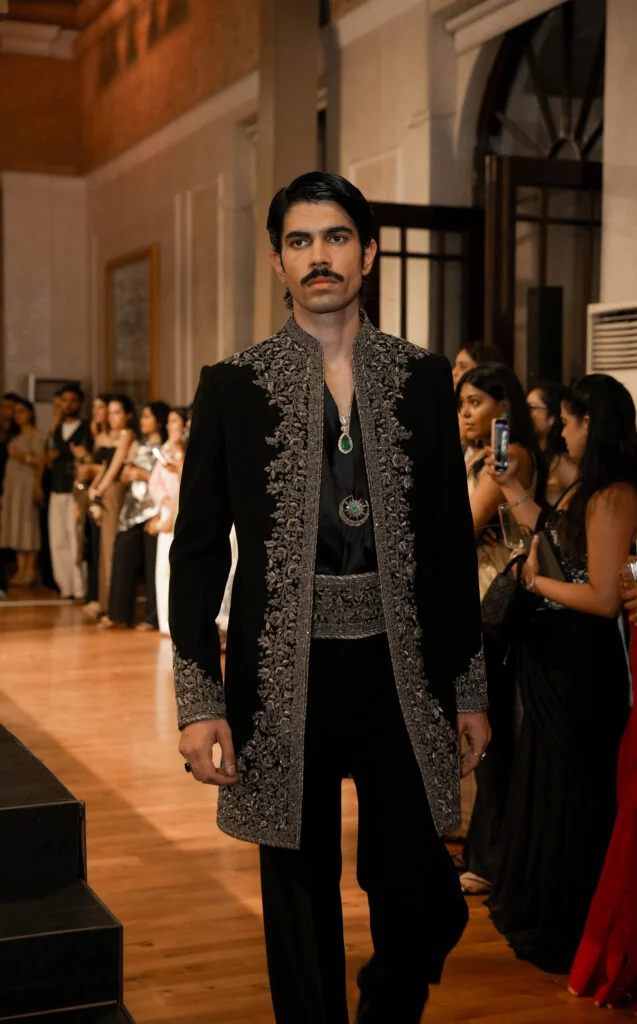
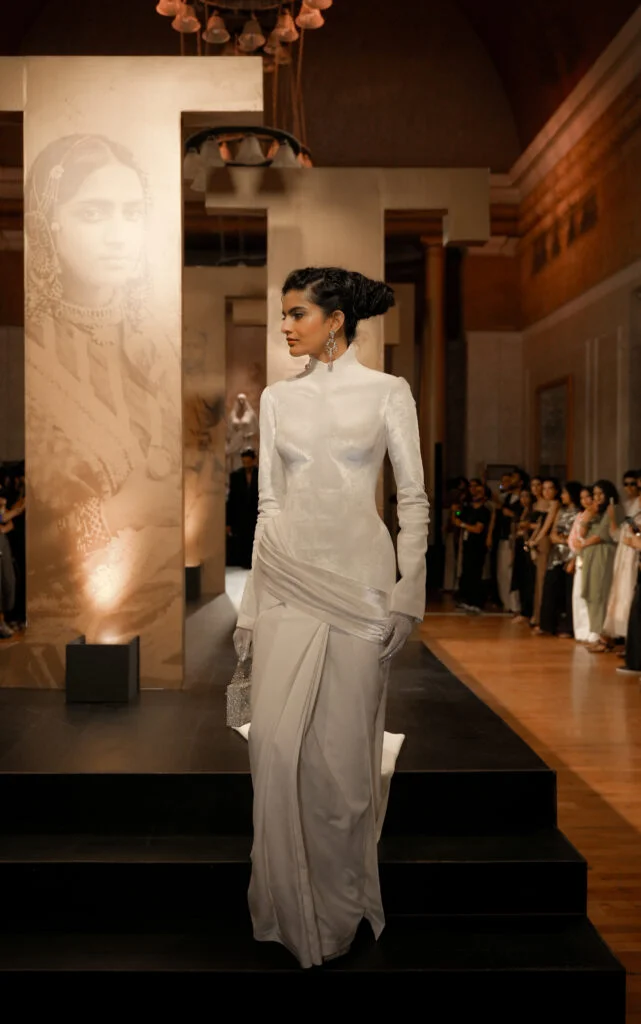
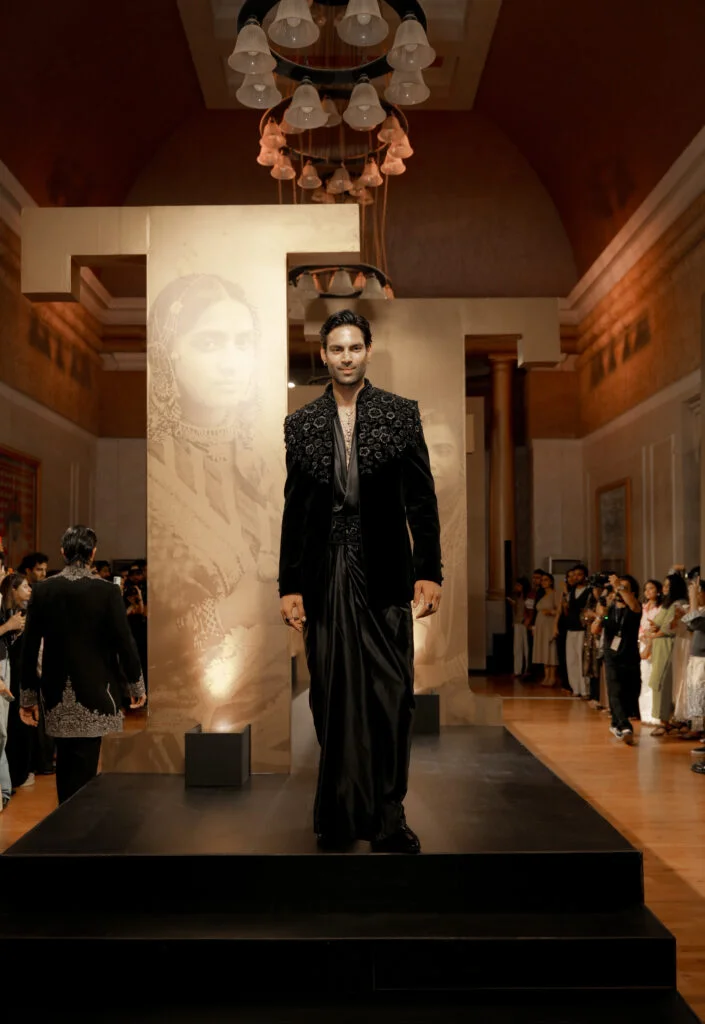
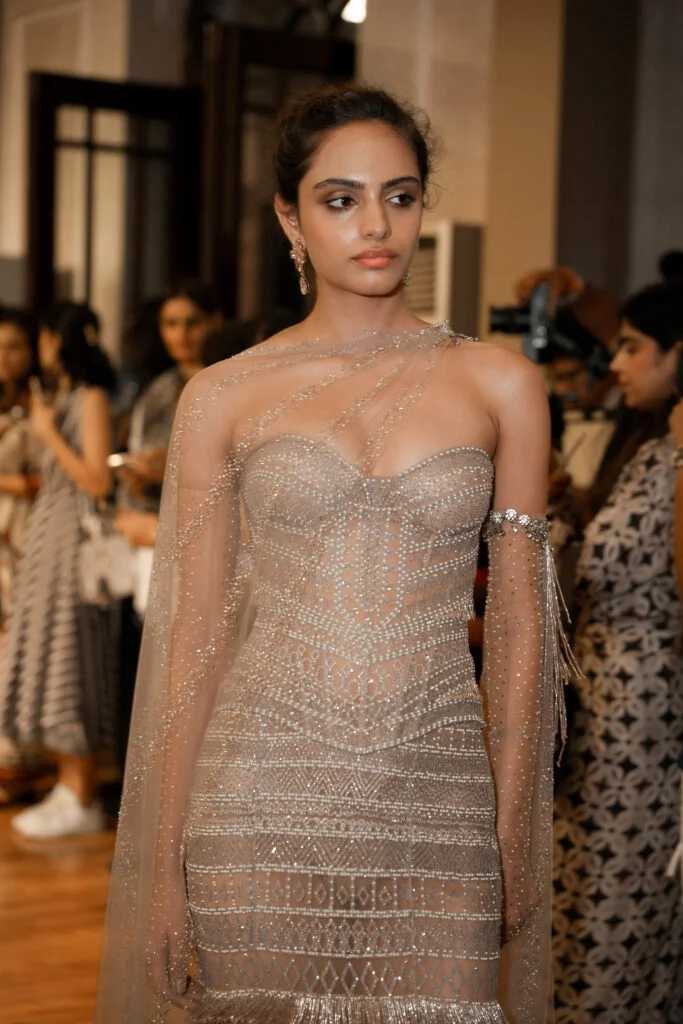
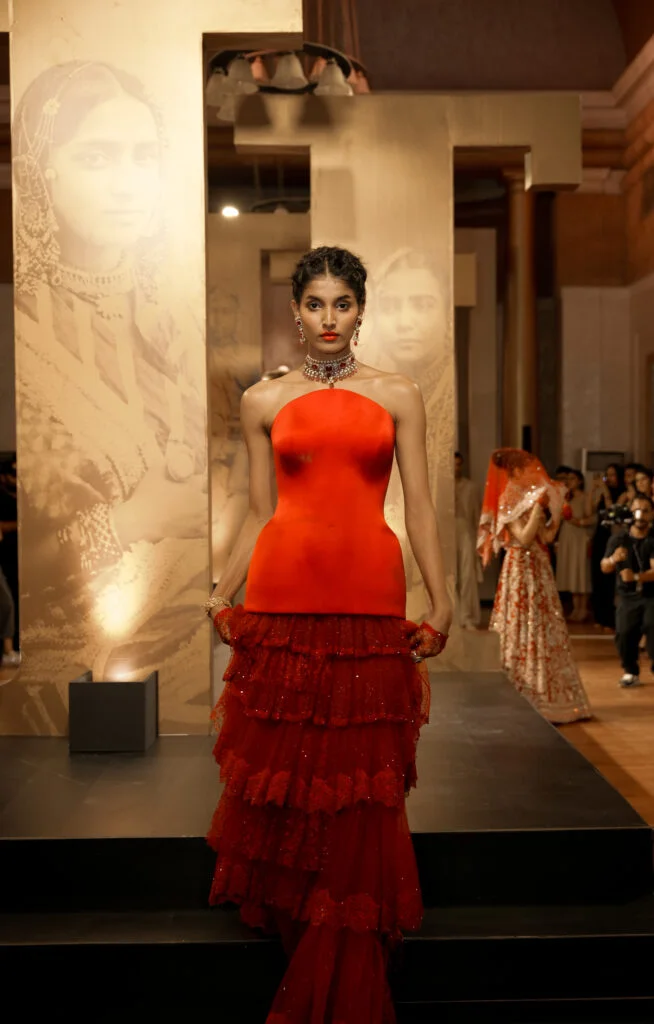
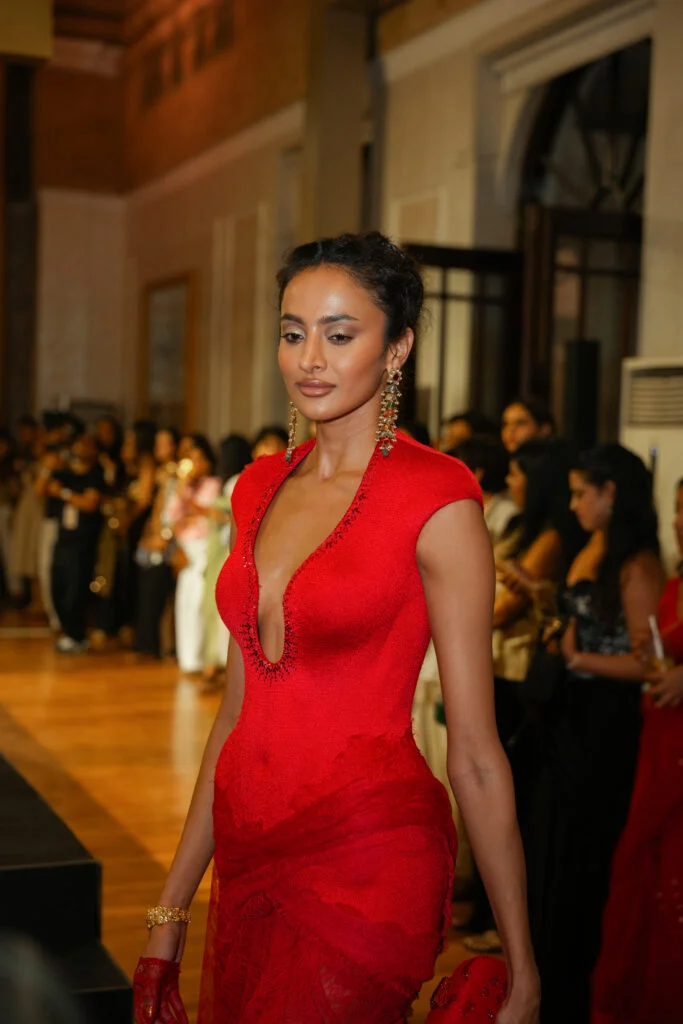
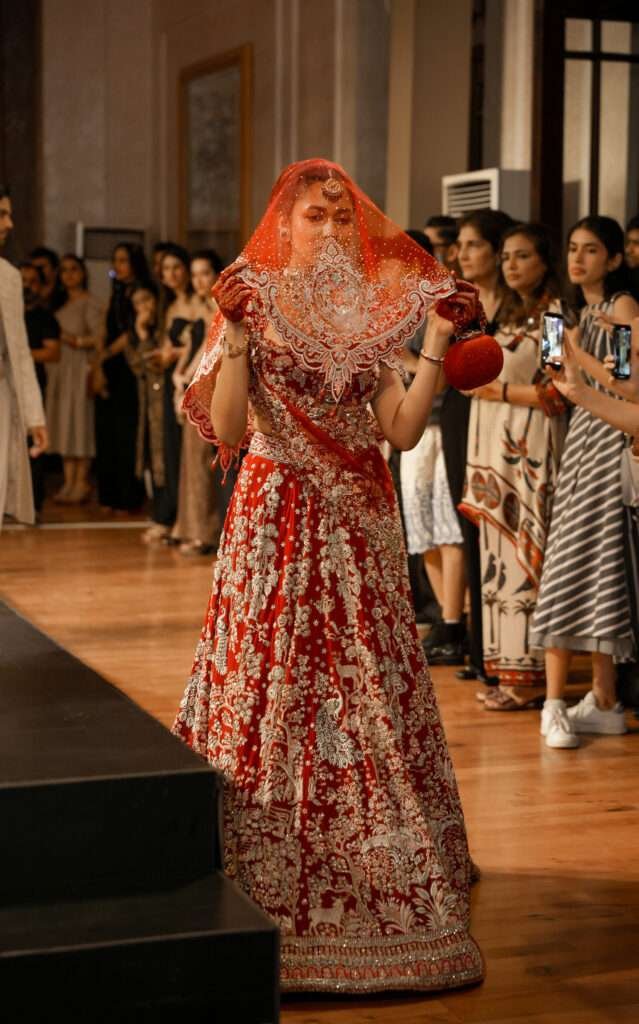
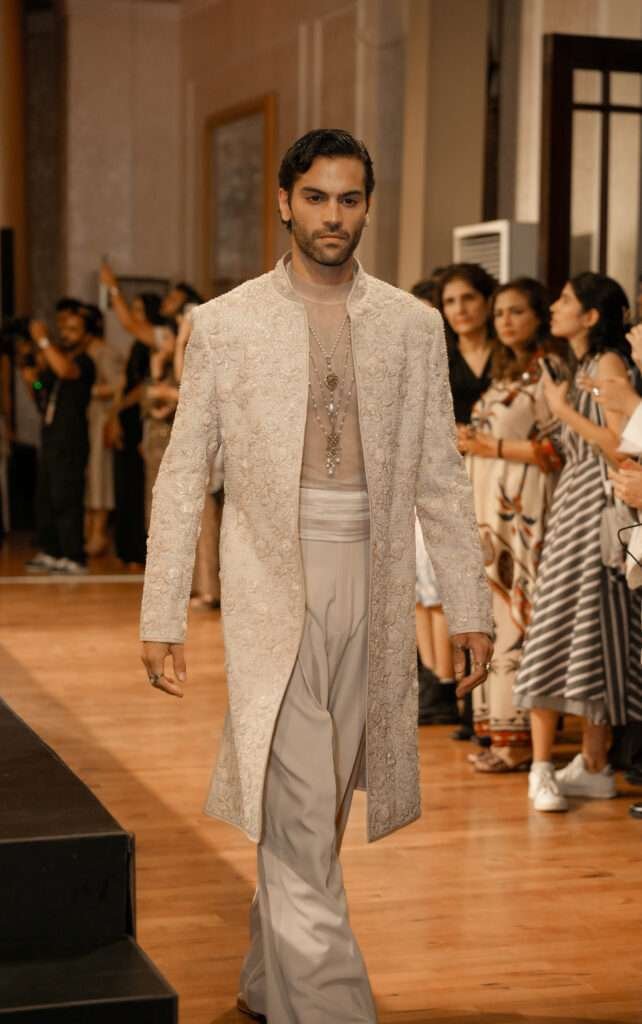
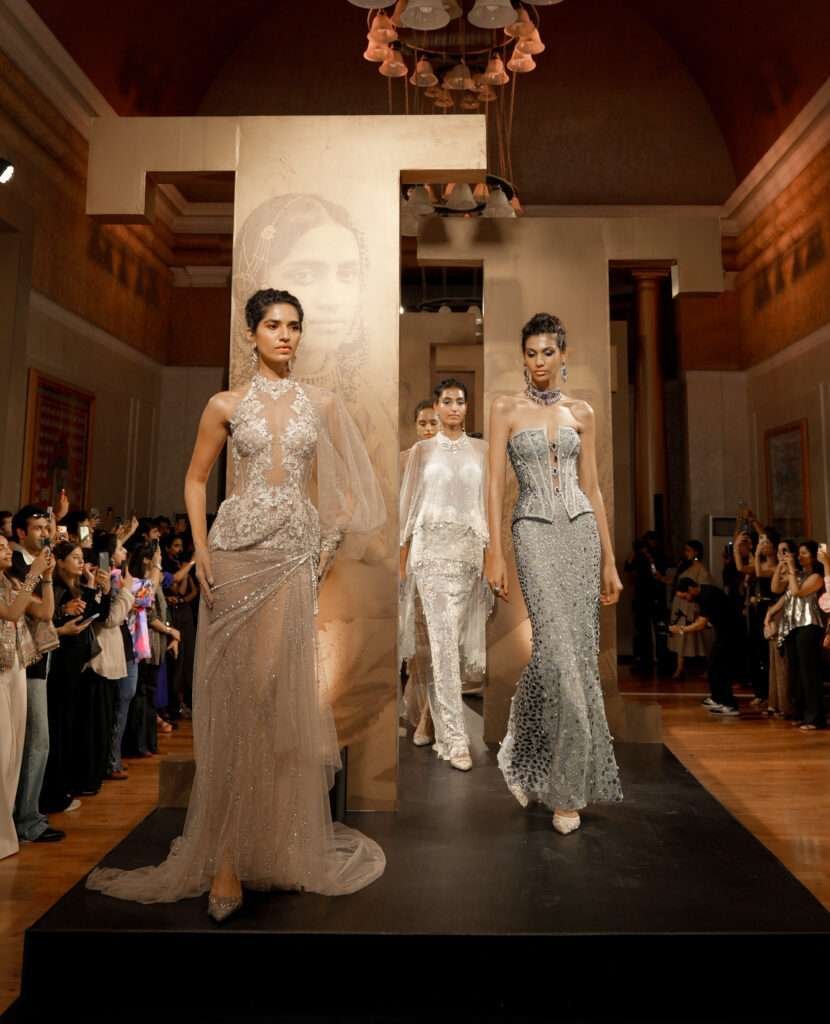
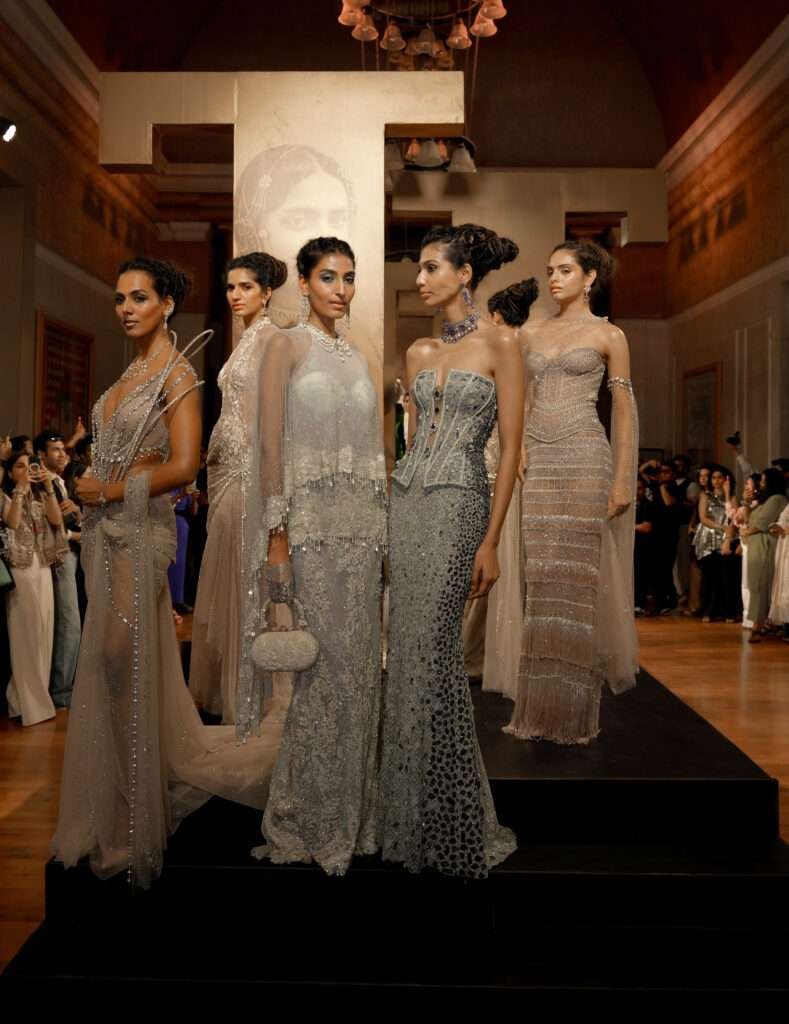
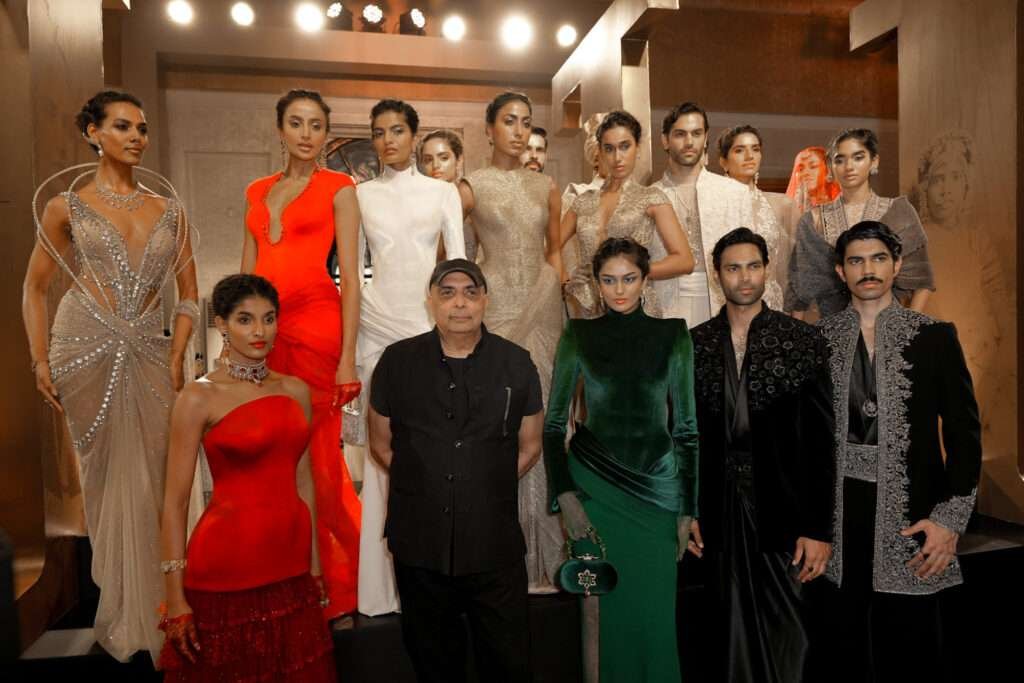
Once on the runway, the garments took on a different dimension. The movement of the drapes, the precision of the corsetry, and the ease with which heavily embroidered lehengas and gowns were worn underscored what had already become apparent during the installation. Chikankari, zardozi, ajrakh, and kashidakari appeared across sculptural gowns, contemporary saris, sharply tailored silhouettes, and bridal ensembles, each technique integrated with quiet confidence rather than excess.
That balance has long distinguished Tarun Tahiliani’s work. The richness of the embroidery never translated into weight, allowing the garments to move with remarkable fluidity. It is an approach that feels particularly relevant for today’s bride, whose expectations extend beyond occasion dressing to include comfort, lightness, and ease without compromising on craftsmanship.
Seeing the garments first within the installation, and later on the runway, offered two distinct perspectives on the same body of work. Details that drew attention at close range—from the precision of the embroidery to the finish of each silhouette—took on a different character in motion. Together, the two formats created a fuller understanding of Navaratna, allowing the collection to be appreciated not only for its visual impact but also for the thought, skill, and time invested in every piece.

