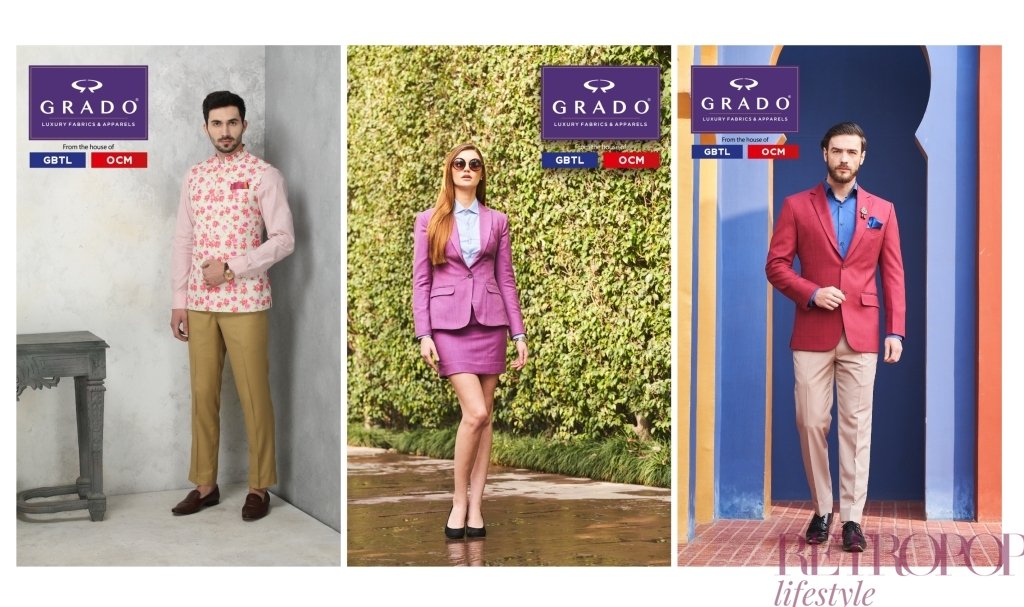
The brand GRADO is a coming together of synergies from legacy brands Grasim (erstwhile Gwalior Suitings) and OCM, with an intent to offer the entire product basket to the consumers – ranging from synthetics to cotton to worsted, under the same brand umbrella. Now, the brand is ready with a jaunty new Spring Summer 2021 collection, showcasing a fresh range of colours and designs, a perfect line-up for the upcoming season as well as weddings.
Summer has always brought joy and hope to all – it’s been the season of fresh beginnings, new fiscals, green shoots, colour and the onset of weddings. For Indian households, weddings have been an important occasion and wherein people need to look their best. GRADO too believes in the auspicious occasion of marriage and the necessity for people to drape the perfect outfits. Post-pandemic lockdown, the wedding season came as a ray of hope compelling people to don the right garb.
This year GRADO by GBTL offers wonderful fabric ranges-
· STREEZA – A premium 4-way stretch fabric epitomizing unique combination of comfort, luxury and style – for Freedom of Movement. This fabric is a flagship product of GRADO BY GBTL and is an innovative and differentiated concept compared to the industry norm of using a Stretch filament in the fabric.
· PICASSO – It is a unique blend of TR fibers which is dyed at fiber stage which gives excellent color fastness and feels premium in terms of fall and finish. It’s really a perfect product basket with designs and colours for suits.
· DONATI – A unique blend of TR and stretch fibers with an eye-catching selvedge and colours.
· MILAZO – TR and wool fibers are dyed at fiber stage and resembles polywool-like properties and has a beautiful selvedge in a range of designs.
· ALSACE – 20% wool tweed for jacketing
· A range of jacquards and fancy PV also adorns the range in a stunning array of colours and are extremely light weight.
And, GRADO by OCM offers-
· IMPERIAL (MPL): Finest Luxury Super 120s wool blended with extra fine polyester (W/P 70/30), Imperial is ideal fabric for suiting. With an exotic touch finish and available in a range of exclusive designs and colors, it is a must buy range for every wardrobe.
· CASA BELLA (CSB): Super 100s wool embedded with extra squashy polyester with magnificent composition of (P/W 50/50). Having exceptional finish, it is available in a glorious range of colors and designs.
· ZIA-ZIO: Presenting a collection of top-quality Jackets and Trousers in co-ordinates.
· BUNDEE (BND): A perfect harmony of colour, design and blends that too, all in bold style. Ideal for bundees, this range stems from a vibrant designer’s perspective and has a vast color palette.
· INVICTA (EVA): Polyester/cellulose in a blend of 65/35, perfect for summers. This fabrics ensures comfort with formula one finish which results in a more smooth and lustrous fabric.
Balancing the bold and bright with the neutral and classic, GRADO’s Spring Summer 2021 has a wide-range of palette endorsing-
· Pale hazy petals combined with exotic pinks and an herbal greens creating a fresh summer look that celebrates the positivity and happiness of colors from nature;
· Adding a vibrant dynamic contrast are yellow, sweetly scented lavender, fragrant oranges and a cool blues combine to create a dynamic contrast with a crisp qua;
· Empowering (shades of) purple and red infuses glamour to a story of vivid contrasts
In order to arrive at these fabric designs and colours, an in-depth research and forecasting has been conducted from a domestic and global perspective. The Spring Summer 2021 collections present a plethora of hues in every colour giving the customers a wide range of choice. This collection is not only perfect for the upcoming season but also amount to be the quintessential attire for the wedding season, which can be custom tailored into bespoke suits (Single breasted, Double breasted, tapered leg trousers and fitted jackets), bandhgalas, sherwanis & bundis too.
Commenting on the GRADO’s Spring Summer Collection 2021, Manish Shukla, CMO of GRADO by GBTL, said, “We are elated to announce the launch of GRADO’s Spring Summer Collection 2021, and are certain that our customers will be really happy and content with the phenomenal range of fabrics GRADO has to offer with trending colour palettes. This collection will also have a variety of fabrics perfect for the wedding season. We, at GRADO, hope to adapt to the changing trends and provide our customers with best quality fabrics.”
Vikram Mahaldar, MD &CEO, OCM Pvt. Ltd., added, “With an illustrious heritage (of close to a century), we have always pioneered to disrupt the market with great quality and innovative products. We’re extremely delighted about the Summer Collection with our vast array of colours – suitable for everyone – children, teens, working people, retired people – really, there’s something for everyone. In 2021, we’re sure this collection will bring a further ray of hope/vibrancy in everyone’s lives.”
A place where you will find the finest foods, incredible bars, and unique dining experiences – all under one roof.
Any foodie will be spoilt for choice by the diversity of restaurants at Atlantis, as well as a range of relaxed yet entertaining spaces where friends and family can spend time together over great food and drinks.
Here are four dining venues that you need to add to your foodie bucket list:
The Ultimate Culinary Indulgence at Grégoire’s Kitchen by Ossiano
Begin your foodie escape in Dubai with a taste of the ultimate gastronomic indulgence at Atlantis. Come and enjoy the most decadent meal in the city in the immersive, ethereal underwater setting of Ossinao without breaking the bank, with a limited-edition dining experience for an affordable price.
Coming from Grégoire Berger, one of the world’s top chefs and the creator of the finest seafood, caviar and avant-garde dishes, Grégoire’s Kitchen by Ossiano is a special edition of Ossiano that is only available for the entirety of the summer season and serves a modern tapas-inspired menu, featuring 18 individual dishes comprised of sweet and savoury flavours, including patatas bravas, Spanish mussels with cider and chorizo, and churros with chocolate and coriander with a twist. While the dishes keep changing every week, the plates will be themed around exploring globally renowned foods that every foodie would love to try and can vouch for.
Blissed-out Mediterranean Vibe at WHITE Beach Dubai
For anyone looking to relax in a laidback environment with splendid views of the Dubai skyline, take in the chill vibe after a long day at work and enjoy a variety of delicious Mediterranean food – WHITE Beach is the place to be!
WHITE Beach Club is different from other beachfront clubs in Dubai. It is considered a ‘day-to-night beach club’ and offers two day and night experiences – Daydreamers &Nightdreamers – for beachside fun, every weekend. Daydreamers experience (Thursdays, 12 pm – 4 pm) lets you enjoy an all-inclusive chilled out day experience and includes a vast selection of tasty bites and refreshing beverages from WHITE Restaurant’s the Mediterranean inspired menu, access to the infinity pool and beach beds, and blissed-out beats that match the beachy Mediterranean vibe. With the Nightdreamers experience (Thursdays, 7 pm – 10 pm), you can watch the day turn to night as you feast on grilled seafood skewers and other top bites to eat with your favourite people or enjoy a night of revelry with your friends at WHITE Beach.
WHITE Beach is not only a feast for the eyes but also the palate. A staple in the Dubai brunch scene, the Sunkissed Beach Brunch offers sunseekers and water babies a delectable Saturday brunch with chill beach vibes that elevate any occasion. The four-hour brunch takes place every Saturday from 1 pm – 5 pm, and features food and beverage stations along with a live grill and BBQ and plenty of uplifting entertainment including all-day pool and beach access as well as an unlimited selection of beverages including froze, white sangria and watermelon martinis, as well as a selection of house spirits, hops, and grape. Reservations to White Beach’s Sunkissed Beach Brunch are highly recommended. Prices start from AED 249.
Family Fun and Good Food at Wavehouse Dubai
For a fix of casual food and family fun on the side, get yourself over to Wavehouse Dubai, a family-friendly entertainment hotspot that brings together music, gaming, bowling, food, and drinks. The restaurant features a mouth-watering menu of lunch, dinner, and snack options – with everything from gourmet burgers, thick shakes, and pizzas to fresh salads and light bites – to keep those hunger pangs in check.
After meals, enjoy a chilled-out afternoon in the sun, on the sprawling garden terrace overlooking the Wave Rider machine. The kitschy, Insta-worthy bar at Wavehouse features an adult-only bar that offers the perfect spot to grab a drink and kick back after work – all making for an adventurous evening.
If you are looking for an extra dose of fun or some friendly competition with your family and friends, you can check out Levels – a modern take on the classic arcade and game zone – that offers plenty of chances to test your skills on more than 50 retro and new-age gaming consoles while your revisit your childhood. It also features a multi-level climbing frame for kids and a four-lane bowling alley where you can bowl a few strikes with your family.
Weekend Brunch and Drinks at Nobu Dubai
A restaurant on the culinary scene for nearly two decades serving up modern interpretations of Japanese and South American cuisine to resident diners, Nobu Dubai has become a global juggernaut with foodies around the world.
Treat your taste buds to a culinary journey at the Weekend Brunch experience that brings alive Japanese-Peruvian fusion cuisine in the dreamy setting of Nobu’s Garden. Featuring a special extensive menu selection of the chef’s signature masterpieces – including Nobu’s legendary black Cod Miso, Salmon Sashimi New Style & Yellowtail Sashimi with Jalapeno – this destination brunch also offers a range of signature cocktails and alcoholic drinks every week and has a bit of party thrown into the mix by Nobu’s resident DJ spinning some brunch music and live entertainment.
Award-winning Cantonese Dining Experience at Hakkasan Dubai
Hakkasan Dubai is an elegant restaurant that showcases China’s contemporary side while staying true to its roots and a vibrant lounge bar that offers a lovely spot to retreat for evening cocktails and after-dinner drinks. Explore a wide range of signature dishes including Peking duck served with Royal Beluga caviar, grilled Chilean sea bass cooked in honey and the famous stir-fried black pepper rib-eye beef as well as the wok-seared tiger prawn with white asparagus, the shimeji and chilli, and the sautéed scallop with salted olive and porcini available exclusively at Hakkasan Dubai. The restaurant was recognised by The World of Fine Wines in 2018, with the Best Designated Wine Lists in the regions of the Middle East & Africa and Asia respectively. The exclusive wine list created by the sommeliers at Hakkasan features premium wines from all corners of the world and a vast selection of Champagne and vodka to choose from.
The 3rd day of the Kumbh of literature was filled with a dance of history, memoir, pandemic, technology, the Booker 2020 winner & much more, exploring conversations on Vincent Brown’s groundbreaking geopolitical thriller Tacky′s Revolt: The Story of an Atlantic Slave War, the first Bhojpurinovel to be translated into English, India’s fight against the Covid-19 pandemic, an acute insight into the professional and personal relationship between the first Chief Information Commissioner of India, Wajahat Habibullah and former Prime Minister Rajiv Gandhi, the impact of liberalism and its place in an age of resurging autocracy, the concept of Dharma and much more.
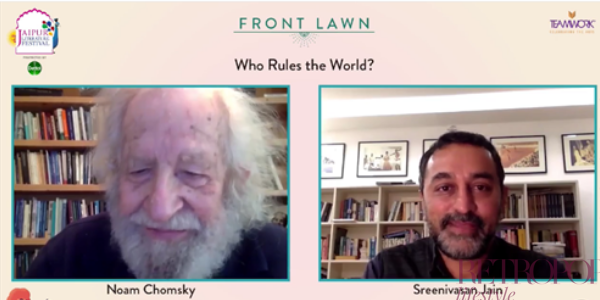
In conversation with journalist Sreenivasan Jain, celebrated American linguist, philosopher, cognitive scientist, historian, social critic and political activist Professor Noam Chomsky discussed the global “drift into authoritarianism”, post-Trump America, and the factors that made social reform possible. He spoke of the recent storming of the United States Capitol, and how it was a turning point for the country, sharing what it was like to wake up in America in the “aftermath” of Donald Trump. Professor Chomsky insisted that the American democracy had “serious problems” even before his presidency. Speaking about the rise of authoritarianism, Professor Chomsky delved into the “neoliberal assault”of the last few decades, explaining how inequality and authoritarianism appeared to be inextricably linked. Responding to Jain’s question on what can be done to resist the threats to democracy, Professor Chomsky said, “There’s no magic key! “You fight it the way you’ve always fought it, with educational programmes, with organisation, with activism.”
“Over time any political or social movement can work,” he said, pointing to the Independence Movement in India. Reflecting on some of the critical progressive movements like the labour movement, the civil rights movement and the women’s rights movement among others, he talked about the significance of coming together in solidarity and with constant dedicated struggle. “There is no point being optimistic or pessimistic. The point is to face the challenges, take the opportunities, get to work and overcome the problems. It can be done – and optimism says yes, let’s do it,”he said.
The “queer son of a single mother”. This is how Douglas Stuart, Scottish-American writer, who recently won the Booker Prize for his debut novel, Shuggie Bain, introduced himself in his session with writer and playwright Paul McVeigh on day 3 of the Festival. Stuart spoke about his mother, on whom the book’s central character Agnes was based. He delved deep into the character, drawing similarities with his mother – she too, like Agnes, had been an alcoholic and had eventually succumbed to her addiction when Stuart had been 16. He said that in her little working class Glasgow milieu, she had perhaps been ‘insignificant’ but she had been ‘very significant’ to him, and like the children of all addicts, he was always on the lookout for strategies to keep her safe.
Irish author Colum McCann, in conversation with Sri Lankan-born writer and activist Ru Freeman, discussed the inspirations behind his book Apeirogon, and the undying quality of hope. When asked about the research he had to do to capture the essence of Beit Jala, where the novel has been based, the first thing McCann was reminded of was the ‘Bird Ringing Centre’ there. He said he was quite fascinated about how the migrating birds were captured, tagged and freed and even compared them to readers who came to this place and went back with a part of it in them. In the five years that he wrote this book, McCann met Rami and Bassam, the protagonists of Apeirogon, and spent time with them and their families. A novelist’s job, as McCann candidly put it, was to ‘put us in the pulse of the moment’—to turn the book into a living, breathing medium, which was why he attempted and left most of the politics up to the reader’s imagination. The heart-rending stories of Rami and Bassam’s loss were painful for McCann to even contemplate but what kept him going was their own hurt and sorrow. The process, he said, was “difficult, but necessary” and an “extraordinary journey”.
In a captivating conversation, Professor Vincent Brown discussed his book ‘Tacky’s Revolt’, with Professor Maya Jasanoff. The focus of the book resides on a slave revolt which occurred in the middle of the 18th century in Jamaica, in the midst of the Seven Years War between Britain and its imperial enemies. Professor Brown said that this event had often been ignored and not considered as a battle that occurred during the Seven Years War; nor had it been wrestled with as a major event in the history of the empire. To shed light on this moment of history, Professor Brown wrote this book and it became the first long account of the revolt since Edward Long, the polemic defender of slavery who wrote his contemporary account of the events in 1774.
Liberalism has always been at the core of western culture as it puts individual freedom at the forefront. Journalist and author John Micklethwait summarised this succinctly by saying that “the starting point of liberals is a distrust of authority or power”, at a session titled “The Death of Liberalism”. During the conversation Micklethwait and co-panelist, American author Adam Gopnik, agreed that liberal democracy needed to take a hard look and reinvent itself to avoid authoritarianism. Micklethwait stressed the need for “social trust and social capital” before having free markets. Gopnik spoke of the degradation of public education in the last thirty years in the US, underscoring the need for liberals “to re-endow these problem areas with a lot more dignity and monetary support”. He also highlighted that a powerful social and democratic government can pose no danger to social or liberal freedom, strongly emphasising that “a high degree of statism, social intervention, and national health above all can co-exist with classic liberal freedoms – that is an empirical truth”.
The concept of Dharma is unique to Indian philosophy and difficult to translate as it implies different things in different contexts. Hindu narratives are ambiguous and avoid prescriptive moralities. The Dharma and duties of different individuals face conflicts of ethical and human dimensions. Distinguished economist, writer, scholar and translator Bibek Debroy spoke of these dilemmas and the ethical and karmic choices inherent in them. In a deep and engrossing session, he talked with Keerthik Sasidharan, author of the recently published novel The Dharma Foresto.
Protected by Reckitt Benckiser, the session titled “Till we win: India’s Fight Against the Covid-19 Pandemic”, with doctors Randeep Guleria, Chandrakant Lahariya and Gagandeep Kang, in conversation with journalist Maya Mirchandani, discussed the book of the same name, that these three medical virtuosos at the forefront of India’s fight against the global pandemic, have written on their experiences and lessons learnt so far.
Concluding the first weekend of the Festival was a debate on “All Power Corrupts” featuring authors Amish Tripathi & Pavan K. Varma, Dutch journalist Kim Ghattas, Indian politician Pinaki Misra, well-known lawyer Pinky Anand and columnist Suhel Seth. The speakers examined the different dimensions of the truth that power corrupts. Is there something inherent in power itself that makes all power corrupt, or is there something else that has to be looked at? Does power corrupt by itself or does power only corrupt when there are no checks and balances?
Speaking against the proposition, journalist, author and analyst Kim Ghattas shared, “I’ve lived through and covered some of the worst abuses of power. Power is wielded at all levels, by the bureaucrat, by the prison guard, by the dictator, but I have also seen power used for good – to help, to save. So, I want to believe that power can do good, and that good people can become powerful and remain true to their moral compass.”
Speaking in favour of the motion, Pavan K. Varma explained that the key “is to try and understand human nature in a competing world, especially illustrated by politics. If you acquire power, there is a tendency for you to believe that you, as that repository of power, can bend rules in accordance with those measures required to sustain your power.”
Amish Tripathi countered saying, “Lord Ram had tremendous power, but he wasn’t corrupt, so what power showed was who he really was.” Amish talked of power as an unveiling of human nature and a challenge to find out what you’re really made of. He also referenced The Dalai Lama as someone who currently wields tremendous power, but uses it for good.
Pinaki Misra, who spoke against the motion, reminded the audience of Abraham Lincoln’s quote“Nearly all men can withstand adversity, but if you want to test a man’s character, give him power.” Speaking from his experience of working in the public sector, he added that “power can be viewed, not as an end in itself but as a means to an end, to transform the lives of the people”.
Speaking for the motion, Suhel Seth said “A lot of people do good, but it’s more political power unbridled that we are talking about, that is then used to abuse the system.” He argued that “compassionate benevolence” is much more the exception than the rule.
Pinky Anand who also spoke against the motion said, “I think we have shown with the test of time that institutional challenges, institutional controls, checks and balances have ensured that constitutions and democracies are able to function and of course ultimately, it’s the will of the people.”
Pavan K. Varma reinforced his stance emphatically, saying that if all power didn’t corrupt, “Why does democracy provide so many checks and balances? Unless they exist, power will corrupt.”
At the end, while the panelists seemed to be reluctantly coming more towards a mutual understanding, the audience poll boldly declared the winning argument to be in favour of the motion that “All Power Corrupts”.
The weekend was also filled with musical performances by Anirudh Varma Collective, Rehmat-e-Nusrat and ‘Belonging’ feat. Jason O’Rourke & Deepmoy Das.
The ongoing 14th edition of the iconic Festival will be held till 28th February on an exclusive virtual platform. The next in line for the upcoming weekend is a multifaceted conversation on climate change with Bill Gates, apart from sessions with John Zubrzyck discussing his book The House of Jaipur, authorsCamilla Townsend and Peter Frankopan discussing the Aztec empire, Nobel Peace Prize winner and bestselling author Malala Yousafzai, artist Anish Kapoor in conversation with Homi K. Bhabha, Marina Wheeler on her exploration of her Indian ancestry. There will also be sessions on the Chipko movement with Ramachandra Guha, Shekhar Pathak and Manisha Chaudhry in conversation with Mukul Sharma, Boria Majumdar’sSport and a Billion Dreams: 2021 with Pullela Gopichand and Mansi Joshi, Jeremy Seal on A Coup in Turkey: A Tale of Democracy, Despotism and Vengeance and several more important themes.
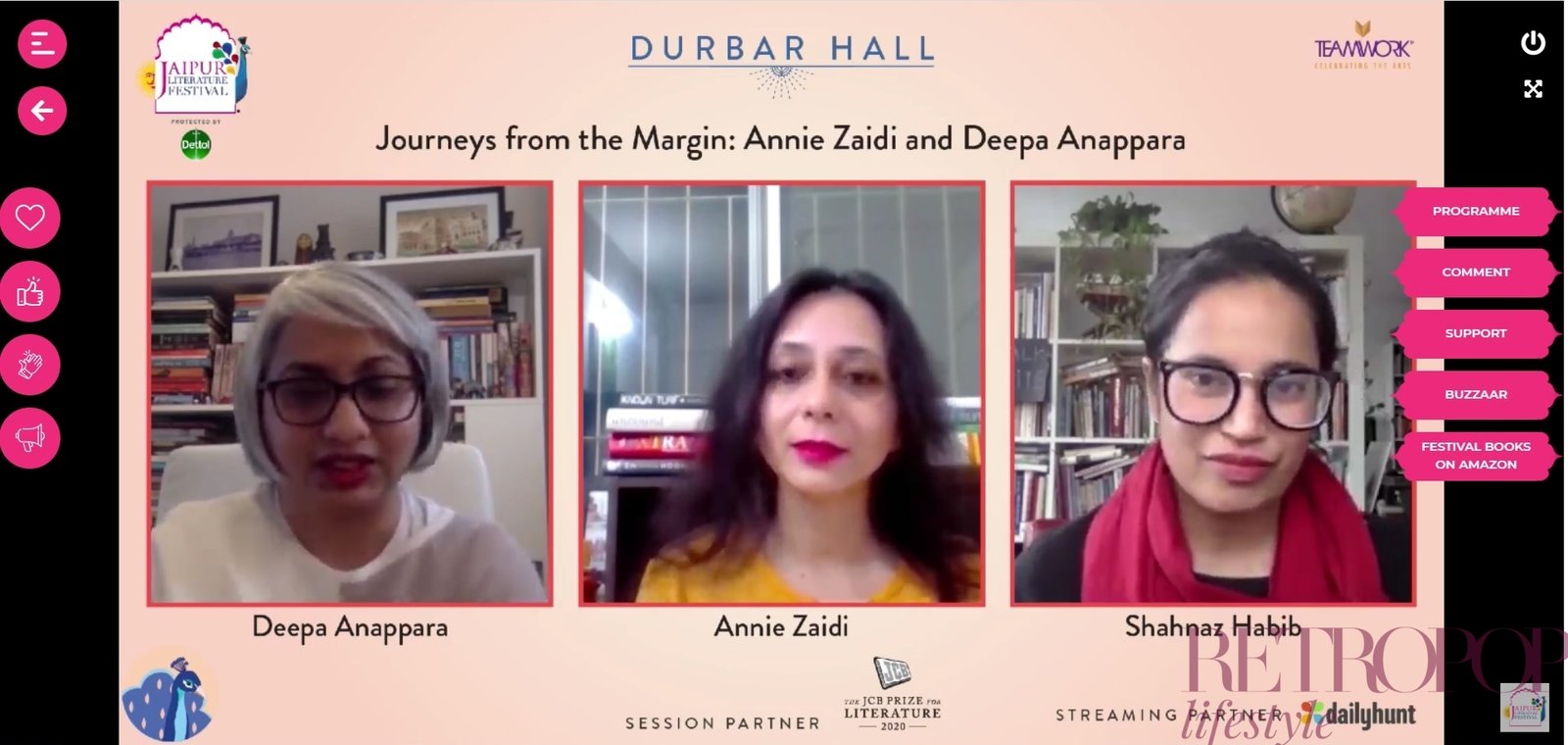
The 2nd day of ‘the greatest literary show on Earth’ featured sessions on fiction, film, food, feminism, biography, theology & much more which included sessions featuring novels that unblinkingly examined inequity across Indian society, the extravagant journey of perhaps one of the greatest filmmakers Bollywood has seen, the life and writings of the master of words, Dante, on the 700th anniversary of his death, along with a session that brought together a cross-section of voices and perspectives to understand feminism and its kaleidoscopic dimensions. Annie Zaidi and Deepa Anappara, in conversation with Shahnaz Habib, spoke about their writing process, their exploration of the fiction genre and the source of their inspirations. At the session, supported by The JCB Prize for Literature, the authors spoke about the liberty that writing fiction allowed and how it helped them bring difficult stories from marginalised communities to the fore, allowing them to showcase different points of view, without having to approach the subject from a journalistic lens. Prelude to a Riot by Annie Zaidi is the disturbing narrative of two families, and charts the growth of religious intolerance, while Deepa Anappara’s debut novel, Djinn Patrol on the Purple Line, tells a haunting tale of heartbreak and the loss of innocence.
Bestselling author Simon Winchester discussed his latest book Land: How the Hunger for Ownership Shaped the Modern World, which traces the concept of land and its ownership from an anthropological perspective. In conversation with Raghu Karnad, Winchester spoke about the “bloody” history of land ownership, which he attributed to “capitalistic thought” and its mythical idea of land that dictates that once you own it, it’s yours, mostly because land had the capacity to yield money. “Land is proving to be no longer immutable,” he said, “We’re losing it to global warming and climate change and it may be slow but it is very noticeable.” Unfair, oppressive and fascinating ideas such as ‘Terra nullius’ (Latin for nobody’s land) were brought to light. The conversation traced political, religious and technological feats and shone light on everything from the history of race to ecological plights and how humankind’s connection with land has been elemental, contentious and necessary.
The session “Of the People, For the People” featured former Chief Election Commissioner of India, Navin Chawla, former Chairman of the Election Commission of Sri Lanka, Mahinda Deshapriya, former Chief Election Commissioner of Bhutan, Dasho Kunzang Wangdi and Commissioner at the Election Commission of Nepal, Neel Kantha Uprety, in conversation with author Mukulika Banerjee. Together, they spoke about the process, achievements and challenges of the electoral process in their respective countries. Uprety talked about how the electoral system had played a big role in bringing the insurgents into the peace process in Nepal. Deshapriya spoke of Sri Lanka being the first South Asian country to have gone through elections in the midst of a global pandemic. In response to a statement about many politicians having criminal records, Wangdi said that in Bhutan, candidates seeking election to the Parliament needed a university degree as well as a certificate that testified they did not have a criminal record. Chawla highlighted the sheer scale, the “secrecy of the ballot” and the quick delivery of results as among the strengths of an Indian Election. Another important aspect of the Indian system, he added, was that results had to be accepted by both losers and winners graciously.
“Conducting free and fair elections is the basic building block of any democracy.We took this process for granted until the US elections, where the transfer of power was not peaceful,” Banerjee commented.
The almost-mythical figures of the nationalist movement have always been surrounded by controversy and hold a revered status in the minds of many as they continue to influence the politics of today. Very rarely does a conversation revolving around the Partition not mention Nehru, Jinnah, and Gandhi; their political presence has played a key role in the formation of the modern-day understanding of India and Pakistan. Speaking at a session, Ishtiaq Ahmed, through his book ‘Jinnah: His Successes, Failures and Role in History’, aimed to debunk myths surrounding Pakistan’s Quaid-e-Azam. A well-known scholar of South Asian history and politics, Ahmed possesses an intricate understanding of partition studies, while his reliance on primary sources details his rigorous efforts to document true narratives.
Scholar and author Rupert Snell chatted with Harish Trivedi on his translation of the Bihari Satsai. Describing his long association with Biharilal’s compositions, Snell said that he was initially drawn to the playfulness of the poet’s language – the puns and alliterations attracted him to take on the translation. But he clarified that the book of his translation of the Satsai was only a “snapshot” of Bihari’s work and “not necessarily the final version”.
At a delightful session on feminism, writers Bee Rowlatt, Mariam Khan and Sabrina Mahfouz, shared their perspectives on feminism and why feminism in its present form must die to accommodate other versions of feminism. Rowlatt, who calls herself as a late emerging feminist, said that one could not get stuck to one idea of feminism and that feminism needed to be constantly reframed – “I would compare feminism to a white shark that has to keep moving to get oxygen, otherwise it will die.” Mahfouz, however, was not quite hopeful if feminism within the framework of patriarchy and white supremacy could be challenged. “It is tough,” she said. In fact, she herself continues to struggle with multiple tags that people put on her identity. For example, people wonder how she is both a Muslim and a vegan!
Discussing prolific playwright and screenwriter Tom Stoppard, authors Chandrahas Choudhury and Hermione Lee uncovered many fascinating facts of Stoppard’s life. During the session supported by the Hawthornden Trust, Lee shared her feelings that through her writing she had found an artfulness that spoke to many different readers.
The 14th edition of the Jaipur Literature Festival began on 19th February 2021 in a virtual avatar that recreated the magic of its customary home, the iconic Diggi Palace. Like every year, the Festival began with a breathtaking Morning Music performance by internationally acclaimed performer, composer, cultural entrepreneur and music educator, Shubhendra Rao. This was followed by the inaugural address, titled “Brave New world”, delivered by Jaipur Literature Festival Co-directors Namita Gokhale and William Dalrymple, Managing Director of Teamwork Arts Sanjoy K. Roy and Hon. Minister Dr. B.D. Kalla, Government of Rajasthan.
An intense day of conversations followed, with sessions on music, poetry, politics, science and India’s linguistic wealth. Some of the highlights included sessions on music across genres of folk, classical and popular; the First Amendment of the Constitution of India; the inspiring story of Kalbeliya exponent Gulabo Sapera; increasing political polarisation and its impact on democracy globally; the ancient Buddhist philosopher Nagarjuna and his ideas on the conjunction of science and philosophy; the challenges that Covid-19 has brought to the fore and learnings from pandemics of the past.
In a session discussing his book Moustache, JCB Prize for Literature 2020 winner S. Hareesh talked about the story of the book’s protagonist Vavachan. Through the protagonist, Hareesh weaves a picture of caste and gender politics in Kerala’s Kuttanad. Hareesh said that no Indian story can be told without writing about caste. “Caste is a way of life; it pervades everything we do. As an Indian writer, caste will be a part of your writing, whether you realise it or not.” Moustache won the JCB Prize for Literature 2020, and with the help of award-winning translator Jayashree Kalathil, the novel was able to reach readers across the world.
At another conversation, celebrated actress and international star Priyanka Chopra Jonas was in conversation with author and columnist Shobhaa De, discussing her recently released memoir Unfinished. From her efforts with the girl child, the evolution of how women are perceived in the entertainment industry, from issues like nepotism to the positive power of support from friends and family, Priyanka spoke candidly about her journey through life and cinema. During the course of the conversation, Shobhaa asked Priyanka about her efforts with the girl child and referred to “Chhoti” in the actor’s memoir. “Chhoti is a really important part of it because it shaped just the person I am and the idea of being aware of the world around you was inculcated in me through my parents,” Priyanka said. Sharing an anecdote about Chhoti, she said that Chhoti’s mother worked as a cook at the Chopras’ home and she couldn’t go to school so that her brothers could. This provoked and moved her and eventually led her to initiate the change, said the actor. “I am a daughter of the same country and my parents raised me with encouragement, having an opinion, with choices in my own life, and making decisions according to my desires, and here was a daughter of the same country who didn’t even have the idea that she had choices,” she explained.
The session “Asia Vision 2021” featured an energy-driven panel discussing the global significance of Asia, given that it included more than half of the world’s population. Vivan Sharan, Mihir S. Sharma, Parag Khanna and Shruti Rajagopalan spoke with Sajjid Z. Chinoy about varied subjects including economics, geopolitics, technology and the aftermath of the pandemic. When asked about the “Asiafication of Asia” and what it meant, Parag replied that the world was Asian – demographically, economically and in many other innumerable ways. Thus, “Asia needs to be further Asianised for Asia is most of the world”. He also talked about the collapse of the Soviet having led to the “intra-regional processes” that have caused a “deepening interdependence” of Asian markets. Sharan spoke about technological aspects highlighting that almost all countries had agreed upon the “free flow of data” across borders but with different governance strategies. On being questioned about global politics and the tussle between the USA and China, Shruti suggested that “the only way to deal with geopolitics is to act as if it doesn’t exist” since market economics was more likely to overpower its effects. Speaking about the impact of the pandemic, Mihir commented that it was difficult to know the magnitude of the setback that Asia shall face, when the impediments will come to the fore and how exactly they were going to play out.
At another session, senior journalists Edward Luce and Anne Applebaum, in conversation with Suhasini Haidar, attempted to unpack the complex idea of increasing political polarisation, shaking up established democracies around the world and discussed the reasons for this trend. Held, in partnership with The Week, the engaging session took the audiences on an exploration of the global recession of democracies. Haidar was also in conversation with John Micklethwait, the Editor-in-Chief of Bloomberg at a session concentrated on global power shifts and the necessity for a structural paradigm shift within governments, exposing giant lapses within governments across the world as they scrambled to battle the COVID-19 pandemic.
Exposing the deep fault lines within governments across the world in the face of the COVID-19 pandemic, author and journalist John Micklethwait’s latest book, The Wake-Up Call: Why the Pandemic Has Exposed the Weakness of the West and How to Fix It co-authored with Adrian Woolridge, offers both critical analysis and solutions.
· I have a little grey hair. I am allergic to chemical dyes and colours. I bought herbal dye with henna. It gives black colour, but causes allergy.
There is no henna or herbal dye colours hair black. Your “herbal dye” may also contain chemical dye. The natural colour of henna is reddish brown. You can use Colourveda Natural Hair colour, which is 100% natural. It contains henna, indigo and catechu (kaththa). It is available in 3 colours – blackish brown, dark brown and burgundy.
COLOURVEDA Blackish Brown 1
COLOURVEDA DARK BROWN
Shahnaz Husain Sunscreen Gel SPF 20
· My skin is oily and brown. Please tell me the order and method of using sunscreen, foundation, compact, etc.
For oily skin, wash the face with soap two or three times a day, or use a face wash. After cleansing in the morning, wipe the face with astringent lotion, using cotton wool. Then apply sunscreen gel, as it suits oily skin more. Apply it 20 minutes before sun-exposure. After a few minutes, apply beige compact powder. Avoid pink. Avoid foundation during the day. At night, you may use a water-based foundation. Dot your face with it and then blend with a damp sponge all over the face.
· My hair becomes curly. How to make my hair straight.
Use a hand-held hair dryer at home to straighten the hair. The effect will last till the next shampoo. After washing the hair, while the hair is still damp, divide it in sections. Hold the end of a section with a comb or brush. Holding it straight and slightly downwards, use the hand held dryer to dry the hair. Repeat this with each section. Hold the dryer at least 6 inches away from the hair. Please note that excessive use of the hair dryer can cause dryness of the hair.
· I have open pores caused by pimples. Can I use anti-wrinkle cream?
Face Mask
Pimples occur on oily skin. Anti wrinkle creams should not be used on oily and pimple prone skin. Creams can clog the pores and cause more pimples. Mix oatmeal with egg white and apply on the face twice a week. Wash it off when it is dry. Or, mix multani mitti with rose water and lemon juice into a paste and apply on the face. Wash it off when it dries. If there is dryness, mix 100 ml rose water with one teaspoon pure glycerin and keep in a bottle in the fridge. Apply a little of this lotion daily.
About Shahnaz Husain
Shahnaz Husain, pioneer of the Ayurvedic beauty movement, heads the Shahnaz Husain Group, with a global network of franchise ventures and 375 Ayurvedic formulations. A Case Study at Harvard for Brand Creation, she is now a Harvard Subject for “Emerging Markets” She was honoured with the Padma Shri Award and is the first woman in 105 years to receive the World’s Greatest Woman Entrepreneur Award from Success, the U.S. business magazine. Indeed, Shahnaz Husain is a leading international beauty icon.
If you have a question that you would like Shahnaz Husain to answer, you can submit it here.
~Authored by Dr Sharad Sharma, Consultant Robotic, Laparoscopic GI & Bariatric Surgeon, Hiranandani Hospital, Vashi-A Fortis Network Hospital~
With schools closed and outdoor activities on hold during the nationwide lockdown, obesity concerns have been looming large, for adults as well as children. Especially for children, it is great matter of concern. A study conducted by the University at Buffalo highlights the negative impact lockdown on health among children. The study points out that bad diet, lesser physical activity, lack of mental engagement and disturbed sleep patterns have said to be a leading cause of obesity among children.
The school eco-system offersa structure and routine around mealtimes, study time, physical activities, which helps regulate sleep time. These factors when impaired contributes to an increase in associated risk of obesity.
Obesity among children in India is now an epidemic. Around 14.4 million children in India are obese, making us the second country load with obese kids after China. Now with the lockdown, this number is expected to grow even further.Unfortunately, the excess weight gained during this lockdown may not be easily reversible and might contribute to obesity during adulthood, if healthy behaviours are not re-established soon.
Ways to control obesity among children:
Clear the junk food out of the snack pantry and make cooking meals together a part of your family’s routine. Get rid of the fizzy drinks and other beverages with high calories. If your kid is going to have free access to the kitchen all day, stock it with carrots and apples. Make better choices for yourself and for your children. Kids are visual learners, if you eat a cake while telling your kids to eat their veggies, it’s not the example they want to follow.
Additionally, parents could also let their kids do chores that help them stay active, such as mopping the floor, gardening, washing, caring for pets, etc. Assign age-appropriate tasks every day to keep them busy. Set a bedtime and stick to it. Encourage kids to talk about their feelings of stress, and pencil in screen-free family time.
Alongside, you should also keep a keen eye to ensure that:
You eat together as a family
Switch off the TV to avoid distraction from mealtime
Do not answer calls, a strict rule of no mobile on the meal table should be enforced and practiced
Ensure that your child eats at least two fruits in a day
Ensure that your child chooses a health snack over a sweet treat, help them choose an apple over a biscuit and a banana over store bought chips
Engage in in-door games with your children
A healthy diet and ample physical & mental activity can help your child stay fit during this lockdown. These simple measures will go beyond the pandemic to inculcate a healthy culture among children. Remember, healthy children lead to healthy adults!–
DENTTABS takes second place in the major toothpaste test by Consumentenbond, the Dutch consumer safety group. The toothpaste tablets perform 89% better than the 18 best-selling toothpastes and are tops in the “abrasive effect” and “packaging” categories.
“It is remarkable that DENTTABS stands up to the pastes,” Consumentenbond also marvels at their own results. In addition to its enamel-friendly abrasive effect, DENTTABS scores highly for its packaging: “The DENTTABS tablets score best in this respect,” says Consumentenbond. Further bonus points: Critical ingredients such as sodium lauryl sulfate, limonene or microplastics are not present in DENTTABS – unlike many toothpastes available to consumers.
Fluoride as an anti-caries agent: Full score for DENTTABS
For the test, 2400 tubes of fluoride-containing toothpastes were purchased and tested. Fluoride plays an important role in caries prophylaxis. This is where DENTTABS toothpaste tablets score full marks: The combination of fluoride and the polishing effect of cellulose provides excellent protection for tooth enamel. “We are pleased to compete against big names such as Sensodyne, Colgate, and Aquafresh,” says Axel Kaiser, founder of DENTTABS. “DENTTABS is thus proven to be beneficial not only for the environment but also for our health.”
A total of nine European partners participated in the test. The results can be read in the February issue of Consumentengid, the print magazine of Consumentenbond. Click here for the online version (in Dutch only):
Established in 2009 by Axel Kaiser, a board member of the German Federal Association for Green Economy, DENTTABS is a fully natural and sustainable dental hygiene brand that has transfigured a novel form of ecological brushing. Available in over 40 countries globally, DENTTABS is on the right path to becoming a household name for sustainability. With its credible BDIH-COSMOS award as well as ecological production and packaging processes, the brand is not only safeguarding the teeth and enabling high oral hygiene standards but also safeguarding natural resources such as water and petroleum which are not utilised in its manufacturing. Moreover, the compostable packaging as well less the significantly lower CO2 footprint also ensures further environmental protection. All these phenomenal and extraordinary properties make DENTTABS the perfect product for innovative, funky, and eco-friendly individuals who want to keep up with the ground-breaking trends.
BSH has launched its first ever experiential centre in India – UnserHaus, which means “Our House” in German – a place where comfort, convenience, inspiration and memories reside in every corner. The first ever UnserHaus is in Worli, Mumbai. Through this experiential centre, BSH’s aim is to offer a space for featuring a collection of unique, innovation-fuelled home appliance brands, developing meaningful relationships and creating lasting memories.
UnserHaus is an exciting new proposition that gives BSH Home Appliances brand, business partners and collaborators a chance to flourish. The philosophy and core ethos is mainly on building long lasting trust with all customers & business partners. The experiential store offers a range of products from Bosch and Gaggenau including coffee machines, refrigerators, teppanyaki grills, cook tops and hobs, wine cellars and ovens to name a few.
The appliances at UnserHaus from Bosch and Gaggenau come with the Home Connect function that open up totally new possibilities in your house. Home Connect feature syncs with the Alexa or Google Home in your house and lets you control all your appliances remotely and conveniently, making everyday life even easier – and of course helps you achieve perfect results
Bringing Travel Arabia Trade Partners together for the first time
An exclusively curated webinar to explore and discover Saudi’s exciting new tourism offering
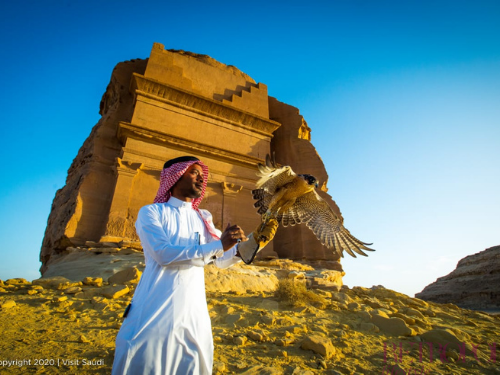
The global travel industry is undergoing its most profound transformation. As the landscape evolves, it is more important than ever to continue to inspire, engage and educate the travel trade for when the world safely re-opens and travel resumes. Saudi Arabia is a relatively new destination on the global stage. As the authentic home of Arabia. Saudi offers unique, diverse and unparalleled experiences, a land of natural assets, rich culture and heritage and adventure.
As well as to bring to light the Saudi offering, the Saudi Tourism Authority (STA) has launched ‘Journeys in Arabia’. An exclusive online event curated especially for Travel Trade Partners around the globe. The virtual engagement series, taking place across six markets around the world, is a first-of-its-kind initiative for STA. aAsource of inspiration and excitement, designed to inform partners about the diverse products and experiences that Arabia offers.
The India ‘Journeys in Arabia’ webinar
Further, brought together local travel trade partners, for an opportunity to hear from thought leaders and experts in the tourism industry. The line up of speakers was:
Welcome address by Fahd Hamidaddin, CEO, Saudi Tourism Authority
Keynote conversation ‘Journeys Make People’ between Abdullah Al Dakhil, International Communication Manager. Saudi Tourism Authority and celebrated Indian Journalist Vir Sanghvi.
Expert panel discussion with:
Haitham Mattar, CCO, Saudi Tourism Authority
Benazir Nazar, CEO, Akbar Travels
Deep Kalra, Founder & Group Executive Chairman, Make My Trip
Madhavan Menon, Chairman & Managing Director, Thomas Cook Group
Rakshit Desai, Managing Director – India, FCM
Sheema Vohra, Managing Director, Sartha Global Marketing
The session on Arabia travel
The session provided insights into the current state of travel, and the opportunities and challenges in addressing the growing demand and interest in Saudi as a new destination. Some of the key highlights and market insights of the discussion were:
India has been identified as one of the key source markets, and STA’s tourism strategy focuses on promoting experiences related to culture, heritage, nature and adventure in Saudi
Indians, especially the online consumers and millennials, are late planners and constantly seek new destinations, within close proximity to India for last-minute holiday planning. Shorter-duration packages, direct flights and ease in visa (preferably e-visas) procurement will be game-changers for a new destination like Saudi
Saudi offers exceptional experiences for diving, adventure sports, and sustainable tourism. The country will also host the Saudi Arabian Grand Prix in 2021. These developments reflect the new travel motivations that Indian leisure travellers actively seek today
Two key considerations among the Corporate/Leisure market are awareness and attractiveness. While the former can be achieved through communication and information dissemination, via visual and video content on Saudi; attractiveness will come from exquisite on-ground experiences that visitors have while at the destination
The high-end Umrah market from India is a major captive audience, combining pilgrimage with leisure through post-Umrah leisure packages
Promoting unique destinations like AlUla for wedding tourism will be a huge draw for Saudi
Lastly, consumer behavior has seen a drastic shift in a post-Covid world with both MICE and Leisure travel experiencing a heightened ecological sensitivity. Travelers are seeking clear information and assurance related to hygiene and safety.
Following up
Moreover, on the success of the Journeys in Arabia’ webinar, STA will also be hosting an immersive virtual roadshow for India on March 2 – 3, 2021, partnering with the most relevant destination, experience and hospitality brands in Saudi to showcase the best of what the Kingdom has to offer.
Accordingly, as part of the ‘Journeys in Arabia’ webinar series, the next webinar takes place for Germany, followed by UK and Russia.
To watch the India webinar in full, please click here:
Saudi Tourism Authority (STA), launched in June 2020, is responsible for marketing Saudi Arabia’s tourism destinations worldwide and developing the Kingdom’s offering through programs, packages and business support. Its mandate ranges from developing the country’s unique assets and destinations, through to hosting and participating in industry events, and promoting Saudi Arabia’s tourism brand locally and overseas.