
Retropoplifestyle

Healing Diseases through Spiritual bliss

By Dr. Priya Kaul

In our life, we face many highs and lows, ups and downs – emotionally and physically. The physical issues and disease can be managed but the emotional problems are a bigger challenge to tackle. We suffer at times and at times we succeed. We accept all these issues as karma or fate. The reality is often different. Our experiences in life do not depend on karma or fate but our thoughts. We are responsible for our reality and not luck. Every thought that enters our brain is creating our future. Bottom line is, we can change our future and turn our life around, on our own accord.

Our thoughts connect us to the spiritual world. All the hardships we go through is the cause of our spiritual thoughts and our spiritual life. Each disease and infirmity may also have otherworldly importance that we are not aware of. As such, the ailment is made inside our body when we are declining to change or acknowledge issues in our lives. Each intersection we experience in disease is, partly, what we cannot see because there may be more to it. That is perhaps what stays behind with us.

We must seek consistent and proficient clinical assistance for any ailment or disease that shows up in our lives. It helps in comprehending the profound importance behind it in our lives. It further helps us understand what our whole being is trying to advise us. Here are a few ailments that can help you understand the hidden meaning behind them. This process is called mapping the cached emotions in the process of healing physical ailments.

●      Inflexibility and guilt: Ankles represent the ability to receive pleasure.

●      Anorexia: Denying the self-life. Afraid of being rejected. Lack of self-love.

●      Anxiety: Not trusting the flow and the process of life. Refusing to live in the present.

●      Apathy: Resistance to feeling. Deadening of the self.

●      Appetite: Fear. Needing protection. Judging the emotions.

●      Arm: Represents the capacity and ability to hold the experiences of life.

●      Arteries: Carries the joy of life.

●      Arthritis: Feeling unloved. Criticism, resentment.

●      Asthma: Smothered love. Inability to breathe for one’s self. Feeling of suffocation. Suppressed crying.

●      Calluses: Hardened concepts and ideas.

●      Cancer: Deep hurt. Longstanding resentment. Deep secret or grief eating away at the self.

●      Candida: Feeling very scattered. Lots of frustration and anger. Demanding and untrusting in relationships. Great takers.

●      Carpal Tunnel Syndrome: Anger and frustration at life’s seeming injustices.

●      Cataracts: Inability to see ahead with joy. Dark future.

●      Cellulite: Stored anger and self-punishment.

●      Cerebral Palsy: A need to unite the family in an action of love.

●      Chills: Mind contraction, pulling away and in. Desire to retreat.

●      Cholesterol: Clogging the channels of joy. Fear of accepting joy

●      Teeth Problems: Longstanding indecisiveness.

●      Root Canal: Can’t bite into anything anymore. Beliefs being destroyed.

●      Throat Problems: The inability to speak up for oneself. Swallowed anger. Stifled creativity.

●      Thyroid Gland: Humiliation. I never get to do what I want to do.

In the process of recovering from your disease or ailment, keep a positive outlook towards this phase. Remember that this a sign from the universe to give your self more attention, listen carefully to what your body has to say to you. It will help you then map out a course of action to overcome this difficulty in life. Your path to a happy and content life is hidden behind the way you counter these messages. Look deeper into yourself to see what is causing these problems consistently in your body. You can involve your medical team in helping you safely recover from the issues you are facing. A compilation of spiritual energies is also remedial.

It must be known, that you can decades or long periods of times before you realize that you trapped emotions. Because these emotions are trapped your body sends you signals by way of ailments. It is when the issue is overflowing and the body cannot manage the issue on its own and needs your assistance.

About the Author

Dr. Priya Kaul is a Spiritual life coach and a healer

Spring and Summer 2021 Collection- Onitsuka Tiger

Willow Smith’s Campaign

Japanese fashion brand Onitsuka Tiger continues to present a contemporary collection that combines fashion with sports, and heritage with innovation.

Onitsuka Tiger is pleased to announce the Spring/Summer 2021 brand campaign images featuring global brand ambassador Willow Smith, continuing from 2020.

The Theme 

“The Onitsuka Tiger Attitude” Andrea Pompilio, Creative Director of Onitsuka Tiger, says the theory of the brand is to pay homage to its history and continue to evolve with creativity and trends.

In this collection, the Onitsuka Tiger style is expressed not only through the logo and the particular details inspired by sailing sails, but also through the intuitive atmosphere. Onitsuka Tiger’s theory, which continues to transmit traditional and innovative messages globally, and Willow’s identity, which is both unique and intelligent, resonates with each other, resulting in special campaign images that allow the viewers to feel a completely new Onitsuka Tiger-ism.

“While the world is changing at an unprecedented speed, Willow continues to offer new values to society without losing her shining individuality,” said the communication team of Onitsuka Tiger on the second season’s campaign images featuring Willow. “For this campaign, Andrea Pompilio used the essential beauty that overflows from within Willow for the theme. We wanted to portray this collection in a dramatic way by incorporating yoga poses, which she happens to be good at. This campaign gives us hope that there are no limits to the diversity of fashion and that everyone can truly enjoy fashion in their own unique way, whether on the go or at home, regardless of location, age, or gender.”

Andrea Pompilio

Onitsuka Tiger Creative Director 

Born in Italy. Andrea grew up in a highly creative environment: his father being an architect, his mother a painter, and his grandmother ran a boutique, and had a dream to be a fashion designer when he was a child. Then, he graduated from Pesaro’s Art Institute and then moved to Milan to study at Istituto Marangon. After gaining experience with various renowned brands, he presented his signature brand in AW 2011. Then, after collaborating with Onitsuka Tiger, Andrea became the creative director and has been in this position ever since. 

 In Conversation with Willow Smith

  • You share your yoga-related activities on your Instagram (@willowsmith) on a daily basis. What does yoga mean to you? Also, you incorporated some yoga poses intothis shoot. So, How did you feel about making yoga poses in Onitsuka Tiger’s new collection?

To me, yoga is a practice which brings me closer to myself so that I can still my mind enough to build my relationship with The Divine. I’m grateful that I could show these beautiful, unique garments in a way that’s so fulfilling for me!

  • If you describe this campaign in one word, what would it be?

I would describe this campaign the same way I would describe the shoes: originative

LOOK

1949, Kihachiro Onitsuka established Onitsuka Co., Ltd., the forerunner of ASICS.  The brand began with a commitment to promoting youth health. Since then, the Onitsuka Tiger Stripes have become synonymous with one of the most world-renowned athletic brands. The legend lives on today in the fusion of Japanese heritage and modern flair. With designs ranging from updated classic silhouettes to refreshing new styles and collaborations with like-minded artists and cultural connoisseurs, the spirit of Japan resonates in each new collection of Onitsuka Tiger shoes, apparel and accessories.

Website

 www.onitsukatiger.com for more information.

The stripe design featured on the sides of the Onitsuka Tiger shoes is a registered trademark of ASICS Corporation. The wording “Onitsuka Tiger” and the logo of “Onitsuka Tiger” used herein are registered trademarks of ASICS Corporation. 

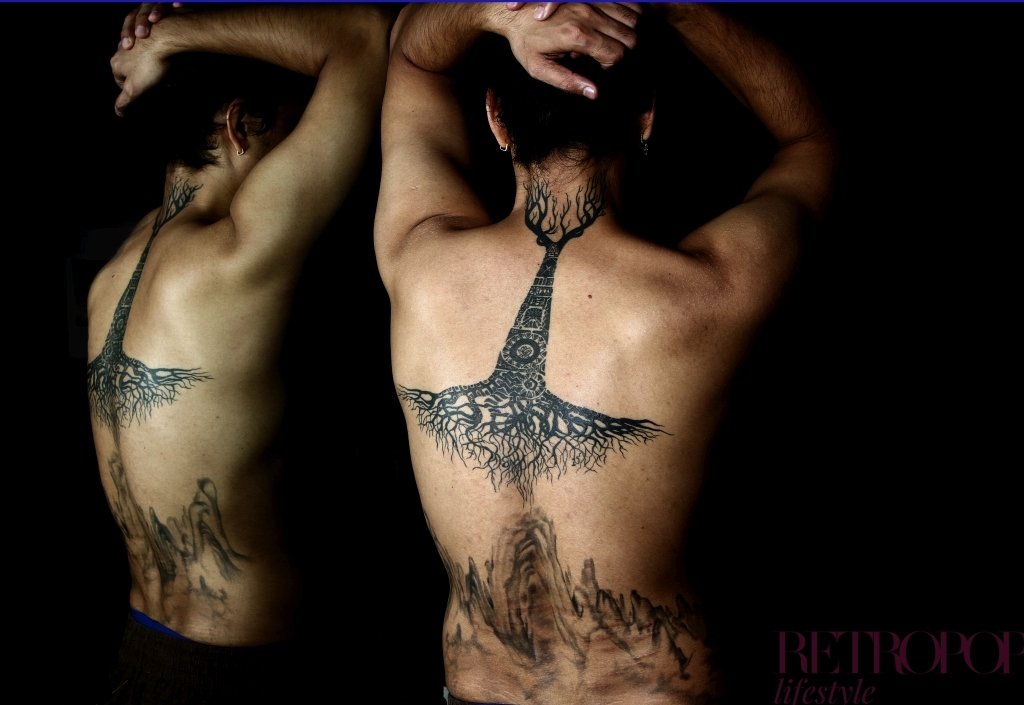
The Continuing Evolution: Art of Tattoo

The art of tattooing is deeply entrenched in Indian culture. Passed down from generation to generation, the legacy art of tattooing has been in India for hundreds of years. It was originally practised in tribal areas of the northeast and central India where it symbolized a rite of passage. From town fairs to village melas, homegrown Indian tattoo artists have freely set up shop wherever the people are. 

Over time, as our country began to keep pace with the rest of the world, the trade of ideas and creative instincts have helped the art of tattooing evolve, too. This evolution can also be seen in the increasing levels of complexity when it comes to tattoos. What began as simple tribal designs have now evolved into intricate artworks that creative and passionate artists spend days to complete.

It is estimated that the Indian tattoo industry generates more than Rs. 20,000 crore every year. However, the industrialization of tattooing is relatively new in India. Even though it is such a money-maker, the industry is fragmented. There is no organized structure, rules and regulations, enforcement of safety protocols, or a governing board/union to keep a check on the standards maintained within the industry. 

Technology and the Tattoo Industry 

Another aspect in which the tattoo industry has grown by leaps and bounds is the technology used to create tattoo art. From the initial days of using rudimentary tools to hand-poke tattoos into the skin, a shift towards coil-based machines was seen. These magnetic coil machines gave artists the freedom to set up their rig at home. It also allowed artists to hasten the process of tattooing and made it possible to create more elaborate designs, as compared to the simple tribal tattoos done earlier. 

Today, advanced technology rotary machines from top-notch companies like Germany-based Cheyenne have become popular. Not only are these rotary machines powered by a robust motor, they make much less noise, and are built to ensure that the artist does not dig too deep into the skin and cause damage. 

Machines have also improved in terms of power supply. Instead of having to keep the machine plugged into a power source throughout the time, it takes to make the tattoo, wireless machines with an internal battery source have made tattooing much simpler. These wireless machines are easy to manoeuvre and portable. 

Taking Cues from the West

Internationally, tattooing is recognized as a lucrative and profitable business opportunity. In line with this, they also have proper organization and regulatory systems in place. So, when it comes to the practices that need to be implemented for hygiene and health or supplies to be used, Indian tattoo artists take cues from their Western counterparts. 

For most artists, this means ordering supplies from the West or utilizing local alternatives for the same purposes. However, with no set protocol or implementation standards, some studios and artists who may not have the resources or inclination to maintain good practices tend to fail in the long run.

Tattooing as a Lucrative Career Option

When it comes to products and services, the demand dictates the supply. This is visible in the burgeoning growth of the tattoo industry in India, too. As the younger generation’s interest in tattooing, body piercing, and even extreme modifications increases, the need for quality tattoo artists is also increasing. This demand is especially evident in the post-pandemic world. More people are feeling the need to express their resilience and strength, to carry their hopes for the future tattooed on their skin. 

For a long time, the tattoo business in India was not considered a lucrative one that could be seriously pursued. However, with time and an exponential increase in demand, the tattoo industry in India is being recognized as one of the trendiest business options in modern times. 

To cope with the increasing demand, more and more tattoo studios have opened shop in the past decade or so in India. While some of these tattoo artists have learned their skill from specialized institutions, many more are self-taught. 

The impact of COVID-19 cannot be denied here. Travelling to work has become infrequent as people are working from home. The situation is direr for those working in MNCs. Global instability and a job that cannot be done from home mean that many young workers are facing a career crisis. 

While there are many things to improve with respect to regulations and governance, the tattoo industry is better placed as compared to most other career options. One of the essential characteristics of quality tattoo artists is their love for the art of tattooing and respect for their own talent. 

They say that a bird does not worry about the branch falling because it has faith in its own wings. This is true about tattoo artists, too. As long as an artist has some basic equipment and the will to pour themselves into their work, they can work from anywhere. Learning how to tattoo is not just an art, it is a life skill. 

Designing Your Own Path to Success

Like most tattoo artists, Max’s successful journey into the world of tattooing began with his first tattoo. While studying for his MBA, he decided to get inked, and the rest is history. Unlike others, Max did not stop just at getting inked—he delved deeper into the art of tattooing, learning the skills required to turn his dream into reality. Two years and many tattoos later, he bid adieu to his well-paying job as a branch manager at a reputed stockbroking firm to establish Inkinn Tattoo Studio in 2011. 

Being a tattoo artist offers you the freedom to set up shop wherever you want. Like other creative pursuits, tattooing has many takers, particularly amongst the younger Gen Y and Gen Z population. However, Max saw a glaring gap—unlike singing, dancing, or photography, tattooing did not have a structured format in which it was being taught. There were no institutes to help budding artists learn the art of tattooing and the science of hygienic practices. The establishment of Max’s labour of love, the Inking Tattoo Academy is a step towards filling this gap. 

Today, unconventional career options are becoming the norm. As a pioneer in the Indian tattoo industry, Max has the expertise and the passion to share what he learned the hard way with artists of the new generation. By teaching the art in a formal and structured manner, it is Max’s hope that new artists will not have to struggle as he did. 

In a world where everyone advises you to make typical career choices, Max hopes to make it easier for you to follow your heart and experience the satisfaction of making money out of your passion. Together, established and new artists can help the tattoo industry of India evolve further and reach new pinnacles of success bringing it to par with the rest of the world.

AN ENIGMATIC BLEND OF CARNATIC AND HINDUSTANI RAGAS AT THE 20TH EDITION OF SMRITIYAAN SERIES

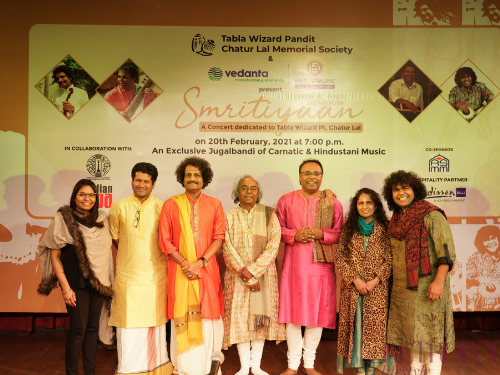
Tabla Maestro Pandit Chatur Lal Memorial Society and Hindustan Zinc Limited as a CSR initiative organized the 20th edition of Smritiyaan #UdaipurChapteron 20th February 2021 on their official social media accounts. The annual concert series wrapped the evening with a unique blend of Carnatic and Hindustani Music.

The concert series commenced with a soul-stirring performance by the winner of ‘Pratibha’ – Online talent hunt of Indian classical folk music & dance Kaustubh Manipushp Kunj from Ajmer. The 15-year-old boy won the hearts of the judges during the talent hunt selection rounds and was chosen as a winner among the 5 districts of Rajasthan. As a part of the winning prize, Kaustubh got a chance to perform at the 20th edition of Smritiyaan #UdaipurChapter and was conferred with Pandit Chatur Lal Yuva Puruskar.

Smritiyaan

The jury of Pratibha Talent Hunt witnessed the legends, Bhajan Samraat Padma Shri Anup Jalota, Kathak Guru Padma Shri Shovana Narayan, Tabla Maestro Pandit CharanjitChaturLal& celebrated Indian flautist Pandit Ronu Mazumdar.

Talking about the online talent hunt, Bhajan Samraat Padma Shri Anup Jalota said, “The entries received from across the 5 districts are appreciable. It was a difficult task to choose a winner as each one of them were good in their own talent. These talents have a long way to go and I wish them good luck.” Adding to Bhajan Samraat, Shovana Narayan added, we were contemplating until last as we were confused between Kastubh & the amazing sarangi & tabla duo Tabriz & Ariz. The young talents were so good that we could not stop praising them. Amongst all, Kaustubh touched my heart with his singing. I wish him and all the other participants the best for future endeavours.”

The evening continued with music maestros of India Dr Mysore Manjunath, Pt. Gaurav Mazumdar, Vidwan B. C. Manjunath and Pranshu Chatur Lal presentingthe much-awaited Jugalbandi of Carnatic and Hindustani Ragas. The moments of soulful elegant fusion of North and South music were made complete with the Violin, the Sitar, the Mridangam and the Tabla.

The Grammy-nominated and Sitar genius Pt. Gaurav Mazumdar shared his excitement of performing at concert series by Pandit Chatur Lal Festival, ‘It is always a pleasure and honour to perform at concerts organized by Pandit Chatur Lal Memorial Society. This bestows upon us a moment to share a close bond of several decades and seek the blessings of the legendary Tabla player Pandit Chatur Lal Ji. This Jugalbandi is very special to me as we bring together both the genres of North and South Indian Music and create a new language and understanding, both for the musicians and the listeners.”

Adding to this violin maestro Dr Mysore Manjunath said, “I am completely touched to see the passion and dedication the Chatur Lal Family endows for Pandit Chatur Lal. Their contribution to promoting Indian culture globally even in the peak pandemic has been commendable. This concert has been also very inspiring looking closely at the journey of Pandit Chatur Lal Ji on our visit to his museum ‘Taa-Dhaa’. This jugalbandi from us is a musical homage to his unparalleled contribution both in north and south genres of music.

Vidwan B. C. Manjunath, the brilliantMridangam artiste, said, “Jugalbandis are always an enriching experience. It gives us the opportunity and a platform where people from different backgrounds come together to make a single piece of music. Hence it’s very colourful and diverse.”

Pranshu Chatur Lal, the young tabla maestro popularly known as Prince of Tabla and grandson of Pandit Chatur Lal, said “Every artist has their own language and thought process towards their music and when it comes to an amalgamation, it beautifully brings forward artistry of all musicians as one platter. I believe, merging and experimenting with music is an experience of souls fusing through their exquisite music.”

Marking 30 glorious years, Pandit Chatur Lal Festival organized the Smritiyan edition in association with Hindustan Zinc Limited as their CSR Initiative. The concert series is co-sponsored by Rajasthan State Mines & Minerals Limited and supported by Hospitality partner Radisson Blu Plaza Delhi Airport, in collaboration with ICCR and IndianRaga as a digital partner.

The Artistic Director of Pandit Chatur Lal Festival and granddaughter of Pandit Chatur Lal who has also curated & conceptualised the series shared, “Smritiyaan concert is an established brand in the world of music, showcasing talent on a mammoth scale for the last 20 years in Udaipur. It has been patronized by almost all the doyens and celebrated artists of India and abroad. Smritiyaan concert is dedicated to the Ratna of Udaipur, Oscar-Nominated & BAFTA Award Winner Tabla Stalwart Pandit Chatur Lal. He was the first Indian percussionist to popularize and give Indian classical music global acceptance and acclaim in the West, in the mid-50s, through innumerable concerts. He deservedly won the encomium of being the pioneer of training the Western ear to appreciate the subtleties and fine nuances of Indian Classical music especially ‘tabla’ along with Pandit Ravi Shankar & Ustad Ali Akbar Khan.” Expressing her gratitude to the sponsor, she added, “I would like to extend a token of gratitude to Hindustan Zinc Limited and Vedanta parivaar for supporting Smritiyaan for almost 17 years now and making its grandeur music festival of Rajasthan Patronizing almost all the doyens and celebrated artists of India and abroad. Pandit Chatur Lal Festival is so glad that this beautiful initiative ‘Pratibha’ has been introduced to Smritiyaan as a new wing unearthing the unknown talents from the rural communities and providing a fair chance to perform and get recognised globally.”

Here is the Concert Link. 

https://www.youtube.com/watch/M0vaSDaTDwI

Committed to Better Goa, CM collects advice for better Ease of Doing Business

Goa CM appreciates incentive-scheme, focus on services for better ‘Ease of Doing Business’ in State

 “The coordination with industry leaders has renewed our resolve to fast-track Goa’s economic development by removing hurdles for business growth”, said CM Dr. Pramod Sawant from his Altinho residence on Friday, February 19, 2021. “Their recommendations and ideas will surely help us craft our immediate and long-term approach in ease of doing business”, he added.

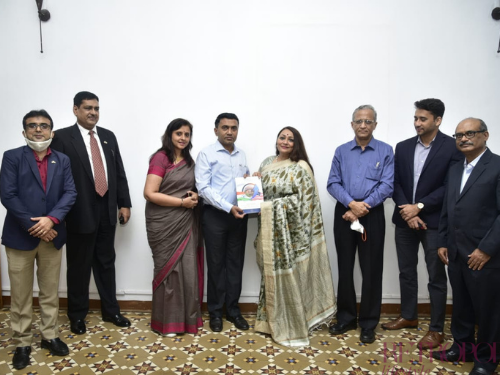
The Hon’ble Chief Minister thanked Indo-American Chamber of Commerce (IACC) and Shardul Amarchand Mangaldas & Co (‘SAM & CO’), during the presentation of the White Paper setting out ideas to improve the government’s approach towards ‘Ease of Doing Business’ in the State.

Representatives from IACC and SAM & CO shared a white paper on ‘Goa and the Ease of Doing Business’, which included key recommendations from a round table discussion held last month. This deliberation had included 26 business leaders from Goa and from diverse sectors like pharma, IT, finance, telecom and mining.

“While Goa’s ecosystem can sustain industrial development at all levels, the state needs to give them an extra push with business-friendly reforms. These reforms would lay a roadmap to make Goa a hub for investment. This White Paper is an attempt to catalogue our recommendations for these reforms in one place”, said Saurabh Shah, 1st Vice President, IACC (West) and Chairman, Ease of Doing Business Committee.

The White Paper includes recommendations on digitisation, e-processing, infrastructure and utility development, transparency and accountability. As a path to Goa’s growth story, it recommended a push to the services sector, food processing, medical tourism and value-added service industries.

“Goa holds a unique position in India, owing to its demographic size, location and natural resources. These factors make it an attractive destination for specialised industries, services and educational activities. The implementation of a holistic and targeted regulatory framework will enable the State to unlock its vast, untapped potential”, said Radhika M. Dudhat, Partner, Shardul Amarchand Mangaldas & Co.

Shardul Amarchand Mangaldas & Co is the Knowledge Partner in this initiative and have collaborated with IACC to make the White Paper a reality.

At the heart of the recommendations lie an appeal to craft a specific incentive program which would foster an ecosystem that cradles development for small, micro and medium-level industries. CARE (Constructive, Adaptive, Robust and Efficient), this incentive approach, would bundle all necessary reforms to improve ease of doing business in Goa. Such a thriving business and industrial ecosystem would integrate, harness, protect and enhance the state’s social and environmental strengths.

Highlighting this incentivised approach, CM Dr Sawant said, “We are welcoming diverse companies to Goa by providing them with a single-window clearance system and GST rebates”.

It also highlighted the need to improve the state’s electrical capabilities and reduce power cuts by promoting renewable energy sources like biogas, solar power and wind energy.

Thanking the IACC and SAM & CO for their exhaustive efforts in drafting this White Paper, the Chief Minister has promised to consider their recommendations in Goa’s future business plans.

Photo caption: Representatives from IACC and SAM & CO shared a white paper on ‘Goa and the Ease of Doing Business’ to the Hon’ble CM Dr. Pramod Sawant from his Altinho residence yesterday. 

Shashi Tharoor Questions Concepts of Nationhood, Identity and the ‘Battle of Belonging’

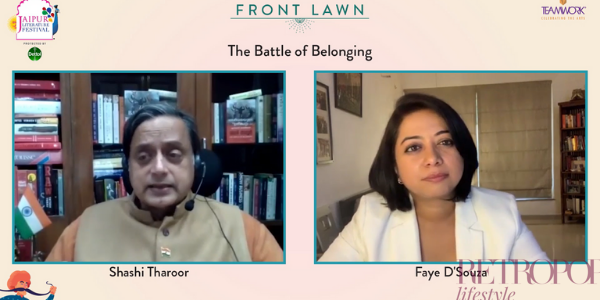
‘Who is Indian and what is ‘nationhood’?’ was a question that took centerstage during a conversation between politician and celebrated author Shashi Tharoor, and journalist Faye D’Souza at the first ever virtual edition of the Jaipur Literature Festival.

The session, titled ‘The Battle of Belonging’ takes inspiration from Shashi Tharoor ’s book of the same name, and evaluates the historical and current political trends impacting the ‘idea of India.’ The book explores the changing interpretations of nationalism, patriotism, citizenship and belonging as well as the nature and future of nationhood. The duo, in turn discussed these themes and ideas in the context of the past, the present and the emergent future during their virtual conversation.

The politician spoke of two broad concepts of nationalism – one which is anchored in an identity defined by place of birth, ethnicity, language and religion or ‘identity nationalism’. The second which is linked to Constitutions and institutions – ‘a civic nationalism’. He mentioned how civic nationalism was first enshrined in the Indian Constitution after three years of debate and dialogue.

The conversation then traced India’s journey post Partition, and how the freedom struggle gave birth to a nationalism of shared sorrow. The duo also raised several other pertinent questions over the course of their hour-long conversation, related to delegitimising dissent, conformity, and India’s cultural identity.

The Jaipur Literature Festival 2021 will take place till 28th February on an exclusive virtual platform.

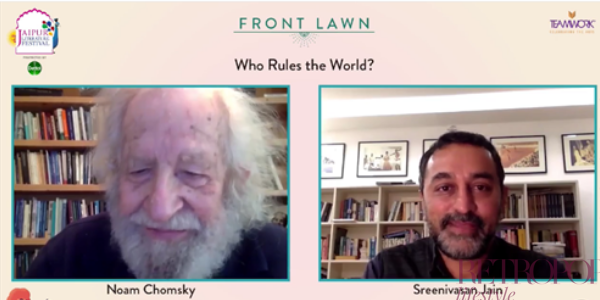
Who ‘Really’ Rules the World?: Noam Chomsky and Sreenivasan Jain in Conversation at the Jaipur Literature Festival

Described as the ‘greatest literary show on Earth’, the Jaipur Literature Festival is a sumptuous feast of ideas. Every year, the Festival brings together a diverse mix of the world’s greatest writers, thinkers, humanitarians, politicians, business leaders, sports people and entertainers on one stage to champion the freedom to express and engage in thoughtful debate and dialogue.

The 14th edition of the Festival is no different. The first ever virtual edition, saw Noam Chomsky, celebrated American linguist, philosopher, cognitive scientist, historian, social critic and political activist in conversation with Sreenivasan Jain on day 3 of the Festival.

The insightful conversation saw Professor Chomsky discuss the global ‘drift into authoritarianism’, post-Trump America, and the factors that make social reform possible.

The session opened with Professor Chomsky speaking of the recent storming of the United States Capitol, and how it was a turning point for the country. He shared what it was like to wake up in America in the ‘aftermath’ of Donald Trump. The duo discussed whether Trump can still pose a tangible threat to American democracy, seeing as he is no longer in power – with Professor Chomsky speculating possibilities of continued propaganda for very real support for Trump by his ‘voter-base’ and insisted that the democracy had ‘serious problems’ even before his presidency. 

Speaking about the rise of authoritarianism, Professor Chomsky delved into the ‘neoliberal assault’ of the last few decades, explaining how inequality and authoritarianism appear to be inextricably linked. He mentioned an example from a study by the RAND Corporation, a well-respected quasi-governmental organization in the US, which estimates that the transfer of wealth from the lower 90% of the population to a fraction of the top 1% has been about 50 trillion dollars over the last 40 years. 

The conversation also raised wider questions about the state of democracy, which appears to be in as much danger from radical majoritarianism in the United States, or in India, as it is from the European Union shifting the seat of several governance decisions away from state governments to Brussels, to an unelected bureaucracy. Responding to Jain’s question on what can be done to resist the threats to democracy, Professor Chomsky said, “There’s no magic key! “You fight it the way you’ve always fought it, with educational programs, with organization, with activism.”

Discussing solutions to push back against the radical majority, Professor Chomsky spoke about the need for the popular forces within an ideological party to press for progressive social action. He spoke about this in context of the American political system and highlighted how the Biden government’s legislative program on climate change, possibly even better than Obama’s, reflects the direct impact of activism and popular forces within the party pushing the agenda. 

“Over time any political or social movement can work,” he said, pointing to the Independence Movement in India. “It takes dedication and commitment. It doesn’t happen by itself, you have to fight for social programs and reform,” he added.  

Reflecting on some of the critical progressive movements like the labour movement, the civil rights movement and the women’s rights movement among others, he talked about the significance of coming together in solidarity and with constant, dedicated struggle. “There is no point being optimistic or pessimistic. The point is to face the challenges, take the opportunities, get to work and overcome the problems. It can be done – and optimism says yes, let’s do it,” he said. 

The Jaipur Literature Festival 2021 will take place till 28th February on an exclusive virtual platform. 

Explained: Blood Donation during the COVID19 pandemic

 By Dr Lalit Dhantole, Consultant Transfusion Medicine, Fortis Hospitals Mulund

Why blood donation is key to saving lives of millions of Indians? Suryakant, a construction worker in Mumbai had the biggest nightmare during the lockdown. His 12-year-old daughter is a Thalassemia patient, a blood disorder that causes the body to produce less than normal levels of haemoglobin. She needed blood transfusion every 2-3 weeks, and that was an exercise that Suryakant & his wife had for years together. But during the lockdown, things got rough; with no work, no financial aid and most public healthcare centres turned into COVID units, getting a blood transfusion done for free was not possible. He had to seek help at a centre where he spent all his savings. He had lost all hope and was about to return to his hometown when an angel extended support. Such was the story of people like Suryakant who faced shortage of blood during the lockdown.

 LACK OF SAFE BLOOD IN INDIA: Access to safe blood has been a persistent problem in India. The rate of blood donation in the country amounts to only 1% of the population, and the pandemic only compounded the issue. Due to strict social distancing norms, cancellation of various blood drives, and low donor turnout due to COVID, India faced a huge shortage of blood. In April 2020, the Indian Red Cross Society raised an alarm that voluntary donation had fallen by almost 100%.  While the rate of blood donation declined drastically, the requirement for blood remained constant. Shortage of blood in the past few month is said to be detrimental to those who are in urgent need of blood and blood components, like those with Thalassemia & severe Anaemia, instances of severe blood loss, road traffic accidents, antepartum and postpartum haemorrhage, and patients needing urgent surgeries.

 As this became a major cause of concern, the Ministry of Health and Family Welfare (MoHFW) issued guidelines for safe donation of blood during the ongoing pandemic. It states that blood donation can still be done after following guidelines for the safety of both donors, and the drive organisers. Similarly, The National Blood Transfusion Council’s (NBTC) also issued guidelines that emphasized on the continuity of supply of safe blood and recommended reinstating both outdoor and in-house donations, in compliance with social distancing standards, biomedical-waste disposal rules and infection control guidelines. Guidelines state that people are at no risk of developing COVID-19 through the blood transfusion or via a blood donation procedure.

 Moreover, in the last few months, the MoHFW and the state government of Maharashtra have been working on new protocols, encouraging people to donate blood. Having said that, this problem will only resolve if people overcome fear and come forward to donate blood.

 GREATEST ACT OF GIVING: Blood donation is the greatest act of kindness and at a time where the world is facing one of the biggest health crisis, it is fundamental to donate blood and ensure safer donation drives. However, most people are sceptical about blood donation and have many questions in their mind. Here are some answers to your queries that can help you save lives.

 WHO CAN, AND CANNOT, DONATE BLOOD? As per the National Blood Transfusion Council (NBTC), blood can be donated 28 days post COVID recover or discharge from a treating facility or 28 days after home isolation ends. Moreover, very mild, mild, pre-symptomatic, moderate, and severe COVID-19 cases must be deferred for 28 days from donating blood after discharge from a treating facility or 28 days after the end of home isolation.

 WHAT ARE SAFETY MEASURES TO BE CONSIDERED BY BLOOD DONATION ORGANIZERS?

  • Social distancing measures should be followed at all blood donation sites. These measures include physical distance, restriction on social norms of handshaking and hugging, reducing overcrowding, managing blood donation couches such that one-metre distance is maintained between two blood collection areas, calling donors in a staggered manner.
  • For collection of convalescent plasma, the guidelines stated that systems should be in place to enable re-entry of cured COVID-19 patients as donors for convalescent plasma for treatment of those affected by the novel coronavirus.
  • Blood donation centres and camp organizers should educate staff and donors on these measures and provide facilities like running water, soap, hand sanitizers, personal protective equipment, color-coded dustbins.
  • Hand hygiene and coughing etiquette must be maintained strictly by all.
  • Also, safe disposal of used gloves, masks, caps, and soiled material should be ensured. Protocols for proper cleanliness of the equipment used during the blood donation should be maintained.
  • Follow procedures for cleaning and disinfecting and increasing frequency of these activities.

WHAT ARE THE PRECAUTIONS THAT DONORS NEED TO TAKE? For donors it is quite simple, maintain good respiratory hygiene. COVID testing is not mandatory before blood donation, as transfusion associated COVID is very rare. However, if a person is experiencing fever or sorethroat  in the past 1/2 weeks, he/she needs to report it before considering blood donation. All donors need to take universal precautions like social distancing measures, wearing mask and proper hand sanitisation during donation.

Before donating blood, make sure you:

  • Drink enough water
  • Get enough rest
  • Avoid smoking and drinking alcohol
  • Avoid heavy physical activity
  • Eat enough food rich in Iron and Protein

Roseate Chef 1.0 calling out Homes Chefs

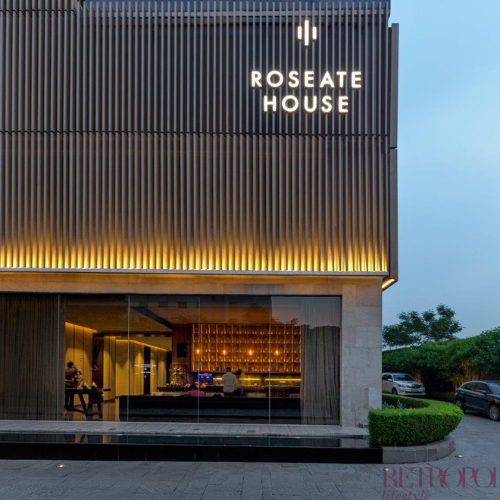
After the resounding success of Chef 1.0 Budding Chefs, Roseate Hotels and Resorts were delighted to host all cooking enthusiasts from across the country to participate in Chef 1.0, Home Chefs in partnership with The Yummy Idea. The competition was held on 12th February 2021.
During the competition, the participants had to share lost recipes of the Indian Kitchens. There were a total of five shortlisted participants in the competition. Winner of the competition Ms. AnupurnaKaul had shared some impressive recipes like Gaad Nadur Mujh a combination of fish lotus stem and Raddish with Plain Steam Rice, Punjabi Chole with Paneer Paratha. The winning dish had the essenceof true flavors and authenticity.
Anuj Wadhwan, Executive chef of Roseate House New Delhi was one of the judges as well as the mentor of the competition. He said “we are extremely happy to organise a competition to encourage fresh talent. This competition is a testimony of Roseate Hotels and Resorts’ long-standing commitment to new and hidden talents.”The prime objective of this competition was to give all the home chefs a platform to step out from their kitchen and exhibit their culinary skills.

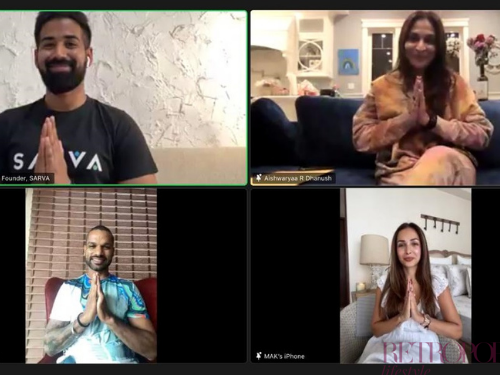
Malaika Arora, Shikhar Dhawan, Aishwaryaa Dhanush and Sarvesh Shashi announce 1 year of free yoga with SARVA for a healthier 2021

Targeting to positively impact the lives of 5 million users through our one-year free yoga and mindfulness program across the globe in the next 365 days

 The COVID-19 crisis placed a huge burden on people’s mental and physical health and well-being across various age groups. The year 2020 was therefore one of change, reckoning, transformation, and shift towards a better lifestyle. Taking this biggest learning forward, some of India’s biggest names have come together to offer one-year of free yoga and mindfulness for a healthier 2021 with SARVA, India’s fastest growing yoga-based wellness ecosystem. 

The offering includes FREE content from the app. These include different kinds of yoga workout videos, different audios of guided meditation, mindfulness music, sleep stories and more and curated healthy recipes to try for a holistic transformation. 

In a fun and insightful discussion Co-Founders of SARVA & Diva Yoga –  Sarvesh Shashi, and Malaika Arora along with investors Shikhar Dhawan and Aishwaryaa R Dhanush discussed the benefits of yoga and the impact that it has had on them all through 2020. 

Sarvesh Shashi, Founder, SARVA and Diva Yoga said, “2020 has been a year of fight, acceptance and gratitude for almost everyone across the world. Continuous evolution became a way of life as the times challenged us. On one hand as we closed most of our studios, we believe that digital health and wellness will be the cornerstones of our life in the years ahead as reinforced by the recent pandemic. The practice of yoga can go a long way in helping us stay fit both mentally and physically. I have undergone a 360-degree transformation ever since I started practicing yoga since the age of 6 and I wish to help people reap the same benefits across the globe. Our quarter on quarter revenue growth of over 50% since our digital launch in April 2020, goes on to show the increasing need for yoga in our lives. It was also heartening to see positive sentiments of users towards what we are doing and that the future prospects for both SARVA and yoga-based health & wellness look promising”

Malaika Arora, Co-founder, SARVA and Diva Yoga said, “Yoga is holistic in nature and is one of the best mechanisms for overall physical, mental & emotional health! I’ve disciplined myself for the last 25 years and have learned so much in that time through Yoga. I’ve discovered that the body responds positively to nutritious food and wholesome experiences. I truly believe that the benefits of yoga aren’t just skin deep. The limitless power it possesses can be wielded with more additions like a Sattvic diet and simple breathing techniques that can literally rejuvenate one’s self in minutes. The pandemic has reinforced why it was one of the best decisions to have inculcated yoga into my routine and the SARVA app has been my enabler.” 

Shikhar Dhawan, Cricketer and Investor SARVA said, “As an athlete, it is imperative to have an optimal balance between physical and mental health. For me, Yoga has been my biggest healer to attain that balance to enhance my game and performance on the field. Additionally, at a personal level too, it has helped me to evolve at an emotional level, which helps me to meet the ups and downs with the same mindset. SARVA, with its new app, offers me the benefit to practice Yoga even when I’m on tours and I believe that it will help to evangelise and assist easy adoption of Yoga with a large audience.”

Aishwaryaa R Dhanush, Director and Investor, SARVA said, “I am extremely focused on my physical and mental composition. Yoga is my ‘go-to’ method for keeping myself in a healthy space at all times. During the pandemic when I spent all my time at home and had to maintain a balance between my kids and work, it is yoga that helped me maintain the equilibrium. There are so many benefits for the body and mind and depending on individual needs. I always find the right yoga and mindfulness content on the SARVA app. Even when I travel due to work or recreation, I make it a point to practice yoga every day.”

SARVA recently relaunched its app in an all-new version with over 1500 hours of Yoga and mindfulness content which makes it probably the largest content bank for a yoga app in the country. The app has yoga modules across various categories like Therapy, Restorative Yoga, Traditional Indian authentic forms of yoga, Yoga for kids of all age groups, Yoga with props and more by various instructors from authentic yoga schools from India. It offers live classes 15 hours a day x 7 days a week.  Personalization has been taken a step forward with features such as goal-based program recommendations catering to people at different stages of their yoga practice (such as beginners, intermediate practitioners and advanced ones) to ensure holistic transformation of body and mind. Further, the app enables users to track their progress.

SARVA has been instrumental in making yoga and mindfulness fun, particularly during the current times, when immunity boosting, physical & mental wellness and health is key. The brand is working towards connecting 7 billion breaths. SARVA 2.0 aims to be the one-stop app that brings forth traditional yoga suited to modern exercise forms and meditation to enhance physical, mental and emotional wellbeing. 

The music and mindfulness section has eclectic musical compositions, and 20,000 minutes of content sourced from global composers. SARVA already has a blanket license for the entire Myndstream music catalogue from Cutting Edge, a leading independent music publisher. 

About SARVA

SARVA is India’s fastest growing yoga-based wellness ecosystem. The brand was founded by Sarvesh Shashi and has notable investors like Jennifer Lopez, Mark Mastrov, Alex Rodriguez to celebrities, influencers, and experts like Malaika Arora, Aishwaryaa Dhanush, Shikhar Dhawan, Shahid Kapoor etc backing it. It is also backed by institutional investors the likes of Fireside Ventures, Mantra Capital and the Cutting Edge Group to name a few.  The SARVA App currently hosts a range of content across Mind, Body and LIVE workouts & aims to be the one-stop solution for everything wellness.