Retropoplifestyle

Hyundai India Couture Week 2026,

Threads Beyond Time

Anamika Khanna’s Moonlit Palace Redefined Indian Couture Through Memory, Movement, and the Quiet Power of Craft

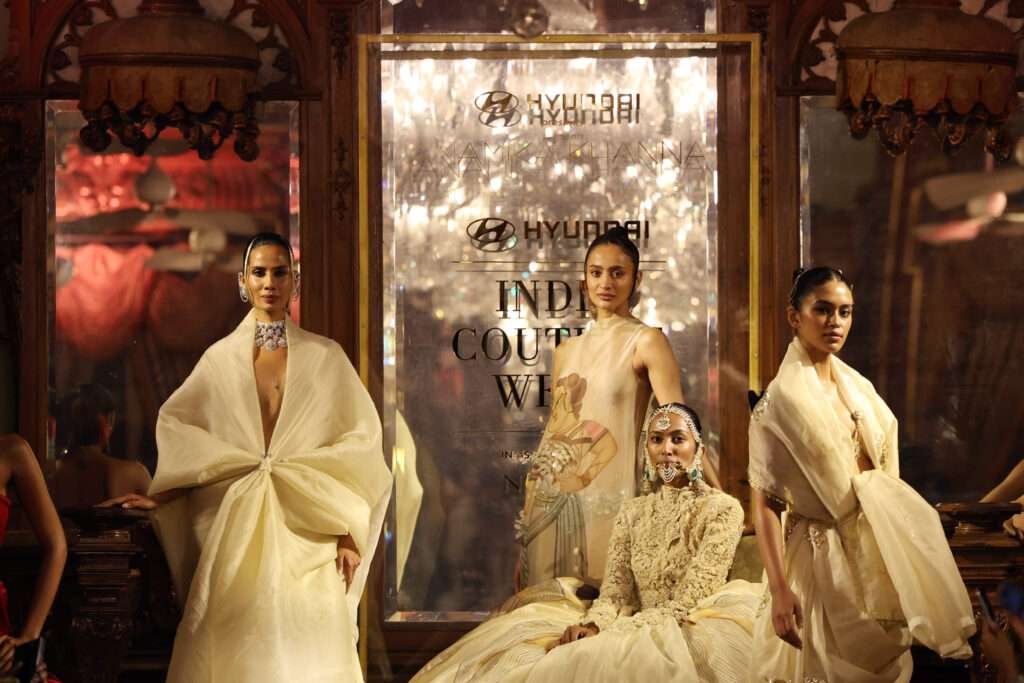
Presented beneath the soaring arches of Hyderabad’s Taj Falaknuma Palace as the opening showcase of Hyundai India Couture Week 2026, in association with Nexxus New York, an FDCI initiative, Anamika Khanna’s Moonlit Palace unfolded with remarkable restraint. There were no exaggerated theatrics competing for attention. Instead, the evening belonged to craftsmanship—patient, intricate, and deeply human.

In a season where fashion continues to chase spectacle, Khanna offered something increasingly rare: stillness.

That stillness became the collection’s greatest strength.

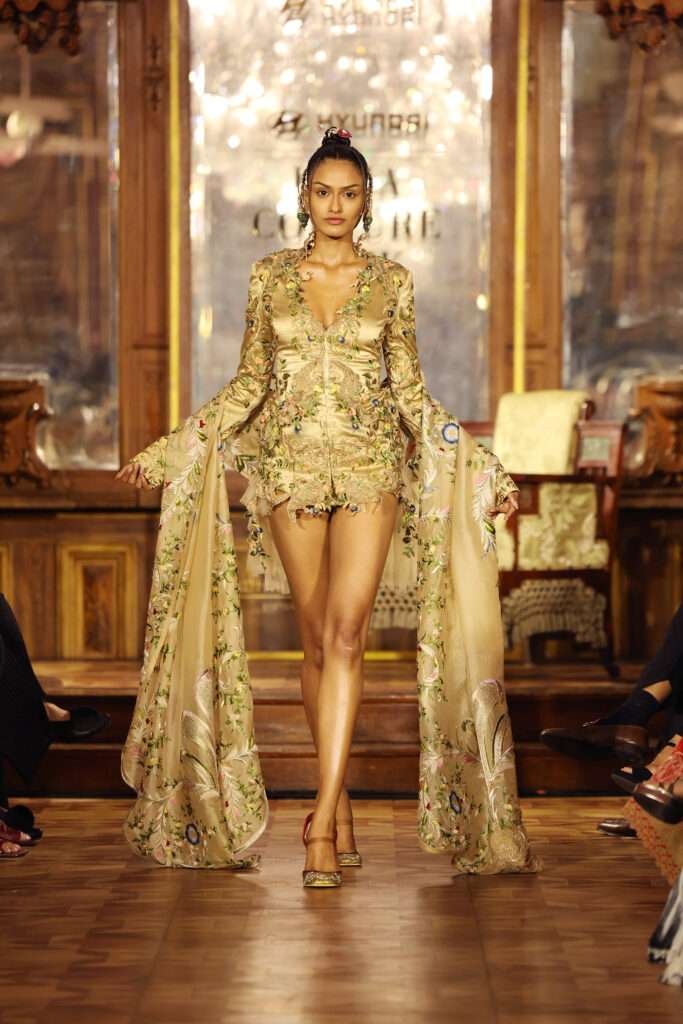
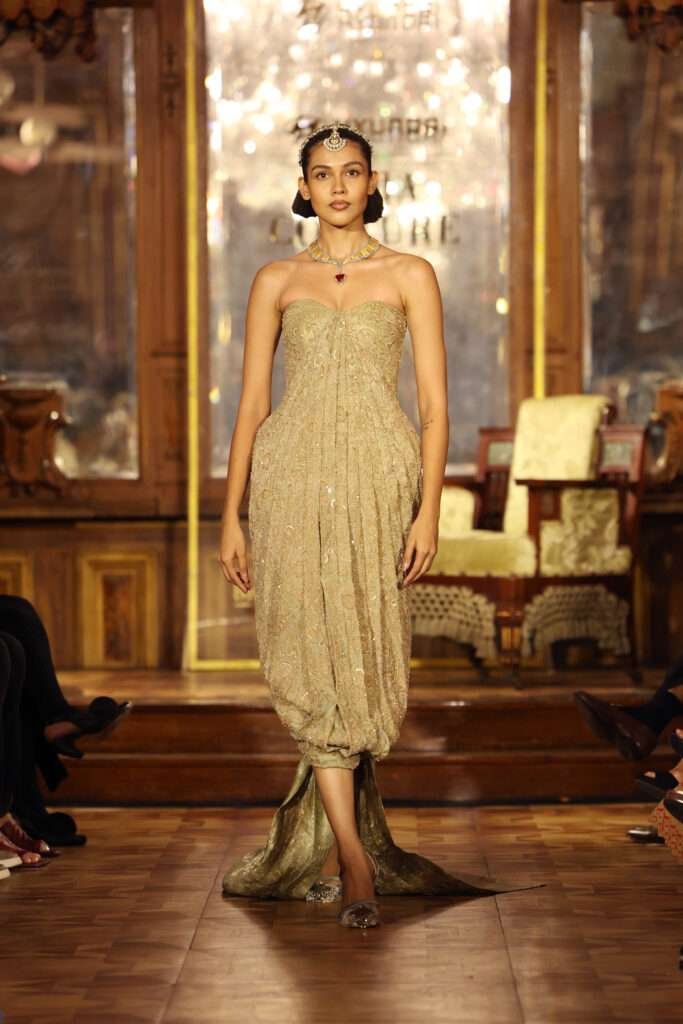
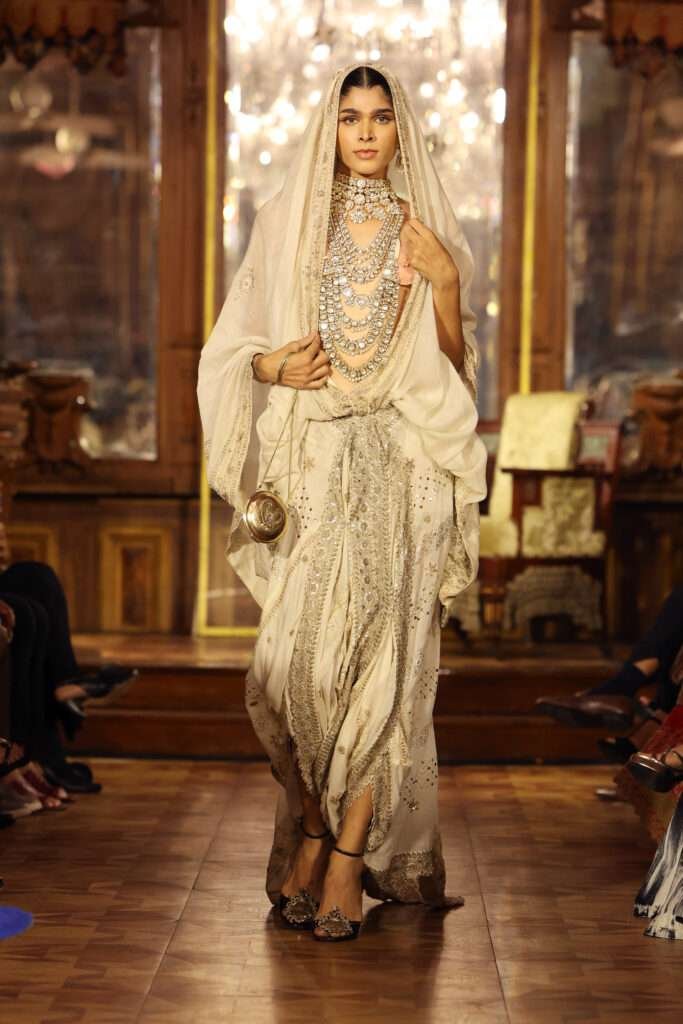
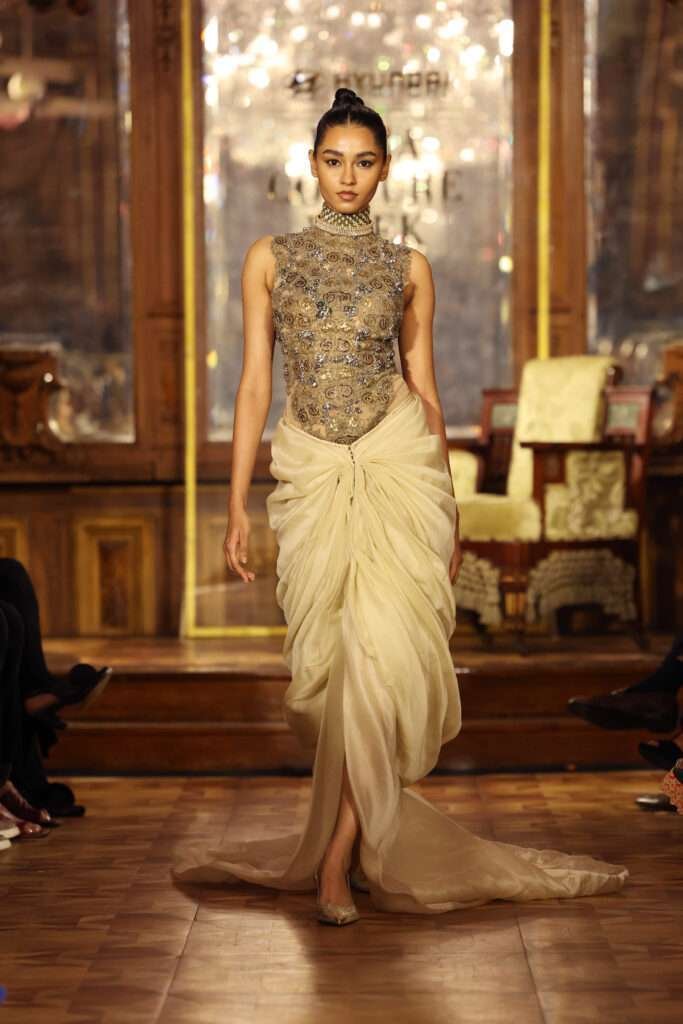
The palace itself seemed less like a venue than an extension of the garments. As silver light filtered across marble floors and vaulted ceilings, every embroidered surface responded differently. Metallic threads glimmered before fading back into shadow. Mirrorwork caught fleeting reflections. Rich textiles appeared almost fluid as they moved through the historic interiors, transforming the runway into an ever-changing play of light and texture.

It was impossible to separate the clothes from the atmosphere surrounding them.

Yet beneath the visual poetry lay a more compelling question—one that has quietly defined Anamika Khanna’s work for years. What happens when Indian craftsmanship is allowed to evolve rather than simply preserve tradition?

Moonlit Palace never attempted to recreate history. Instead, it imagined heritage as something alive, capable of adapting without surrendering its identity.

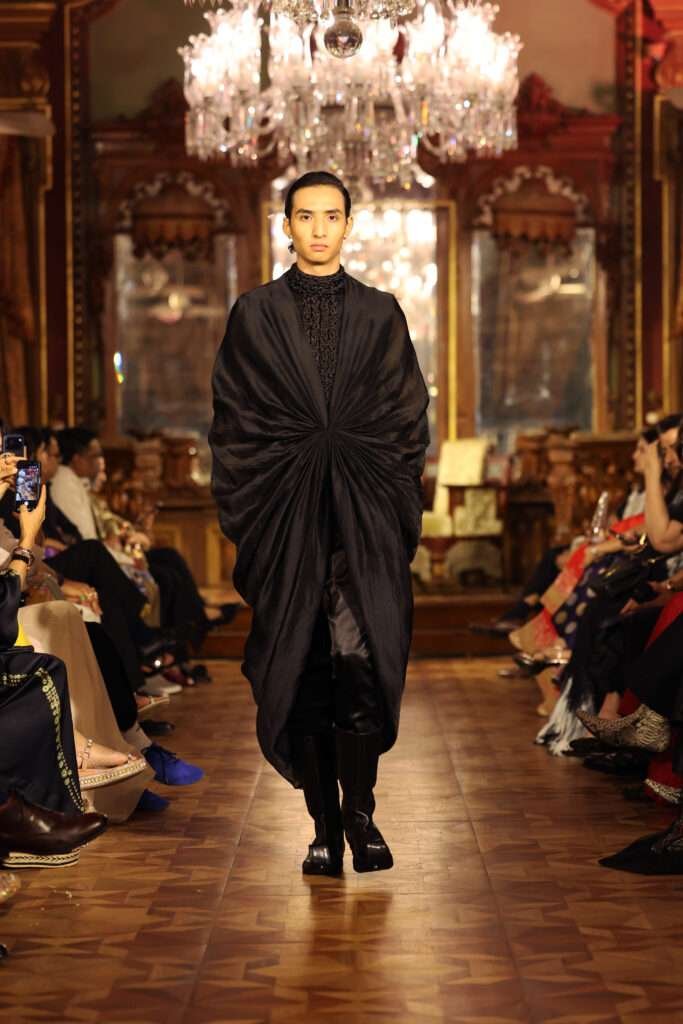
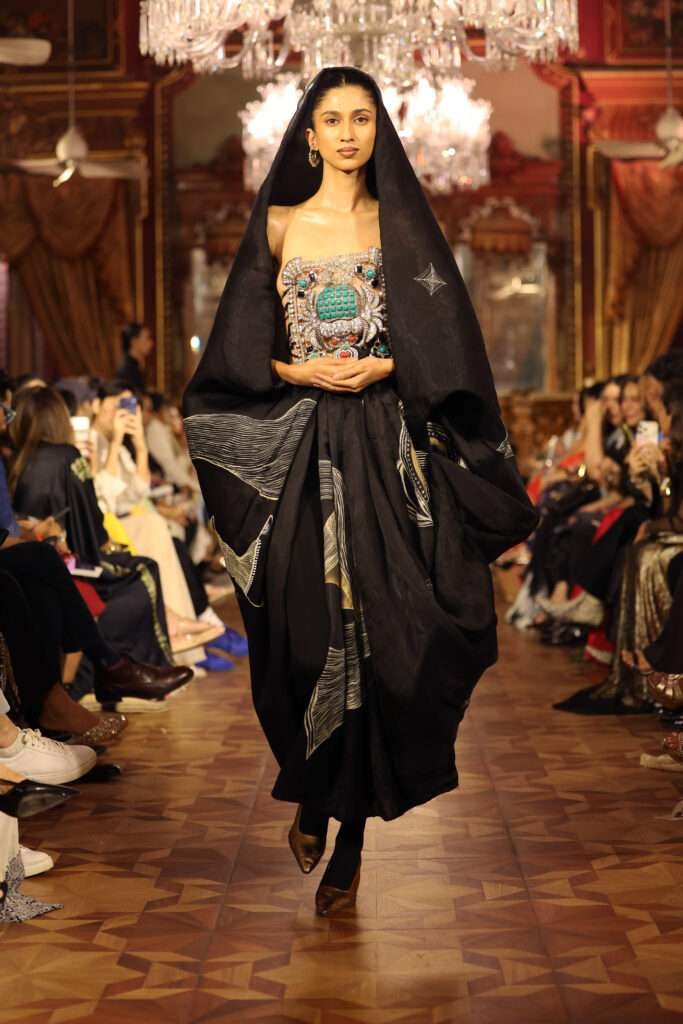
The opening silhouettes established that philosophy with understated confidence. Sculptural drapes skimmed the body instead of overwhelming it, while embellishment became part of the garment’s architecture rather than decorative excess. Jewelry wasn’t layered onto the looks as an afterthought. It emerged organically from necklines, bodices, and sleeves, blurring the line between ornament and construction.

The effect was unmistakably couture, yet refreshingly contemporary.

Rather than relying on volume or extravagance to signal luxury, Khanna trusted proportion, texture, and exceptional craftsmanship to do the work.

The collection’s emotional center arrived through Barmer.

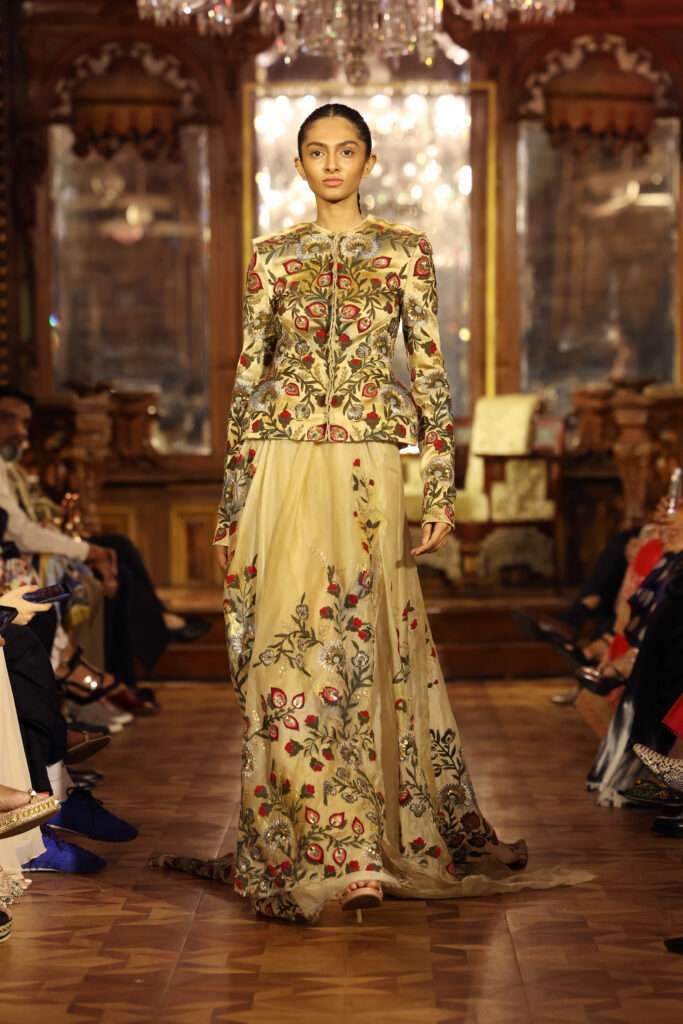
Drawing inspiration from Rajasthan’s celebrated textile traditions, the runway shifted into warmer, richer territory. Deep jewel tones replaced muted metallics, while mirror embroidery and gold foil created surfaces that seemed to pulse under changing light. These textiles, developed in collaboration with women’s artisan communities, carried visible evidence of handwork—stitched, dyed, painted, and embroidered with remarkable precision.

What made these pieces resonate wasn’t simply their technical brilliance.

It was the acknowledgment of the women whose skills continue to sustain India’s textile legacy, often far from fashion’s brightest spotlight.

Khanna has long championed collaboration with artisan communities, but here those partnerships never felt symbolic. They became the foundation of the collection itself, allowing regional techniques to exist within luxury fashion without being diluted or romanticized.

The conversation then drifted eastward.

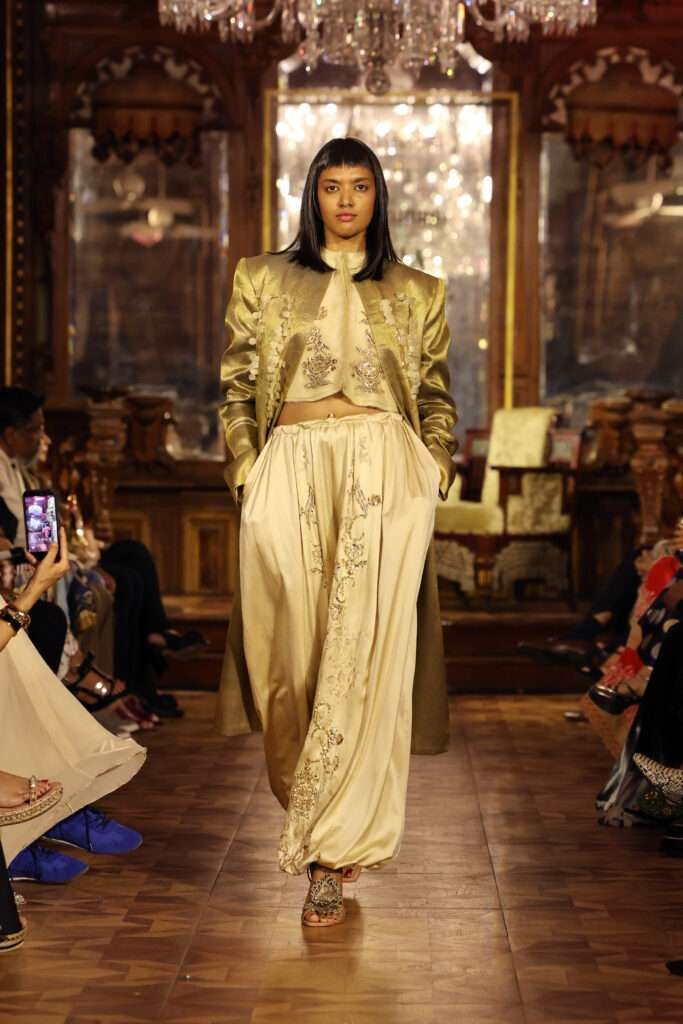
Inspired by Kolkata’s Kalighat artistic traditions, silhouettes softened into elongated forms that emphasized movement over structure. Embroidery grew quieter. Lines became cleaner. Every detail appeared carefully considered, allowing space to become as expressive as embellishment.

It was a reminder that couture isn’t measured by how much is added to a garment, but by how thoughtfully every element is resolved.

Throughout the evening, light remained an active participant.

Embroidery caught illumination before disappearing into shadow. Metallic surfaces shifted with every step. Fabrics revealed new dimensions depending on the viewer’s perspective. Rather than presenting craftsmanship as something fixed, the collection suggested that beauty itself is constantly changing—revealed through movement, time, and observation.

That idea lingered long after the runway concluded.

At its heart, Moonlit Palace wasn’t simply about exquisite clothing. It was about memory.

Each silhouette carried echoes of forgotten narratives, regional identities, inherited techniques, and generations of artisans whose work continues to shape India’s cultural landscape. Yet the collection refused to treat those histories as relics. Instead, it proposed that tradition remains most powerful when it continues to evolve.

This philosophy has increasingly become Khanna’s signature.

While many designers reference heritage through familiar motifs, she consistently asks how those traditions can speak to a contemporary audience without losing their integrity. The answer isn’t found in nostalgia or reinvention alone, but somewhere between the two—a place where craftsmanship becomes both archive and innovation.

That balance is precisely what has kept Anamika Khanna at the forefront of Indian luxury fashion. Her work rarely follows trends because it is rooted in something more enduring: the belief that couture should reflect culture as much as creativity.

The decision to stage the opening presentation of Hyundai India Couture Week outside Delhi for the first time reinforced that spirit of expansion. Hyderabad’s architectural grandeur provided more than an extraordinary backdrop; it framed a broader conversation about Indian couture reaching beyond familiar geographies while remaining firmly connected to its artistic roots.

As the final looks emerged, weaving together the collection’s many influences, there was no need for a dramatic crescendo. The closing moments felt calm, assured, and complete—qualities that have become increasingly uncommon in contemporary runway presentations.

In the end, Moonlit Palace succeeded not because it sought to dazzle, but because it trusted craftsmanship to carry the narrative.

In an industry increasingly defined by immediacy, Anamika Khanna offered something with far greater longevity: a reminder that the future of couture may not lie in creating something entirely new, but in discovering new ways to honor the hands, histories, and human stories that have always been there.

Newsletter
Join the Family
Sign up for Davenport’s Daily Digest and get the best of Davenport, tailored for you.